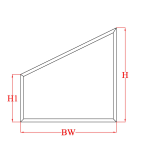
Technical Engineering & Sourcing Masterclass Engineering Custom Trapezoid Vinyl Windows for Architectural Wall Systems
Trapezoid vinyl windows have evolved from niche decorative accent fenestrations into essential structural daylighting components for modern residential and commercial architecture. Widely specified in high-pitched gable walls, vaulted rooflines, multi-story stairwells, and luxury mountain or coastal estates, trapezoid vinyl windows maximize glazed surface area while mirroring the dramatic slope of raked ceilings. However, engineering non-rectangular vinyl window systems presents unique challenges in frame physics, glass expansion, structural load distribution, and weatherproofing seal integrity.
This technical procurement guide explores the critical engineering parameters that general contractors, architectural specifiers, commercial developers, and international wholesale buyers must evaluate when sourcing custom trapezoid vinyl windows factory-direct from Southern California.
1. Profile Chemistry: 100% Virgin Vinyl vs. Recycled Regrind Profiles
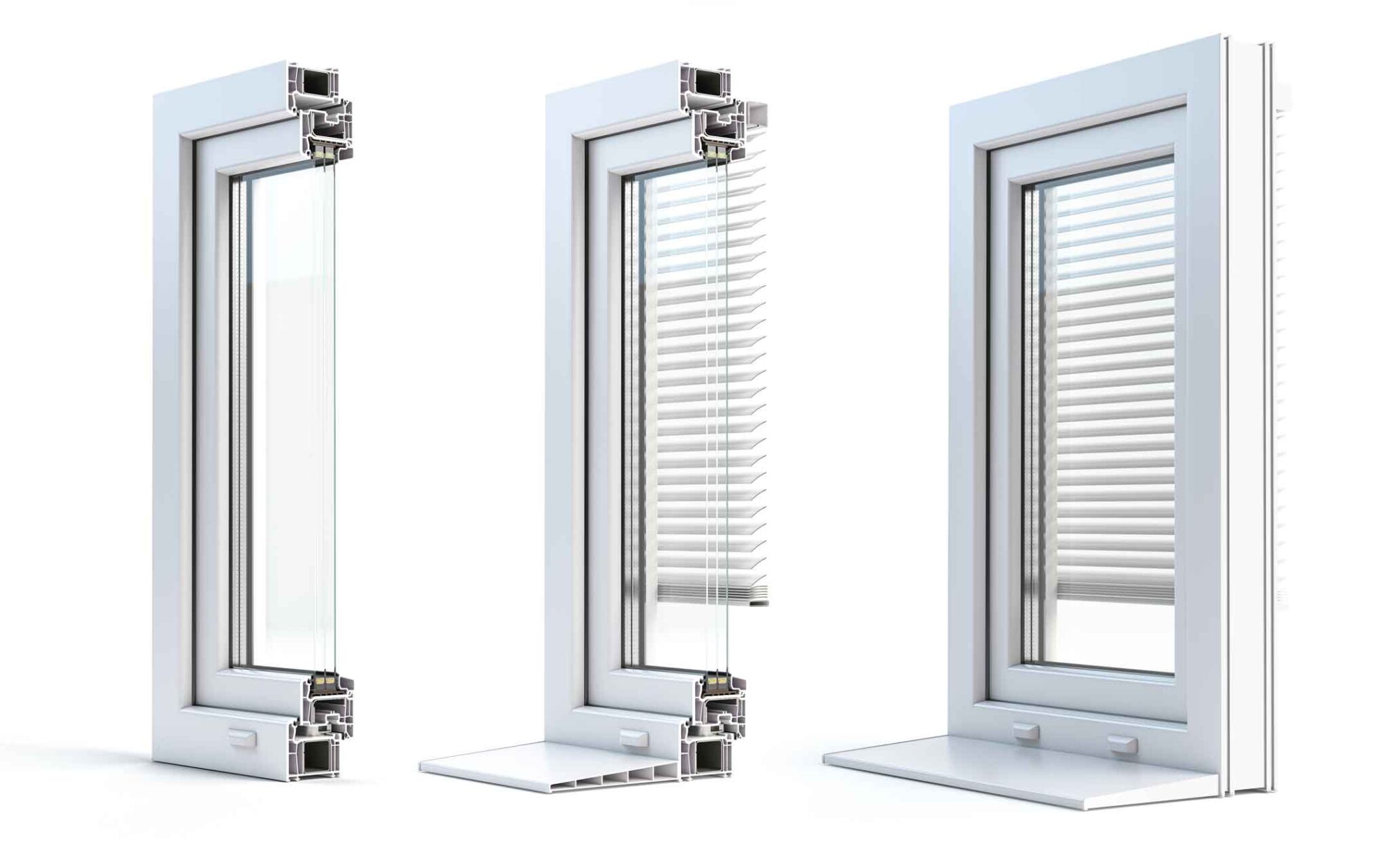
The foundational integrity of any custom architectural vinyl window lies in the chemical composition of its unplasticized polyvinyl chloride (uPVC) extrusion compound. Cheap window manufacturers frequently utilize post-industrial regrind—recycled scrap vinyl contaminated with mixed polymers, stabilizers, and ambient dust. While regrind reduces material cost, it severely compromises tensile strength, UV stability, and corner weld density.
At Amar Engineered Products, all trapezoid window profiles are extruded exclusively from 100% virgin uPVC compound formulated with titanium dioxide (TiO₂) UV inhibitors and high-impact modifiers. This rigid formulation ensures:
- Zero Thermal Discoloration: Resists yellowing, chalking, or cracking under intense solar exposure in arid or coastal climates.
- Maximum Corner Fusion Strength: Virgin vinyl maintains a homogenous molecular structure during the fusion-welding process, ensuring acute and obtuse trapezoidal corners achieve structural load capacity matching straight frame lengths.
- Reduced Thermal Coefficients: Lowers expansion and contraction rates under extreme diurnal temperature swings, preventing frame deflection against structural framing.
2. Fusion-Welded Non-90 Degree Geometry vs. Mechanically Screwed Frame Joints
The defining structural vulnerability in non-rectangular windows occurs at the frame corners. Traditional aluminum or budget vinyl windows rely on mechanical corner cleats, self-tapping screws, and silicone gaskets to join sloped trapezoid corners. Over years of wind loading and thermal cycling, mechanical corner fasteners loosen, leading to gasket degradation, water infiltration, and air leakage.
Amar solves this structural vulnerability through CNC-controlled automated fusion welding. The frame and sash profiles are cut to exact raked pitch angles and simultaneously heated to 245°C (473°F). The profile ends are pressed together under calibrated pneumatic pressure, melting the vinyl walls into a single, continuous, monolithic unit.
Key Engineering Advantage of Fusion-Welded Trapezoid Corners:
Because fusion welding eliminates corner seams, screws, and rubber gaskets, the corner weld possesses the exact same tensile strength, water penetration resistance, and air infiltration rating as the solid profile walls. There are zero joints to separate or leak over decades of service.
3. Glass Thermal Performance & Glazing Pocket Engineering
Trapezoid windows located on upper elevation gables are exposed to intense solar radiation and high ambient wind velocity. Standard dual-pane glass is insufficient to prevent heat gain in cooling-dominated environments or excessive HVAC energy losses in cold regions.
Amar equips trapezoid vinyl picture and combination units with advanced LoĒ³-366 triple-silver Low-E insulated glass units (IGUs). Engineered with three microscopic layers of silver, LoĒ³-366 blocks 95% of ultraviolet radiation and rejects solar heat while allowing daylight to flood the room interior.
Solar Heat Gain Coefficient (SHGC)
Our LoĒ³-366 glass packages achieve an SHGC as low as 0.22, significantly reducing peak cooling loads for high-ceiling architectural spaces.
U-Factor & Thermal Insulation
Combined with warm-edge non-metallic spacers and 90% argon gas fill, overall U-Factors drop below 0.27 Btu/h·ft²·°F, exceeding California Title 24 prescriptive targets.