Precision-extruded virgin uPVC doors engineered with multi-chamber insulated frames, argon-filled double glazing, and corrosion-free stainless hardware for wholesale distribution across Sydney, Melbourne, Brisbane, and Perth.
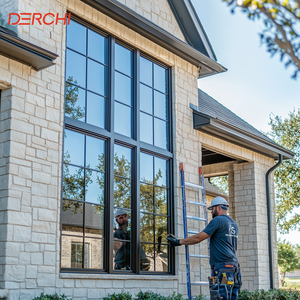
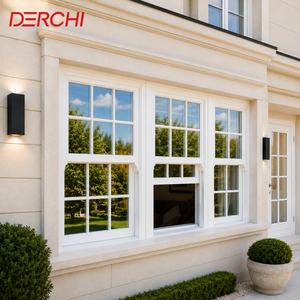
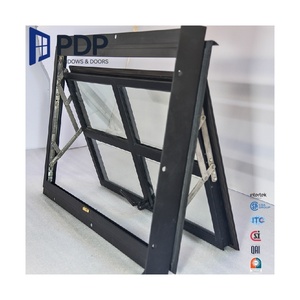
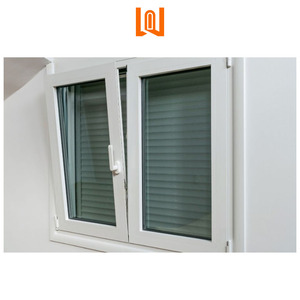
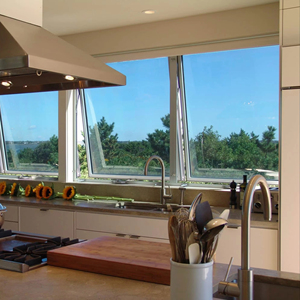
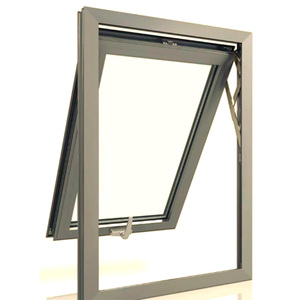
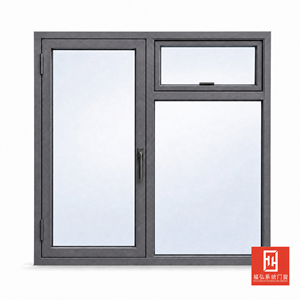
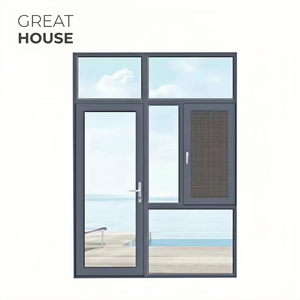
Australia’s residential and commercial building sectors are experiencing a seismic shift in fenestration specification. Historically dominated by non-thermally broken aluminum frames, the Australian market is rapidly adopting high-performance vinyl (unplasticized Polyvinyl Chloride or uPVC) door systems. Driven by stringent national updates in the National Construction Code (NCC 2022/2025)—which mandates minimum 7-Star NatHERS energy ratings for new home builds—architects, tier-1 builders, and property developers across New South Wales, Victoria, Queensland, and Western Australia are turning to direct international suppliers and exporters for certified vinyl door solutions.
Unlike standard metal frames that conduct extreme atmospheric heat directly into interior spaces, engineered vinyl doors utilize multi-chambered internal profiles. This hollow, multi-ribbed construction creates thermal dead-air pockets that drastically reduce overall frame U-values. When combined with advanced double or triple-pane insulating glass unit (IGU) packages—featuring Low-E coatings, warm-edge spacers, and heavy argon gas fills—vinyl door assemblies achieve thermal performance ratings up to 60% superior to standard aluminum doors.
uPVC features an inherently non-conductive thermal material property ($k \approx 0.17 \text{ W/m·K}$). Multi-chamber profiles combined with LoĒ³-366 glass achieve overall system U-values as low as 1.2 to 1.6 W/m²K, effortlessly fulfilling Australian 7-Star energy mandates.
Formulated with high concentrations of Titanium Dioxide ($\text{TiO}_2$) radiation absorbers and impact modifiers, our export vinyl profiles resist chalking, yellowing, and embrittlement under intense Australian UV radiation indices (UV 11+).
Self-extinguishing virgin uPVC compounds comply with Australian AS 3959 bushfire standards up to BAL-40. Furthermore, 100% synthetic frame composition eliminates coastal salt-spray corrosion, pitting, and oxidized frame deterioration.
Every vinyl door unit exported to Australia by Amar Engineered Products undergoes rigorous quality assurance and testing to ensure total compliance with Australian Building Codes. Below is a comprehensive engineering performance benchmark breakdown:
| Australian Code / Testing Metric | Compliance Standard | Amar Export Spec Vinyl Door Performance | Engineering Benefit |
|---|---|---|---|
| AS 2047 Requirements | Windows & External Doors in Buildings | Tested up to 3000 Pa Ultimate Limit State | Prevents frame deflection and structural failure during extreme storm events. |
| AS 1288 Safety Glazing | Glass in Buildings Selection & Install | Toughened Safety / Grade A Laminated Glass | Guarantees impact protection for large patio sliding & French door openings. |
| Water Penetration Resistance | AS 2047 Test Pressure | 450 Pa - 600 Pa Water Head Protection | Fusion-welded corner seals eliminate joint leakage during horizontal rain storms. |
| Air Infiltration Rate | AS 4420.4 Air Tightness Test | < 0.10 L/s·m² (Exceeds Air-Conditioned Class) | Stops unwanted draft energy loss; maximizes indoor thermal mass stability. |
| Acoustic Attenuation | ISO 140-3 / AS 1191 Sound Rating | Rw 38 dB - Rw 44 dB (With Laminated IGU) | Dampens heavy urban traffic, aircraft noise, and coastal gale wind acoustics. |
| Bushfire Resistance | AS 3959 Construction Requirements | BAL-12.5, BAL-19, BAL-29, to BAL-40 Certified | Flame-retardant compound with metal-reinforced inner frame structure. |
Australia’s continent spans vastly disparate climatic zones—from the humid, tropical environments of Far North Queensland to the scorching solar heat of Outback Western Australia and the freezing winter conditions of the Victorian Alps. Our export vinyl door systems are tailored to address these specific regional environmental stressors:
As a dedicated B2B manufacturer and international exporter, Amar Engineered Products handles full container-load (FCL) shipping logistics directly to all major Australian container terminals.
Driven by rising electricity tariffs across Victoria and SA, single-family homes and multi-residential builds are adopting Passivhaus design principles. Fusion-welded uPVC doors are the primary fenestration choice for achieving required air-tightness ($n_{50} \le 0.6 \text{ h}^{-1}$).
Traditional white uPVC has evolved. Australian architectural design heavily favors dark modern palettes—specifically Anthracite Grey (RAL 7016), Monument Black, and Silver Anodized finishes applied via solar-reflective foil laminates.
Indoor-outdoor living remains central to Australian residential architecture. Demands for multi-panel sliding patio doors (XO, XOX, OXXO) exceeding 2.7 meters in height require internal heavy-gauge steel reinforcements and tandem load-bearing rollers.
Vertical manufacturing control from raw virgin compound extrusion to final fusion-welding, glazing, and export container loading.
We own our profile dies and extrusion lines. We never mix recycled scrap material into our structural profiles, guaranteeing maximum tensile strength, impact resilience, and long-term color retention.
Corners are heat-fused into a single seamless piece. Unlike mechanically screwed frame joints used by traditional manufacturers, our fused corners will never loosen, sag, or create water leakage points.
Our vinyl door frames, fusion-welded seams, insulating glass seals, and structural hardware are backed by a comprehensive warranty engineered for commercial trade peace of mind.
Everything you need to know about compliance, custom ordering, ocean freight, and installing export vinyl doors in Australia.
Connect directly with our export specification team today. Submit your architectural window & door schedules for line-by-line engineering review, AS 2047 compliance checking, and direct container pricing.