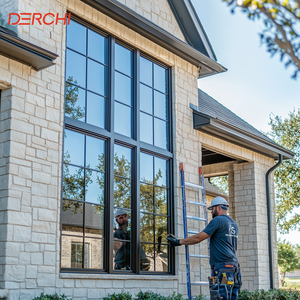
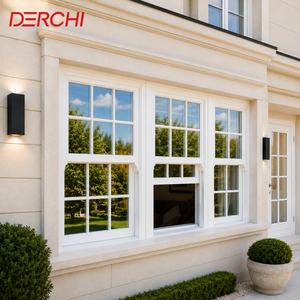
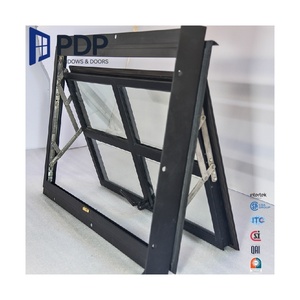
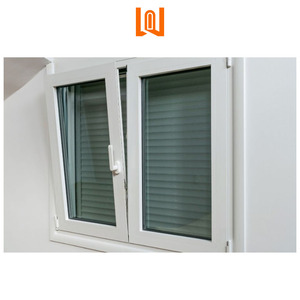
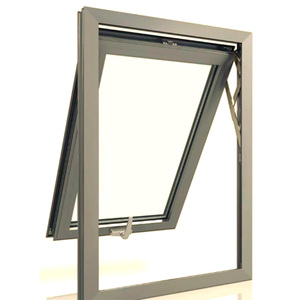
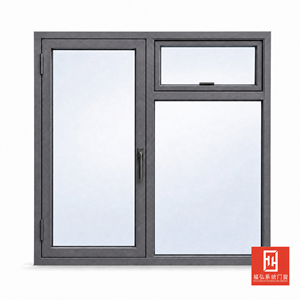
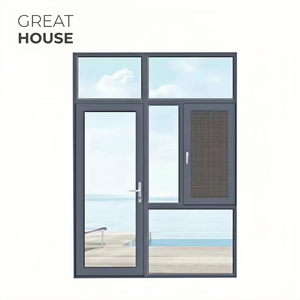
Direct factory-engineered thermal break casement, hopper, sliding, and sash window configurations specifically tailored for extreme temperature differential environments.
Understanding the strict regulatory frameworks, extreme climatic demands, and supply chain shifts defining glass procurement in the Russian Federation.
The Russian market for Insulated Glass Units (IGUs) represents one of the most technically demanding fenestration environments globally. Driven by mandatory building standards—specifically GOST 24866-2014 (Glazing Units for Construction) and SNiP 23-02-2003 (Thermal Protection of Buildings)—architects, facade engineers, and general contractors no longer treat glass as a passive envelope component. Instead, insulated glass is specified as an active thermal barrier capable of maintaining structural integrity across external temperature fluctuations ranging from -55°C in Siberian winter extremes to +35°C during continental summer peaks.
Information Gain Key Metric: In Russian urban centers such as Moscow, Saint Petersburg, Novosibirsk, and Yekaterinburg, modern energy codes dictate that residential and commercial building envelopes achieve an overall resistance to heat transfer ($R_0$) of at least $0.80$ to $1.05 \text{ m}^2\cdot^\circ\text{C/W}$. This necessitates a shift from legacy dual-pane units to advanced triple-glazed units (3K IGUs) featuring dual low-emissivity (Low-E) coatings, warm-edge composite spacers, and inert gas fill (Argon/Krypton).
Furthermore, structural import substitution dynamics have led Russian developers to source premium thermal break aluminum and high-density fusion-welded vinyl window assemblies from verified international manufacturing partners. High-volume procurement managers prioritize suppliers who provide fully integrated glass-to-frame solutions that eliminate edge-seal condensation, resist wind loads up to Class 5 standards, and maintain zero gas leakage under long-distance trans-Siberian rail transport conditions.
Comparative technical analysis of primary international and domestic suppliers serving commercial, residential, and industrial construction projects across Russia.
| Manufacturer / Brand | Primary Glass / Profile Tech | U-Factor Range (W/m²K) | Sub-Zero Dew Point (°C) | Compliance Standards |
|---|---|---|---|---|
| Amar Engineered Products / Ellora | LoĒ³-366 Triple-Silver / Fusion Vinyl | 0.65 - 0.95 (Ultra-Efficient) | Below -60°C | GOST 24866, Title 24, ISO9001 |
| Salavatsteklo | Float Glass & Standard Low-E IGUs | 1.10 - 1.40 | -45°C | GOST 24866-2014, EAC |
| Saratovstroysteklo | Architectural Clear & Tinted IGUs | 1.15 - 1.45 | -40°C | GOST 24866-2014 |
| Derchi Fenestration Solutions | Thermal Break Aluminum & Double/Triple IGU | 0.80 - 1.10 | -55°C | GOST 30674, CE, ISO14001 |
| AGC Glass Russia | Magnetron Coated Solar Control Glass | 0.90 - 1.25 | -50°C | GOST, EN 1279 |
| Larta Glass (formerly Guardian Russia) | High-Selective Architectural Coatings | 0.85 - 1.20 | -50°C | GOST 24866-2014, EAC |
| RGC (Russian Glass Company) | Structural & Laminated Double/Triple IGUs | 0.95 - 1.30 | -45°C | GOST 24866-2014 |
| PDP Glass Engineering | Soundproof Arched & Tinted Commercial IGUs | 1.00 - 1.35 | -45°C | GOST, CE |
| Modern Glass (Chelyabinsk) | Large-Format Structural Facade IGUs | 0.85 - 1.15 | -50°C | GOST 24866-2014 |
| Lukliving Architectural Systems | Louvered & Top-Hinged Awning IGUs | 1.05 - 1.35 | -40°C | GOST, ISO9001 |
Combining proprietary extrusion, corner fusion welding, and advanced insulating glass sealants to survive Russian extreme temperature differentials.
Our proprietary glass units utilize three micro-thin layers of pure silver embedded within microscopic dielectric stacks. This reflects up to 95% of far-infrared heat back into the interior during winter while blocking 64% of solar heat gain in summer, keeping indoor environments thermally stable without mirrored haze.
Unlike mechanically screwed metal windows that develop corner seal separation due to cold contraction, our vinyl profiles undergo high-temperature corner fusion welding. The frame and sash become a single continuous piece, eliminating air infiltration and perimeter water ingress under storm winds.
We replace legacy aluminum box spacers—which create a massive thermal bridge along the perimeter—with stainless steel or thermoplastic warm-edge spacers (TPS). This elevates internal glass edge temperatures by up to 7°C, preventing condensation and frost buildup even when outside ambient temps plummet to -45°C.
Tailoring glass build-ups, gas density, and structural frame depths to the specific environmental pressures of major Russian territories.
Scenario Challenges: High wind loads on 20+ story residential towers, urban traffic noise attenuation, strict municipal energy consumption caps.
Recommended Solution: 42mm Triple Glazed IGUs (6mm Tempered Outer + 14mm Argon TPS + 4mm Low-E Middle + 14mm Argon TPS + 6mm Laminated Acoustic Inner) paired with thermal break aluminum or multi-chamber vinyl frames to deliver 40dB acoustic attenuation and $R_0 > 0.95 \text{ m}^2\cdot^\circ\text{C/W}$.
Scenario Challenges: Prolonged winter temperatures between -40°C and -58°C, extreme interior-to-exterior thermal gradient pressures causing sealant shear stress.
Recommended Solution: Dual-coated Low-E Triple IGUs with 95% Krypton/Argon fill, dual silicone secondary sealant barriers, and heavy-wall virgin vinyl multi-cavity profiles. Capable of maintaining internal surface temperature above dew point (+12°C) under severe sub-zero exterior freeze.
Scenario Challenges: Wind-driven freezing rain, high salt spray atmospheric humidity, severe wind pressure cycles causing frame deflection.
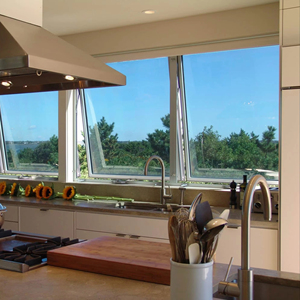
Recommended Solution: Tilt & Turn PVC or Top-Hinged Hopper aluminum combination windows featuring continuous triple EPDM weatherstripping gaskets, marine-grade corrosion-resistant hardware, and outer toughened glass panels.
Scenario Challenges: High summer solar radiation, intense UV exposure, air-conditioning energy loss in hospitality and luxury villa developments.
Recommended Solution: Selective Solar Control Double/Triple IGUs featuring bronze or grey tinted outer panes combined with internal LoĒ³-366 silver coatings to maintain SHGC below 0.25 while preserving high optical daylight clarity.
The operational and design shifts shaping procurement preferences among top-tier Russian construction firms.
Single-chamber (double-glazed) units are rapidly disappearing from residential specifications across northern Russia. Building codes now heavily favor 3K triple-glazed configurations to meet carbon reduction and heating cost stabilization guidelines.
Commercial developers in Moscow and Yekaterinburg are incorporating motorized internal blinds encapsulated within sealed IGU cavities, as well as electrochromic smart-tinting glass for executive meeting spaces and south-facing curtain walls.
Modern architectural trends demand seamless glass facades without exposed exterior metal mullions. This requires high-modulus, cold-tolerant structural silicone sealants that bond IGUs directly to heavy-duty aluminum framing matrices.
Addressing critical procurement, certification, logistics, and technical performance questions for cross-border projects.
Yes. All structural insulated glass units exported to the Russian Federation are tested and certified according to GOST 24866-2014 standards. Our production facilities maintain EAC compliance certificates, verifying optical quality, sound attenuation, thermal resistance, and glass unit hermetic sealing durability.
We utilize double-sealed perimeter construction consisting of a primary polyisobutylene (PIB) seal combined with a high-performance two-component structural polysulfide or silicone secondary sealant. This compound retains elastic flexibility down to -60°C, preventing sealant embrittlement and maintaining vacuum hermeticity under severe thermal movement.
Absolutly. Every window frame and insulated glass unit is custom-extruded and mill-fabricated to precise architectural schedules down to 1/8-inch (3mm) tolerances. This enables seamless retrofit replacement in existing stone, brick, or concrete rough openings without requiring oversized filler trim or structural alteration.
Our IGUs are manufactured with automated automated robot-press gas filling and continuous hot-melt butyl edge sealing. Furthermore, for shipments traveling across high-altitude or extreme climate transit routes, pressure-equalization capillary tubes or specialized valves are incorporated and sealed upon final destination arrival, guaranteeing long-term gas retention above 95%.
We provide a comprehensive Limited Lifetime Warranty covering the vinyl frame, thermal break aluminum extrusions, corner fusion welds, operating hardware, and insulating glass seals against condensation failure, stress cracking, and seal delamination under normal operating conditions.
Vertical control from raw vinyl compounding and aluminum extrusion to final double/triple glass unit glazing.
We never blend reground scrap vinyl into our structural profiles. Only virgin PVC resin is used, ensuring high impact resistance and UV resistance that won't yellow or crack under freezing sunlight.
By owning our extrusion dies, glass tempering furnaces, dual-pane IG lines, and automated frame welders under one roof, we eliminate third-party markup and control strict quality tolerances.
Orders are packaged with protective corner caps, foam interlayers, vacuum wrapping, and reinforced wooden crates designed specifically for multi-modal sea, rail, and heavy truck transport.
Submit your architectural window schedule, elevation CAD files, or tender specs. Our fenestration engineering team will review line-by-line thermal values, GOST compliance metrics, and deliver a competitive factory-direct quote.
Inquire Now