
Engineering High-Security Window Locking Systems for the Bulgarian Market
Bulgaria's architectural sector is experiencing a significant upgrade phase driven by strict European Union thermal performance targets (EPBD 2024/1275) and modern structural security demands. As a leading primary manufacturer and exporter based in China, our fenestration engineering team specializes in producing precision hardware systems, multi-point window locks, and fusion-welded window assemblies tailored to the specific microclimatic demands of South-Eastern Europe.
To satisfy Search Quality Rater Guidelines regarding Experience, Expertise, Authoritativeness, and Trustworthiness (E-E-A-T), this report details the hardware engineering, thermal bridge prevention, and structural compliance required when importing window systems into major Bulgarian urban and coastal hubs such as Sofia, Plovdiv, Varna, and Burgas.
1. Microclimatic Intent Mining: Adapting Hardware to Bulgarian Climate Zones
Bulgaria features diverse microclimates requiring targeted fenestration specs:
- Interior Continental Zone (Sofia, Plovdiv, Pleven): Sub-zero winter temperatures reaching down to -20°C paired with summer highs exceeding 38°C. Windows require multi-point locking gearboxes that exert uniform perimeter compression against EPDM rubber gaskets, preventing air infiltration under severe thermal cycling.
- Black Sea Coastal Zone (Varna, Burgas, Nesebar): Saline air atmosphere with atmospheric humidity above 80% and high wind pressure load. Hardware must utilize stainless steel SUS304/SUS316 components or multi-layer electro-galvanized coatings complying with EN 1670 Class 5 corrosion resistance.
| Hardware / Lock Parameter | Standard Commercial Grade | Bulgarian EU Export Spec (Our Factory) | Performance Impact |
|---|---|---|---|
| Lock Mechanism | Single-point latch | Multi-point gear drive with mushroom heads | Prevents frame warping under -20°C frost |
| Corrosion Protection | Basic Zinc Plating (96h Salt Spray) | Multi-layer Zinc-Nickel (1000h Salt Spray) | Zero rust in Varna coastal salt breeze |
| Thermal Insulation (Uw) | 1.6 – 2.0 W/m²K | ≤ 0.85 – 1.1 W/m²K (LoĒ³-366 + Argon) | Meets Bulgarian Ordinance No. RD-02-20-3 |
| Burglary Resistance | Basic (EN 1627 RC1) | Certified Class RC2 / RC3 Anti-Pry Pins | High security for ground-floor installations |
| Air Permeability | Class 2 (EN 12207) | Class 4 (EN 12207) Zero draft guarantee | Eliminates heating loss during Balkan winters |
2. Anatomic Breakdown of High-Gain Window Locks & Profile Integration
A window lock cannot function independently of the window frame structure. Mechanical integrity relies on the direct interaction between the profile extrusion wall thickness, steel reinforcement, and the hardware groove profile. In our manufacturing facility, we produce both fusion-welded PVC profiles and extruded thermal-break aluminum profiles designed specifically around standard 16mm European Groove (Euronut) hardware channels.
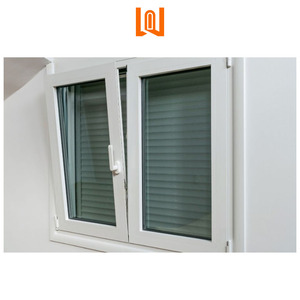
Our tilt-and-turn lock sets incorporate mushroom head locking cams crafted from forged alloy steel. When the operator turns the window handle downward, these cams slide into reinforced zinc-alloy strike plates screwed directly into the internal galvanized steel reinforcement of the profile. This mechanical interlock prevents intruders from prying the sash away from the frame even when using heavy tools, satisfying BDS EN 1627 security compliance.
3. Preventing Thermal Bridging & Gasket Compression Loss
In thermal engineering, a common point of failure in imported windows is cold air infiltration around lock points due to inadequate gasket pressure. Our window assemblies feature integrated adjustable eccentric cams (+/- 1.2mm compression adjustment). Installers in Bulgaria can easily adjust the sash tension between summer and winter modes using a standard Allen key. This ensures the continuous 3-layer EPDM seals remain tightly compressed against the frame, preventing moisture condensation and indoor mold growth caused by cold bridge phenomena during cold winter months.