
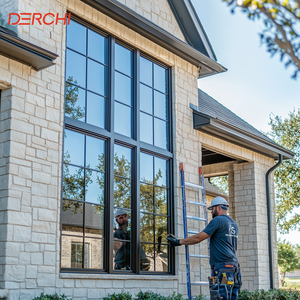
Thermal Break Dual-Glass Crank Casement Window
- Decorative Internal Grills
- Heavy-Duty Stainless Hardware
- Ideal for High-Wind Coastal Zones
Engineered specifically for South American climatic challenges—from Buenos Aires coastal humidity to Patagonian wind loads.
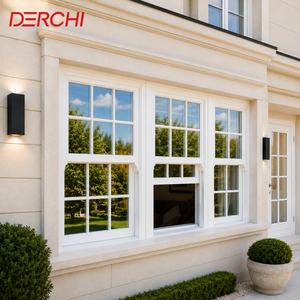
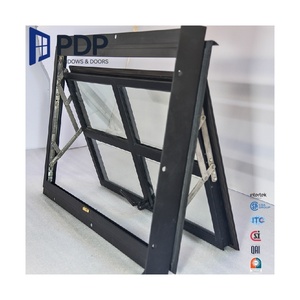
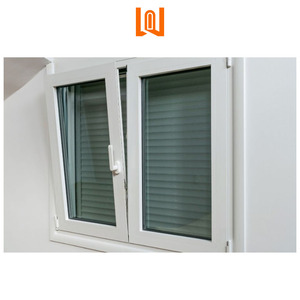
The Argentine construction and property redevelopment sectors are currently undergoing an unprecedented transformation driven by escalating energy tariffs, stringent municipal regulations regarding building thermal envelopes, and a growing awareness of life-cycle building cost optimization. Historically dominated by cold aluminum profiles without thermal breaks (RPT), residential and commercial projects across major hubs like Buenos Aires, Córdoba, Rosario, and Mendoza are rapidly replacing legacy aluminum fenestration with high-density, multi-chambered Unplasticized Polyvinyl Chloride (uPVC) window systems.
As a leading Chinese manufacturer and global exporter of extrusion-welded uPVC fenestration, our engineering team works directly with Argentine architectural firms, fenestration distributors (carpinterías de PVC), and commercial real estate developers. We bridge the gap between high-capacity, cost-efficient manufacturing in China and the exact technical mandates set forth by Argentina's standard-setting bodies, specifically IRAM (Instituto Argentino de Normalización y Certificación).
Under Ley 13.059 of the Province of Buenos Aires and Ley 4.458 of the Autonomous City of Buenos Aires (CABA), new construction projects must comply with strict maximum thermal transmittance (K-value / U-value) caps. Standard single-glazed aluminum windows typically yield U-values exceeding 5.8 W/m²K, whereas our multi-chamber uPVC systems with LoĒ³-366 double insulation bring overall U-values down below 1.3 W/m²K—a 77% reduction in building thermal loss.
Argentina encompasses an extraordinary range of climate conditions—spanning Subtropical zones in the North to Subpolar extremes in Tierra del Fuego. A standard window profile designed for temperate Europe or inland Asia will fail if deployed without climate-specific customization. Below, we break down our specialized uPVC configurations adapted for Argentina’s primary micro-climates:
Along the Río de la Plata basin and Atlantic coastal cities like Mar del Plata, humidity levels frequently exceed 85%, paired with airborne salt salinity. Traditional metal windows oxidize, pit, and leak sound from heavy traffic.
Our Solution: 100% virgin uPVC profiles with multi-point EPDM rubber gaskets and dual-pane acoustic glass (6mm + 12Ar + 4mm). The vinyl material is entirely immune to marine corrosion, requiring zero paint or sealant re-application over its 30+ year lifespan.
Patagonian winds frequently reach hurricane force (gusts over 140 km/h), while winter temperatures plummet well below freezing. Window frames must possess extraordinary structural rigidity to prevent wind deflection and sash seal failure.
Our Solution: 5-to-7 chamber extrusion profiles reinforced with interior 2.0mm hot-dip galvanized steel box channels. Paired with triple-pane LoĒ³-366 argon-filled glass units to deliver passive-house level thermal retention.
High-altitude solar exposure causes severe UV degradation in low-quality plastics, leading to yellowing, embrittlement, and thermal warping under 20°C daily temperature fluctuations.
Our Solution: Special "Tropical Grade" uPVC formulation containing 8.5 parts per hundred of Titanium Dioxide (TiO₂) UV stabilizer. Tested under ASTM G154 accelerated weathering standards to guarantee zero yellowing or structural breakdown under intense Andean sunlight.
Fine agricultural dust during harvest season easily penetrates sliding window tracks, jamming rollers and compromising interior air quality in residential developments and offices.
Our Solution: European Tilt & Turn systems utilizing continuous double-step compression gaskets. When closed, the multi-point locking system pulls the sash tightly against the frame, achieving an airtight seal (IRAM 11507 Class 4 Air Tightness).
To assist Argentine civil engineers, specifiers, and procurement managers in drafting tender documentation, the table below provides a side-by-side technical evaluation of our exported uPVC systems against traditional market alternatives.
| Performance Parameter | Legacy Cold Aluminum (No RPT) | Standard Local uPVC | Our Export-Grade Fusion-Welded uPVC |
|---|---|---|---|
| Frame Thermal Transmittance (Uf) | ~ 6.8 W/m²K | ~ 2.2 W/m²K | 1.1 – 1.4 W/m²K |
| Overall Window Transmittance (Uw) | ~ 5.4 W/m²K | ~ 2.4 W/m²K | 1.2 – 1.6 W/m²K |
| IRAM 11507 Air Tightness | Class 1 (High Leakage) | Class 2 or 3 | Class 4 (Maximum Airtight) |
| Acoustic Isolation (Rw) | 22 – 26 dB | 32 – 36 dB | Up to 48 dB (with Laminated IG) |
| Internal Steel Reinforcement | N/A | 1.0mm – 1.2mm Steel | 1.5mm – 2.0mm Box Galvanized Steel |
| UV Resistance Rating | Anodized / Powder Coated | Standard European Grade | Tropical Class (High TiO₂ Content) |
| Corner Joint Method | Mechanically Screwed / Cleated | Cold Glued / Welded | Seamless Monolithic Fusion-Welded |
As an actual original manufacturer rather than a trading broker, our facility controls every phase of the extrusion, fabrication, glazing, and quality testing workflow. This vertical integration is what allows us to offer custom sizing down to 1/8-inch (3mm) increments without extending lead times.
We strictly prohibit the use of reground industrial waste scrap in our core profile extrusions. Our virgin uPVC resin mixture includes high-impact modifiers, heat stabilizers, and premium TiO₂ to ensure high tensile strength and color consistency across thousands of window units.
Unlike mechanically jointed aluminum frames that rely on screws and prone-to-dry gasket sealants, our uPVC frames are heat-fused at 245°C. The corners melt into a single unbroken structure, eliminating the possibility of corner air infiltration or liquid moisture entry over time.
Our clean-room glass processing line fabricates double and triple-pane IGUs featuring warm-edge stainless steel spacers, dual-stage butyl/silicone secondary sealing, 90% Argon gas filling, and options for world-class LoĒ³-366 solar control coatings.
Before leaving our factory floor, every window unit undergoes diagonal squareness checks, hardware operation cycle tests, and corner weld strength audits. Products are bundled with protective corner guards, wrapped in heavy-gauge shrink film, and secured on fumigated wooden pallets for ocean transport to Argentina.
Navigating import procedures, currency clearing, and technical compliance in Argentina requires a supplier with verified international experience. We provide complete technical documentation packages, custom HS Code classification guidance (NCM 3925.20.00), and flexible container consolidation for mixed profile orders.
Here are clear, authoritative technical answers to the most common questions asked by Argentine architects, procurement specialists, and fenestration importers.
Yes. Our uPVC profile systems and insulated glass assemblies are engineered to meet or exceed IRAM 11507-1 (Thermal Insulation), IRAM 11507-2 (Air Tightness and Water Tightness), and IRAM 11507-3 (Structural Wind Resistance under high pressure). Test reports and physical technical data sheets are provided with every official quotation.
Fusion welding melts the sash and frame profile corners into a single continuous piece of solid PVC at 245°C. There are no mechanical screws to loosen, no gaskets to dry out, and no corner seams to leak air or water. This creates an airtight, structurally superior unit that maintains its seal integrity for decades.
We formulate our uPVC profiles using high concentrations of Titanium Dioxide (TiO₂) UV absorbers and organotin heat stabilizers designed specifically for high-solar irradiance (Tropical Class). Our extrusions pass 6,000 hours of accelerated Xenon-arc weatherometer testing with zero cracking, yellowing, or loss of impact resistance.
Yes. We regularly handle FOB, CFR, and CIF ocean freight shipments to major Argentine ports, including Puerto de Buenos Aires and Terminal Zárate. Orders are securely palletized, shrink-wrapped, and loaded into 20ft or 40ft High Cube containers to maximize volume utilization and prevent transit damage.
Absolutely. Because we own our extrusion lines and fabrication shop, we manufacture custom sizes in 1/8-inch (3mm) increments. We produce arches, trapezoids, tilt-and-turn units, double-hung sash, and sliding systems in solid white, dark bronze, matte black, and woodgrain laminated foil finishes.
We offer multi-point locking gear systems compatible with leading international hardware brands such as Roto Frank, Siegenia-Aubi, GU (Gretsch-Unitas), as well as premium Chinese hardware (Kin Long). All hardware components undergo 500-hour salt-spray corrosion testing for maximum durability.
We provide a 10-Year Factory Warranty covering the uPVC profile frame against color fading, cracking, and structural extrusion defects, along with a 5-Year Limited Warranty on insulated glass seal integrity and operating hardware components.
Send us your window schedules, architectural elevations, or tender requirements today. Our technical engineering team will deliver a comprehensive itemized quote within 24 hours.