Precision fusion-welded vinyl profiles, thermal break aluminum hybrids, and advanced double-glazed fenestration systems tailored to residential and commercial construction in New South Wales.
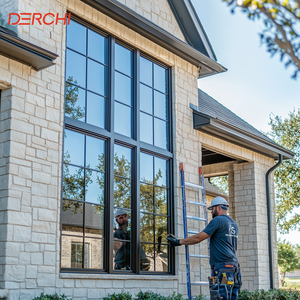
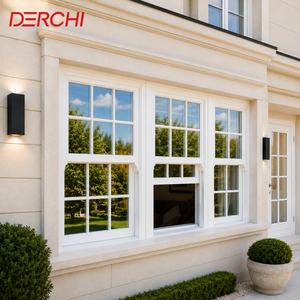
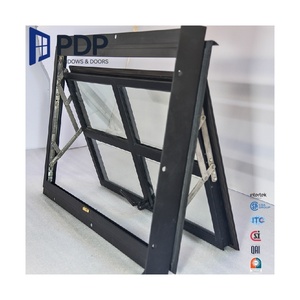
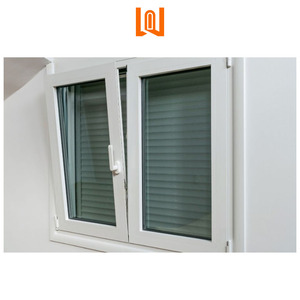
Architectural design in Greater Sydney—from the coastal cliffs of the Northern Beaches and Eastern Suburbs to the urban infill projects of North Sydney and the sprawling modern estates of Greater Western Sydney—demands fenestration systems capable of resisting extreme natural forces. Among geometric window configurations, trapezoid vinyl windows (also known as rake or angled accent windows) have emerged as the premier choice for architects specifying soaring cathedral ceilings, dramatic gable rooflines, and sun-drenched clerestory openings.
However, importing non-standard geometric windows into Australia presents rigorous engineering challenges. Standard off-the-shelf windows fail to handle Sydney's intense solar irradiance, high wind pressures (N2 to N5 ratings under AS4055), and harsh coastal marine environments. As China’s leading custom vinyl window manufacturer, our manufacturing facility engineers custom fusion-welded trapezoid uPVC windows engineered explicitly to fulfill Australian Standard AS2047 (Windows and External Glazed Doors in Buildings) and AS1288 (Glass in Buildings - Selection and Installation).
Whether your project requires high-pitch trapezoid fixed lites stacked above sliding patio doors in Mosman, or tilt-and-turn combination windows integrated into contemporary passive solar homes in Parramatta, our direct factory-to-site supply chain delivers custom-extruded, millimetre-accurate vinyl fenestration tailored to New South Wales building requirements.
Sydney's diverse topography creates distinct environmental microclimates. Our engineering team customizes profile chemistry, glazing pocket depths, and hardware configurations to match your project's exact geographical coordinates.
Properties in Manly, Bondi, and Cronulla suffer severe pitting and galvanic corrosion when using standard aluminum frames. Our virgin uPVC formulation is completely non-metallic and impervious to salt spray, ensuring zero surface oxidation, rust, or finish flaking over decades of exposure.
Western Sydney suburbs such as Penrith and Blacktown experience extreme summer heat exceeding 45°C. Utilizing multi-chamber uPVC profiles filled with argon-insulating air pockets combined with LoĒ³-366 triple-silver glass, our windows reduce interior thermal transfer by up to 74% compared to single-glazed clear glass.
For builds in bushfire-prone zones along the Blue Mountains fringe, Sutherland Shire, and Ku-ring-gai, we provide specialized high-temperature fire-retardant uPVC profiles integrated with toughened safety glass and metal mesh screens, engineered to comply with BAL-29 and BAL-40 fire attack ratings.
The Australian solar spectrum possesses one of the highest UV radiation indexes globally. Standard PVC formulations imported without tropicalization quickly yellow, embrittle, and warp. Our factory utilizes a proprietary High-Titanium Dioxide ($TiO_2$) Virgin uPVC Resin Blend infused with organic Calcium-Zinc ($Ca/Zn$) eco-stabilizers—completely free of toxic lead additives.
Our in-house automated extrusion lines operate under strict ISO9001 quality protocols, controlling profile wall thicknesses to a structural 2.8mm to 3.0mm class standard. This guarantees that large geometric trapezoid windows maintain structural equilibrium even when subjected to intense wind pressure fluctuations.
| Engineering Attribute | Standard Aluminum Window | Thermally Broken Aluminum | Our High-Impact uPVC Profile |
|---|---|---|---|
| Thermal Conductivity (Frame) | 200 W/mK (Extreme heat bridge) | 3.5 – 5.0 W/mK (Moderate thermal loss) | 0.17 W/mK (Ultra-Insulating) |
| Corner Joinery Method | Screwed Mechanical Corner Cleats | Crimped Cleats with Gasket Glue | Monolithic Heat Fusion Welded |
| Salt Air / Marine Durability | Prone to Filiform Corrosion | Requires Expensive PVDF Coating | 100% Corrosion & Rust Impervious |
| UV Discoloration Resistance | Powdercoat Chalking Over Time | Anodized Fading under High Sun | 9 phr $TiO_2$ UV-Stabilized Compound |
| Acoustic Noise Reduction (Rw) | 22 – 26 dB (Basic Seal) | 28 – 32 dB (Standard Dual Glass) | 38 – 45 dB (Multi-Chamber + Laminated) |
Furthermore, our insulating glass unit (IGU) manufacturing facility integrates warm-edge composite spacers, dual-stage butyl silicon perimeter seals, and 90% high-purity argon gas filling as standard. When combined with LoĒ³-366 glass technology, our trapezoid and casement window series achieve unprecedented thermal energy ratings that drastically lower HVAC electricity bills across Sydney homes.
The Australian National Construction Code (NCC 2022) has officially raised thermal efficiency requirements for new home builds and major renovations from 6 stars to a stringent 7-Star NatHERS (Nationwide House Energy Rating Scheme) baseline. In New South Wales, BASIX targets have similarly escalated thermal comfort obligations.
Windows account for up to 40% of a building's total thermal energy loss during winter and up to 87% of heat gain during Sydney's summer months. Standard single-glazed aluminum windows are virtually incapable of meeting modern BASIX approval criteria without costly offsets elsewhere in the building envelope.
Our custom trapezoid, double-hung, and tilt-and-turn vinyl windows provide Australian builders, developers, and architects with a competitive edge:
With certified NFRC and WERS thermal test data, our low U-values (down to 1.3) and tuned SHGC options streamline BASIX certificates for NSW council submissions.
Projects near Sydney Airport flight paths (Marrickville, Sydenham) or busy transport corridors (Parramatta Rd, Pacific Hwy) benefit from our acoustic laminated glass packages, reducing perceived traffic noise by up to 80%.
Direct manufacturer pricing enables developers to install architectural geometric windows at a fraction of local Australian custom timber or thermally broken aluminum costs.
Trapezoid windows require absolute mathematical precision during fabrication. A deviation of even 1.5 millimetres in pitch angle can cause glass seal stress, frame racking, or catastrophic water leakage along the raked head jamb.
Our factory utilizes 5-Axis Automated CNC Cutting Machinery linked directly to CAD window schedule software. When you submit your architectural window schedule or CAD elevation drawings, our engineering department calculates exact pitch angles, frame deductions, structural mullion reinforcement inserts, and custom glass unit stepped edges.
Every uPVC trapezoid frame profile is internally reinforced with hot-dipped galvanized steel channels (1.5mm to 2.0mm thickness), ensuring zero frame sagging or wind deflection under heavy structural dead loads.
Specially extruded interior glazing beads allow rapid, secure glass installation from inside the building, eliminating expensive exterior scaffolding requirements during high-rise installation.
As China’s top custom vinyl window manufacturer serving the Australian market, we eliminate intermediate trading markup while providing complete export logistics management directly to Port Botany or your Sydney job site.
From raw uPVC resin extrusion and steel reinforcement bending to insulating glass assembly and final testing, every step occurs under one roof for total quality control.
Every production batch undergoes rigorous structural deflection tests, water air-infiltration pressure testing, and hardware cycle-testing prior to export packaging.
Units are wrapped in protective polyethylene film, cushioned with corner guards, and secured inside heavy-duty fumigated plywood crates labeled by window tag ID for effortless on-site sorting.
Clear engineering and logistical answers for Australian architects, builders, home improvers, and building material importers.
Yes. Our window systems are engineered and tested in accordance with AS2047 (Windows and External Glazed Doors in Buildings), verifying structural wind load deflection, air infiltration, and water penetration resistance. All glass units comply strictly with AS1288 for thickness selection, safety toughening, and acoustic performance.
Absolutely. Every geometric trapezoid window is built to order from your exact architectural drawings or CAD files. Our precision 5-axis CNC equipment cuts vinyl profiles and glass units down to 1/8-inch (3mm) accuracy, guaranteeing a seamless fit into your rough framing.
Our uPVC profiles are specially formulated with high concentrations of Titanium Dioxide ($TiO_2$) UV stabilizers designed for tropical and high-radiation regions. They will not chalk, turn yellow, crack, or become brittle under New South Wales sunlight, backstopped by our long-term structural frame warranty.
Standard fabrication lead time is 2 to 3 weeks upon final shop drawing approval. Direct ocean freight from our port to Port Botany in Sydney typically takes 12 to 16 days. We assist with custom packaging, bill of lading documentation, and freight forwarder coordination.
Fusion welding thermally bonds profile corners into a continuous, impenetrable solid frame. There are no screws to loosen over time, no gaskets to dry out or shrink, and no metallic thermal bridge path to transfer exterior heat into your air-conditioned home.
We highly recommend our double-glazed insulating units featuring LoĒ³-366 glass, warm-edge spacers, and 90% argon gas fill. This configuration drastically lowers Solar Heat Gain Coefficients (SHGC) for northern/western elevations while holding an ultra-low U-value, maximizing your NatHERS star rating.
Submit your window schedules, architectural floor plans, or opening dimensions today. Our senior technical fenestration specialists will provide a detailed line-by-line quote, glass thermal assessment, and factory-direct pricing for your Sydney project.