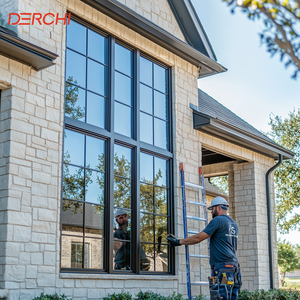
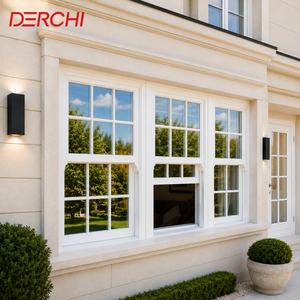
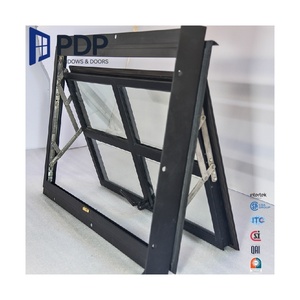
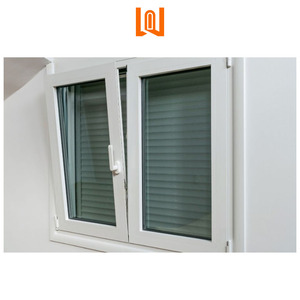
Sourced directly from our state-of-the-art extrusion and magnetron coating facilities, these certified fenestration and glazing units are precision-engineered for commercial, multi-family, and industrial projects across Mexico.
In modern architectural fenestration, glass is no longer merely a transparent physical barrier—it functions as an active thermal filter. For commercial developers, industrial architects, and residential builders operating in Mexico, managing solar energy influx while preserving visible light transmission is critical to meeting statutory building energy performance metrics. As a premier China Low-E glass manufacturer operating with local supply chain integration and manufacturing hubs in Mexico, our facility utilizes advanced off-line Vacuum Magnetron Sputtering Vapor Deposition (MSVD) technology to engineer high-selectivity spectrally reflective glass units.
Low-Emissivity (Low-E) coatings consist of microscopically thin, multi-layer stacks of silver (Ag), dielectric metal oxides (such as zinc oxide and tin oxide), and protective capping layers deposited directly onto float glass substrates. While standard clear float glass exhibits an emissivity coefficient ($\epsilon$) of approximately 0.84, our advanced triple-silver Low-E glass packages (such as LoĒ³-366 equivalent technologies) reduce thermal emissivity to below $\epsilon = 0.02$. This drastically inhibits long-wave far-infrared thermal radiation transfer through the insulated glass unit (IGU).
By strategically positioning triple silver layers within the MSVD stack, our Low-E glass reflects near-infrared (NIR) solar energy without compromising natural daylight, achieving SHGC ratings down to 0.22.
Integrated warm-edge spacer systems combined with 90%+ Argon gas fill reduce conductive thermal transfer, delivering winter and summer U-Factors as low as 0.24 Btu/h·ft²·°F (1.36 W/m²K).
Blocking up to 95% of harmful ultraviolet radiation (280nm - 380nm) prevents interior fabric fading, furniture degradation, and material breakdown in high-insolation Mexican environments.
Selecting the correct glazing package requires matching thermodynamic properties with regional climate conditions. Below is a detailed performance comparison of our standard dual and triple-pane magnetron sputtered Low-E glass assemblies.
| Glazing Package Configuration | Visible Light Transmittance (VLT) | Solar Heat Gain Coefficient (SHGC) | U-Factor (NFRC / Imperial) | Light-to-Solar Gain (LSG Ratio) | Recommended Regional Application |
|---|---|---|---|---|---|
| Single Silver Low-E (Passive Solar) | 74% | 0.62 | 0.32 Btu/h·ft²·°F | 1.19 | High-altitude mountain zones (e.g., Toluca, Puebla) |
| Double Silver Low-E (Solar Control) | 68% | 0.38 | 0.28 Btu/h·ft²·°F | 1.78 | Central Highlands & Temperate Urban (Mexico City, GDL) |
| Triple Silver Low-E (LoĒ³-366 Equivalent) | 64% | 0.22 | 0.24 Btu/h·ft²·°F | 2.90 | Northern Arid Deserts & Coastal Resort Belts (MTY, Cancún) |
| Laminated Acoustic Low-E (PVB/SGP) | 58% | 0.25 | 0.25 Btu/h·ft²·°F | 2.32 | Urban High-Rise, Airport Zones & Coastal Hurricane Regions |
As Mexico tightens compliance under energy performance regulations including NOM-008-ENER (energy efficiency for non-residential building envelopes) and NOM-018-ENER (thermal insulation materials), specifying high-efficiency Low-E glass has shifted from a premium option to a mandatory engineering requirement. Mexico’s complex geography encompasses diverse microclimates requiring tailored fenestration strategies:
Characterized by extreme diurnal thermal swings and intense ambient heat exceeding 40°C during summer months. Projects in these industrial hubs demand extremely low SHGC values (≤ 0.24) to reduce peak HVAC refrigeration loads by up to 35%, significantly cutting industrial electricity expenditures under CFE commercial tariffs.
Subject to high humidity, continuous marine salt spray, intense solar radiation, and severe tropical storms. Our glass packages for coastal Mexico feature heavy-duty tempered laminated Low-E units sealed with structural silicone (Dow Corning 983) and corrosion-resistant warm-edge spacers, complying with Miami-Dade hurricane impact standards.
Elevations above 2,000 meters experience elevated ultraviolet exposure paired with moderate daytime temperatures and cool nights. Glazing systems in these urban office towers require balanced VLT (>60%) with sound-attenuating PVB interlayers (STC ratings of 38+) to dampen dense city noise while maintaining indoor visual comfort.
Navigating modern supply chain challenges requires a manufacturing partner capable of delivering uncompromised quality, competitive pricing, and local agility. As a premier Chinese manufacturer of advanced Low-E glass and fusion-welded fenestration systems with dedicated warehouse infrastructure and customer support teams across Mexico, we eliminate intermediary markups while offering factory-direct warranty coverage.
We own and operate every stage of production—from raw vinyl profile extrusion and MSVD glass magnetron coating to precision automated fusion welding and robotic IG assembly. By maintaining absolute control over manufacturing tolerances, we eliminate component mismatch and ensure perfect frame squareness.
Our logistics network is fully optimized for cross-border nearshoring dynamics under T-MEC / USMCA protocols. With consolidated shipping, customs clearance handling in Manzanillo, Veracruz, and Laredo, and regional buffer inventory in Mexico, we guarantee predictable delivery schedules for large commercial schedules.
Whether fulfilling retrofit replacement contracts or multi-story architectural curtain walls, every window sash and glass lite is fabricated to exact field dimensions in 1/8-inch (3mm) increments. This eliminates the need for oversized trim filler strips or structural framing modifications on site.
Submit your architectural window schedule, elevation drawings, or specification requirements. Our technical engineering team in Mexico will provide line-by-line thermal performance calculations, NFRC data sheets, and direct factory pricing within 24 hours.