Engineered to excel in Northern East Asia's rigorous sub-zero winters, coastal monsoons, and high-density urban environments. Below are 8 flagship architectural entry door systems exported directly from China's leading manufacturing facilities to South Korean residential and commercial developments.
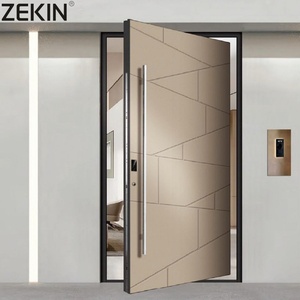
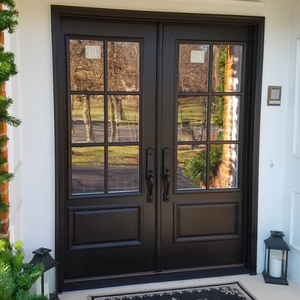
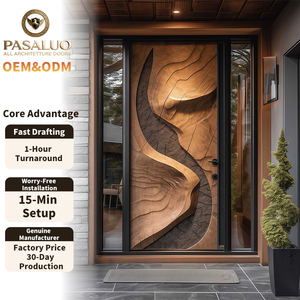
South Korea’s construction sector—ranging from high-density multi-family residential complexes in the Seoul Capital Area (Gyeonggi/Incheon) to ultra-luxury private villa developments in Jeju and Busan—faces strict compliance hurdles. The convergence of severe winter climates, rigorous national energy efficiency mandates (Korean Building Energy Efficiency Rating System), and a sophisticated consumer demand for high-security smart home integration requires entrance systems that exceed standard fenestration benchmarks.
As a leading China entry door exporter, our engineering and manufacturing ecosystem bridges the gap between cost efficiency and architectural precision. Chinese door exporters have evolved beyond basic OEM fabrication to become co-engineering partners for Korean importers, general contractors, and trade distributors. By leveraging state-of-the-art multi-axis CNC machining, automated fusion welding, thermal-break extrusion technology, and fluorocarbon surface treatments, Chinese manufacturers supply entrance doors that seamlessly integrate with Korean digital mortise lockstandards (such as Samsung, Gateman, and EZON cutouts) while meeting strict thermal transmittance ($U$-Factor) targets.
Building materials exported to South Korea must address unique microclimatic stresses and structural typologies. Here is how specialized entry door engineering meets localized site demands.
South Korean homes utilize underfloor radiant heating (Ondol). When indoor temperatures reach 22°C while outdoor temperatures drop to -15°C in Gangwon-do or Seoul, uninsulated metal doors suffer from thermal bridging, causing interior condensation and frost build-up. Our thermal-break aluminum and cast-aluminum armor doors incorporate polyamide (PA66GF25) thermal strips and EPDM triple-gasket seals. This maintains frame surface temperatures above dew point, eliminating condensation risk and conserving indoor radiant warmth.
Over 85% of modern Korean residences utilize push-pull biometric smart locks rather than mechanical keys. Exporting entry doors to Korea requires factory-milled precision cutouts for dual-mortise push-pull locksets, fingerprint sensors, and integrated wiring channels for IoT video doorbells. Our automated CNC routing guarantees 0.5mm mortise tolerance, ensuring drop-in compatibility for Korean hardware brands without requiring destructive jobsite modification.
Coastal developments along Jeju Island, Busan, and Incheon endure extreme wind pressures during summer monsoons and constant marine salt mist. Our heavy-duty cast aluminum entry doors and fluorocarbon (PVDF) coated aluminum profile series undergo 1000-hour neutral salt spray (NSS) chamber testing. Combined with multi-point stainless steel locking pins, these units withstand wind loads up to Grade 5 (wind pressure resistance $\ge 4.5\text{ kPa}$).
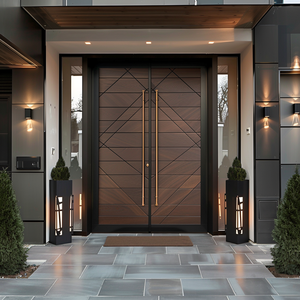
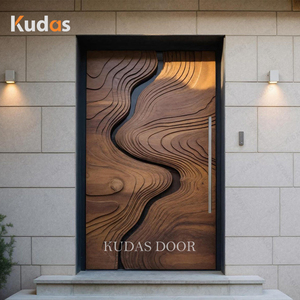
In contemporary Korean residential architecture—particularly high-end single-family housing in Pangyo, Bundang, and Songdo—standard-sized entry doors are being replaced by high-impact visual statements. Oversized pivot doors featuring organic solid wood carvings or monolithic cast aluminum panels with concealed hydraulic hinges dominate new architectural specifications.
Cast aluminum front entry doors (8mm to 12mm thick solid slab casting) are increasingly specified for luxury villas. Their resistance to deformation, extreme structural mass, natural fire retardancy, and ability to accept deep 3D sculptural textures make them the preferred replacement for traditional steel doors.
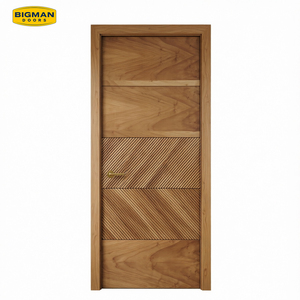
Combining the natural warmth of interior-facing solid American Walnut or Natural Oak with exterior-facing weather-resistant anodized aluminum cladding. This dual-material setup satisfies interior designer aesthetic demands while protecting the exterior from weathering.
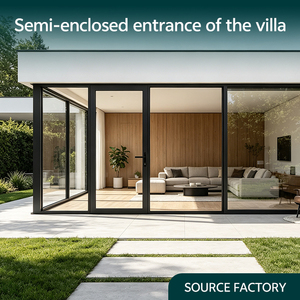
Modern entranceways utilize full-height entrance doors flanked by insulated double or triple Low-E safety glass sidelights. Utilizing LoĒ³-366 coatings with argon gas fill ensures bright, naturally lit foyers without compromising structural security or thermal envelope performance.
A comprehensive engineering comparison for B2B procurement officers, architects, and importers evaluating door categories exported from China to South Korea.
| Door Material Category | Thermal U-Value (W/m²K) | Acoustic Rating (STC/dB) | Fire Resistance Rating | Primary Korean Application | Maintenance Profile |
|---|---|---|---|---|---|
| Cast Aluminium Entry Door | 1.1 – 1.4 | 42 – 48 dB | 60 / 90 Mins (Class A) | Luxury Villa Main Entrance, Private Estates | Zero Maintenance (PVDF Coated) |
| Thermal Break Alu Casement | 1.0 – 1.3 | 38 – 44 dB | 30 Mins (Optional) | Contemporary Homes, Modern Apartments | Low (Anodized Powder Coating) |
| Alu-Wood Hybrid Security Door | 1.2 – 1.5 | 40 – 45 dB | 30 Mins | High-End Residential Interiors & Front Entry | Periodic Interior Wood Oil Refresh |
| Carved Solid Wood Entry Slab | 1.4 – 1.8 | 35 – 40 dB | Non-Fire Rated Base | Boutique Hotels, Custom Architectural Villas | Moderate (Exterior UV Clear Sealant) |
| Waterproof MDF / Composite | 1.6 – 2.0 | 32 – 36 dB | Non-Fire Rated | Multi-Family Interior Unit Entrance / Bedrooms | Low (Melamine / PVC Laminated) |
To maintain leadership as top China entry door exporters servicing Korea and global markets, our manufacturing infrastructure operates under strict ISO 9001 and ISO 14001 certified quality management systems. Every product line featured in our export portfolio undergoes a 7-stage quality assurance protocol before crating:
We utilize 100% primary T6-6063 aluminum ingots for extruded profiles and high-purity aluminum alloys for heavy cast panels. We never incorporate re-ground or scrap metal contaminants, ensuring structural tensile strength ($\ge 205\text{ MPa}$) and zero structural porosity.
Door frames undergo automated robotic fusion welding. Frame joints are miter-cut and fused seamlessly, eliminating mechanical screws or sealant gaskets at frame corners that could shrink, degrade, or leak air over decades of seasonal thermal expansion.
Units are individual-wrapped with protective anti-scratch film, corner-shielded with high-density EVA foam, and vacuum-sealed inside ISPM-15 compliant fumigation-free solid plywood crates. Labels indicate Korean jobsite opening numbers to streamline installation management.
Clear answers to essential technical, logistical, and compliance questions regarding importing entry doors from China to South Korea.
Our export entry door series are manufactured to comply with KS F 3109 (Steel and Aluminum Door Assemblies) specifications. We provide third-party laboratory test reports covering air tightness (Grade 1 or higher), water tightness, and structural wind load resistance. For energy-sensitive residential projects, we engineer thermal break profiles and Argon-filled Low-E glass units to meet South Korea's strict Energy Saving Design Standards for Buildings.
Yes. Every unit is manufactured to order down to 1/8-inch (3mm) precision tolerances. We pre-engineer lock mortise pockets, wire conduits, and strike plate cutouts specifically for popular Korean digital smart lock models (including Samsung Smart Door Locks, Gateman, Solity, and Milre). This guarantees seamless jobsite drop-in installation without additional milling or site modification.
Manufacturing lead time ranges from 15 to 25 calendar days depending on order size and customization level (e.g., custom cast aluminum molds or specialized hand-carved wood patterns). Ocean transit from main North/East China ports (Qingdao, Ningbo, Shanghai) to major South Korean ports (Incheon, Busan, Pyeongtaek) takes approximately 2 to 5 days. Total order-to-delivery lead time is typically under 30 days.
We incorporate structural polyamide (PA66GF25) thermal breaks between exterior and interior aluminum extrusions. This thermal barrier prevents outdoor freezing temperatures from transferring to interior door surfaces, eliminating condensation, frost formation, and interior wall mold growth during winter months in northern regions like Seoul and Gangwon-do.
We back our entry door exports with a comprehensive 10-Year Structural Frame Warranty and a 5-Year Sealed Glass Unit Warranty. Hardware components, seals, and surface finishes (PVDF / Anodized) are covered under a 3-Year Limited Warranty against peeling, fading, or mechanical failure under normal operational conditions.
Are you a developer, architect, contractor, or door importer in South Korea? Connect directly with our engineering team to review door schedules, custom CAD cutouts, thermal test documentation, and volume export pricing.