Direct factory supply with tropical UV-stabilized virgin vinyl, multi-chamber thermal breaks, and anti-corrosive hardware platforms.
An in-depth evaluation of thermal dynamics, coastal salt-spray resilience, subterranean termite resistance, and green building standard integration across the Indonesian archipelago.
Indonesia's tropical maritime climate presents one of the most aggressive weathering environments in Asia for building fenestration systems. With relative humidity continuously ranging between 75% and 95%, year-round ambient temperatures averaging 28°C to 34°C, and an extreme Ultra-Violet (UV) Index frequently exceeding 11+, traditional materials such as untreated timber and non-thermally broken aluminum suffer from rapid performance degradation.
Timber doors in high-humidity zones like Greater Jakarta (Jabodetabek), Surabaya, and coastal Medan suffer from swelling, warping, fungal rot, and heavy subterranean termite (Coptotermes gestroi) infestations. Conversely, standard aluminum doors conduct immense solar radiation into indoor spaces, increasing air conditioning energy consumption, while being prone to galvanic corrosion when exposed to airborne salinity in coastal resorts like Bali, Lombok, and Makassar.
CE Certified high-density Unplasticized Polyvinyl Chloride (UPVC) multi-chamber door systems solve these localized pain points. Formulated with high titanium dioxide (TiO2) loading and impact modifiers, engineered UPVC profiles deliver zero water absorption, complete chemical immunity to saline spray, and permanent termite resistance, serving as the benchmark choice for contemporary Indonesian commercial and residential developments.
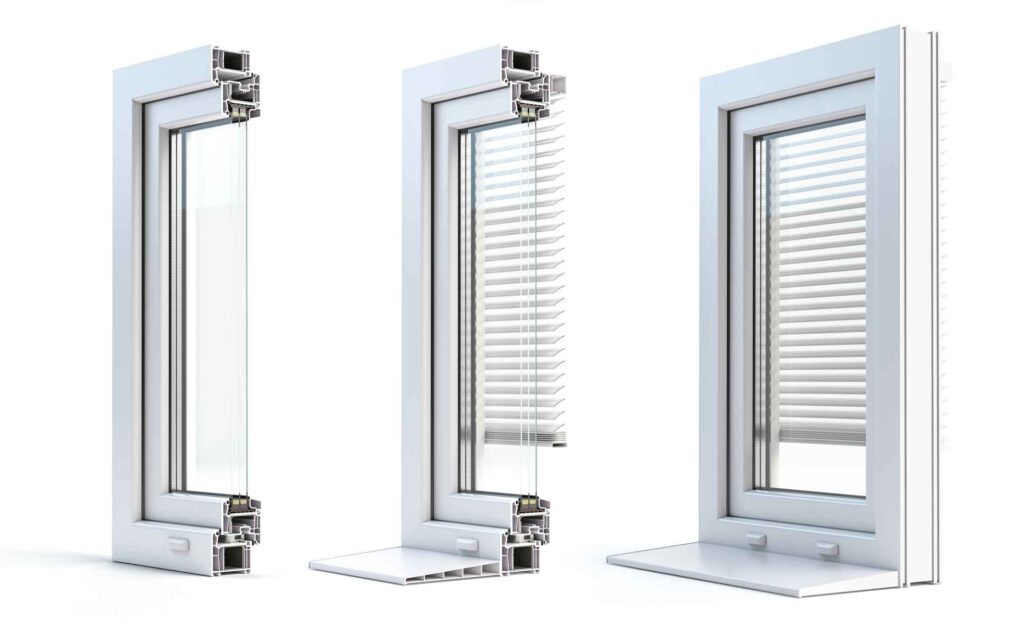
Quantitative empirical data comparing raw engineered UPVC against traditional aluminum and natural timber door structures.
| Performance Parameter | CE Certified 6-Chamber UPVC | Standard Thermal Aluminum | Indonesian Teak / Hardwood | Indonesian Code Standard |
|---|---|---|---|---|
| Thermal Conductivity (K-Value) | 0.14 W/m·K (Superior Insulator) | 160 – 200 W/m·K (Highly Conductive) | 0.13 – 0.18 W/m·K | SNI Energy Saver Targets |
| Overall Door U-Factor | 1.4 – 1.6 W/m²K | 2.8 – 3.5 W/m²K | 2.2 – 2.8 W/m²K | GREENSHIP GBCI Class A |
| Acoustic Noise Reduction (STC) | 40 – 45 dB (Double Glazed) | 25 – 30 dB | 28 – 32 dB | Urban Traffic Mitigation Standard |
| Termite & Bio-Rot Resistance | 100% Inert & Immune | Immune to Termites / Corrodes | High Vulnerability (Requires Chemical Treatment) | SNI 03-3987 Compliance |
| Coastal Salt-Spray Corrosion | Zero Degradation (EN ISO 9227) | Pitting & Oxidation Risk | Finish Degradation & Surface Rot | ASTM B117 Coastal Spec |
| UV Yellowing Stabilization | Delta E < 2.5 (After 6,000h Tropical Test) | Anodized Fading / Chalking | Varnish Discoloration & Cracking | ISO 4892-2 Accelerated Weathering |
Targeted engineering solutions matching the micro-climates, urban density, and regional architectural codes of Indonesia.
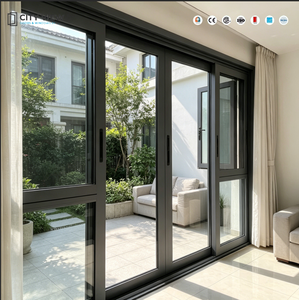
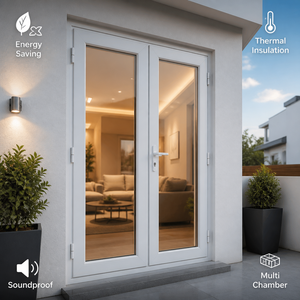
Marine-grade UPVC casement and lift-and-slide patio doors equipped with EPDM gaskets and 316 stainless steel friction hinges. Built to resist direct sea-breeze atmospheric salt spray without oxidation, maintaining effortless sliding operation while sealing against violent monsoon rainfall.
6-Chamber acoustic insulated UPVC door assemblies capable of blocking up to 45 dB of exterior traffic sound. Engineered to withstand high wind load pressures (up to 3000 Pa) on high-level apartment balconies, drastically lowering building cooling costs and fulfilling GREENSHIP GBCI energy standards.
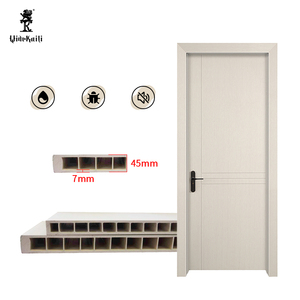
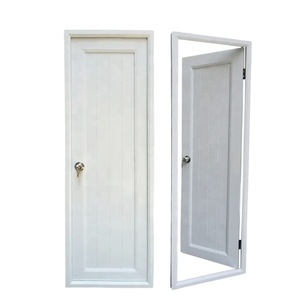
45mm thickness WPC and UPVC composite door panels designed for 100% waterproof interior deployment. Eliminates bottom-panel water swelling, mold growth, and delamination commonly experienced with wood-based MDF/HDF doors in Indonesian humid residential bathrooms.
Specially engineered low-E dual-glazed UPVC door units designed to conform with Indonesia's Ministry of Public Works regulation PERMEN PUPR No. 21/2021 on Green Buildings. Provides low Solar Heat Gain Coefficient (SHGC < 0.28) for tropical net-zero initiatives.
Analysis of regulatory mandates, consumer shifts, and economic catalysts shaping fenestration demand.
With Indonesia committing to Net Zero Emissions by 2060, regional governments in Jakarta, Bandung, and Surabaya enforce strict thermal envelope mandates. Developers are replacing energy-draining metal doors with multi-chamber UPVC profiles that prevent solar heat radiation transfer.
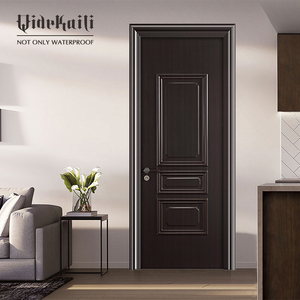
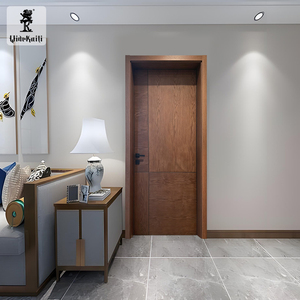
Rising prices of premium Indonesian hardwood (Teak and Merbau) alongside strict government deforestation quotas have led architects to specify UV-stabilized UPVC and WPC doors that mirror real wood-grain aesthetics without maintenance overhead.
Rapid urban density growth in Tier-1 Indonesian cities has heightened demand for high sound isolation doors. Property developers prioritize UPVC profiles integrated with multi-point locking gear to secure premises against both noise pollution and unauthorized access.
As a premier factory-direct manufacturer and exporter of CE-certified UPVC fenestration systems, we manage every step of production—from raw polymer blending to final crated export shipping.
Technical clarity on standards, customs clearance, thermal gaps, and order fulfillment for the Indonesian market.
Our UPVC door profiles are extruded in full accordance with European Standard EN 12608 (Class A wall thickness) and certified with the CE mark. For Indonesian projects, our technical profiles align directly with SNI 03-3987 for anti-termite and structural building integrity, as well as the GREENSHIP rating standard managed by the Green Building Council Indonesia (GBCI). By using multi-chamber thermal breaks and Low-E double glazing, our systems help projects achieve the required Overall Thermal Transfer Value (OTTV) benchmarks set by PERMEN PUPR No. 21/2021.
Yes. As an authorized Chinese exporter, we issue official Certificates of Origin under the ASEAN-China Free Trade Area (ACFTA Form E). This certificate allows Indonesian B2B buyers, distributors, and contractors to import our CE Certified UPVC doors under preferential 0% to 5% import duty tariffs at major ports such as Tanjung Priok (Jakarta), Tanjung Perak (Surabaya), and Belawan (Medan), significantly reducing landed project costs.
Standard UPVC profiles designed for temperate zones tend to chalk and yellow when subjected to Indonesia's constant UV Index of 10-12+. Our export profiles utilize a specialized tropical compound loaded with >4.5 phr (parts per hundred resin) of Rutile-grade Titanium Dioxide (TiO2) and high-impact organic stabilizers. Accelerated xenon-arc weather testing confirms color stability with a Delta E < 2.5 after 6,000 hours of direct high-temperature exposure.
Because UPVC has a coefficient of linear thermal expansion of approximately 6 x 10⁻⁵ /°C, proper installation requires engineered perimeter clearance gaps. For a standard 2.2-meter door sash installed in Indonesian ambient temperatures (25°C to 35°C), we recommend a perimeter expansion gap of 5mm to 8mm filled with flexible polyurethane foam and non-staining neutral silicone sealant to accommodate natural thermal movement without frame buckling.
Yes. Subterranean termites feed strictly on cellulose materials found in organic timber. Both our high-density UPVC profiles and 100% Wood Plastic Composite (WPC) door series contain zero digestible cellulose for insects. They are completely impervious to termite boring, fungal decay, and bacterial degradation, eliminating the expensive chemical soil treatment routines required for natural wood doors.
Standard fabrication lead time is 15 to 20 days upon approval of the window schedule drawings. All door units are individually protective-wrapped with PE foam, corner-edge guards, and shrink film, then packed into fumigated seaworthy wooden crates or heavy-duty steel pallets. Ocean freight transit time from Guangzhou/Shenzhen port to Tanjung Priok (Jakarta) or Tanjung Perak (Surabaya) averages 7 to 10 days, allowing seamless project scheduling.
Contact our engineering export department for full technical specifications, window schedules review, ACFTA Form E guidance, and factory-direct pricing quotes.
Get a Quote