
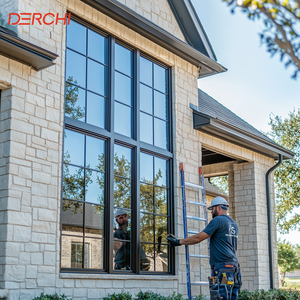
Direct factory supply of CE-certified double-glazed units, fusion-welded vinyl profiles, and thermal-break aluminum systems specified for commercial and residential developments.
Tokyo’s architectural landscape presents a demanding convergence of rigorous seismic mandates, extreme urban density acoustic requirements, and distinct seasonal microclimates. Spanning from hot, intensely humid summers to dry, cold winters driven by northern continental winds, fenestration in Greater Tokyo must satisfy both the Building Standard Law of Japan (BSLJ) and advanced sustainability criteria set by the Tokyo Metropolitan Government’s Environmental Security Ordinance.
As a certified European CE Mark manufacturer supplying international contractors, developers, and trade importers across Japan, our double-glazed window and door assemblies are precision-engineered to bridge Western energy efficiency benchmarks with East Asian structural dynamics.
Integrated EPDM gasket networks and structural silicone pocketing designed to absorb inter-story drift displacement up to 1/100 rad during seismic events without seal rupture or glass displacement.
Pressure-equalized weep drainage systems rated for positive and negative wind pressures exceeding 3,000 Pa, resisting wind-driven rain penetration during Kanto typhoon seasons.
Warm-edge TGI polymer spacers combined with high-purity 90%+ Argon gas fill prevent interior glass surface drops below dew point during Tokyo’s cold winter evenings.
Achieving Net-Zero Energy House (ZEH) status in Tokyo (Climate Zone 6) requires fenestration to deliver an overall U-value under 1.9 W/m²K, with premium residential specifications demanding U-values below 1.3 W/m²K. Our CE-certified insulating glass units (IGUs) utilize spectrally selective low-emissivity (Low-E) coatings such as LoĒ³-366 triple-silver deposition.
By vacuum-depositing three microscopic layers of pure silver between dielectric protective films, our double glazing reflects solar heat back outside while maintaining an exceptional VLT of ~64%. In winter, the long-wave radiant heat generated by indoor heating systems is bounced back into the living space, drastically reducing HVAC loads.
All units are tested under EN 1279 (Glass in Building - Insulating Glass Units) and EN 14351-1 (Windows and Doors Product Standard).
| Performance Parameter | Test Standard / Method | Standard Unit Spec | High-Performance Upgrade | Tokyo Code Target Alignment |
|---|---|---|---|---|
| Thermal Transmittance (U-Value) | EN ISO 10077-2 / NFRC 100 | 1.3 W/m²K (0.23 BTU/h·ft²·°F) | 0.78 W/m²K (Krypton Triple) | Exceeds ZEH & CASBEE Class 5 |
| Solar Heat Gain Coefficient (SHGC) | EN 410 / NFRC 200 | 0.38 (Standard Low-E) | 0.22 (LoĒ³-366 Triple Silver) | Optimized for Tokyo Zone 6 Summer |
| Acoustic Insulation (Rw / STC) | EN ISO 717-1 / ASTM E90 | Rw 34 dB (STC 35) | Rw 42 dB (Acoustic PVB Laminated) | Complies with Railway & Expressway zones |
| Air Infiltration / Permeability | EN 12207 / JIS A 4702 | Class 4 (600 Pa) | Class 4+ (Custom Dual Gasket) | A-4 Grade under Japanese Industrial Standard |
| Watertightness Under Wind | EN 12208 / JIS A 4702 | Class E900 (900 Pa) | Class E1200 (1200 Pa) | W-5 Grade Typhoon Resistance |
| Resistance to Wind Load | EN 12210 / ASTM E330 | Class C5 (2000 Pa) | Custom Reinforced (3600 Pa) | High-Rise Coastal Tokyo Bay Standards |
| Argon Gas Retention Rate | EN 1279-3 Accelerated Aging | > 90% Concentration | > 95% Automated Gas Filling | 25-Year Gas Retention Guarantee |
Tailored structural configurations designed for distinct micro-districts, building typologies, and municipal regulations.
Densely constructed luxury developments facing major arterial roads (such as the Shuto Expressway) demand maximum acoustic mitigation without compromising architectural daylighting. Our Acoustic PVB Laminated Double Glazed Windows utilize asymmetrical glass thickness configurations (e.g., 6mm outer + 12mm Argon + 8.76mm acoustic laminated inner) to disrupt noise frequency harmonics, reducing perceived street noise by up to 80%.
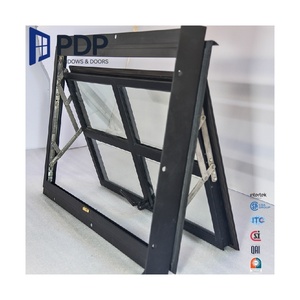
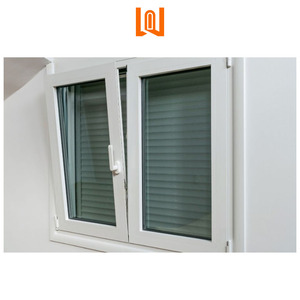
Modern commercial retrofits and narrow-lot office infills require maximum usable floor space and stringent fire-spread prevention standards under Japanese urban planning codes. Our thermal-break aluminum tilt-and-turn windows feature multi-point concealed locking mechanisms, narrow frame sightlines, and optional CE-certified fire-rated double glass combinations for perimeter boundary walls.
For custom residential villas in mountainous or wooded suburban areas surrounding Greater Tokyo, winter temperatures drop significantly, creating substantial heating demands. Utilizing our 3G Max Series with dual-seal warm-edge technology ensures condensation-free operation even when indoor humidity is maintained at comfortable living levels, protecting custom timber framing from rot.
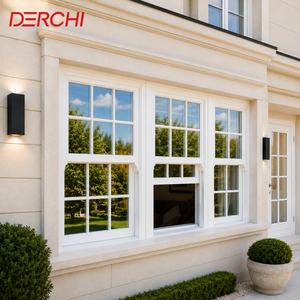
Boutique hotels and boutique lodging operators require uniform aesthetic presentation coupled with intuitive operation for global guests. Our European-style casement and double-hung sash windows feature heavy-duty stainless steel friction hinges, effortless child-safety restrictors, and custom frame anodizing finishes matching traditional or modern Japanese facades.
Unlike regional assembling vendors who source white-label components, our manufacturing enterprise controls every phase of the fabrication lifecycle.
We never mix recycled scrap material into our extrusions. Our profiles use 100% virgin uPVC compound formulated with titanium dioxide UV stabilizers to prevent yellowing, chalking, or embrittlement under intense solar radiation.
Corner joints are fusion-welded at high temperatures into a single continuous profile. This eliminates corner screws, mechanical brackets, or liquid sealant joints that shrink, crack, and leak water over extended thermal cycling.
Insulating glass units are assembled inside automated cleanrooms. Primary butyl sealing is backed by secondary structural silicone or polysulfide sealants, holding annual gas leakage rates under 0.50% (surpassing EN 1279-3 standards).
Addressing compliance, freight logistics, custom dimensions, and structural installation in Japan.
CE Certification under EN 14351-1 and EN 1279 evaluates structural wind load, watertightness, air permeability, and thermal performance using internationally recognized ISO test standards. In Japan, general contractors and architects accept CE test documentation as verification of compliance with the Building Standard Law of Japan (BSLJ) and CASBEE energy efficiency performance tiers. Our engineering team supplies complete English/Japanese test data datasheets for submission to local building authorities (Kakunin Kinsa).
Yes. Every unit is custom-built to your exact window schedule down to 1mm (1/8-inch) tolerances. Whether your project utilizes traditional Japanese Shaku grid dimensions (e.g., 910mm module pitch) or contemporary international architectural grids, our direct extrusion and CNC cutting lines fabricate frames that fit existing rough openings perfectly without requiring oversized interior trim or site-cut adapters.
For Greater Tokyo, we typically specify a 24mm to 28mm double-glazed IGU comprising a 5mm or 6mm outer pane with a triple-silver Low-E coating (such as LoĒ³-366), a 12mm to 16mm 90% Argon-filled cavity equipped with a stainless steel TGI warm-edge spacer, and a 5mm clear or acoustic laminated inner pane. This package achieves an overall U-value around 1.1 - 1.3 W/m²K while suppressing solar heat gain (SHGC ~0.22 - 0.28), preventing summer heat spikes and eliminating winter pane condensation.
Export orders bound for Tokyo Port or Yokohama Port are packed in heavy-duty, fully enclosed fumigated plywood crates. Each window unit is protected with edge corner guards, inter-leaf foam sheets, and high-density shrink wrapping. Crates are loaded into FCL (Full Container Load) containers using heavy-duty strapping and timber bracing designed to withstand maritime vessel roll and pitch motion.
We provide a comprehensive 20-Year Limited Warranty covering vinyl and aluminum structural frame integrity, fusion-welded corner joints, and hardware functionality. The insulated glass seal against internal dust or moisture ingress and argon gas seal failure is backed by a 15-Year replacement warranty. Written warranty certificates are provided per batch invoice.
Send us your window schedule, elevation drawings, or project specifications. Our fenestration engineering specialists will calculate U-values, structural wind loads, and provide a line-by-line commercial proposal for your Tokyo development.