Direct factory supply for Seoul real estate developers, general contractors, and glazing importers. Fully compliant with European CE standards and Korean Energy Efficiency criteria.
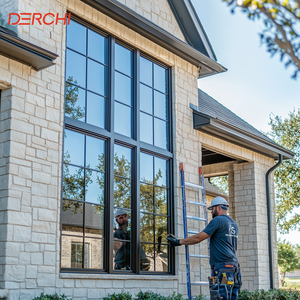
Heavy-duty crank-out casement window engineered with decorative grills, multi-point compression locking, and dual-pane tempered low-E glass for extreme winter insulation in Gyeonggi-do.

Precision spring-balanced double hung sash system. Combines classic heritage aesthetic with high-density EPDM weatherstripping to block Hwangsa (Yellow Dust) infiltration in Seoul apartments.
Custom radius arch frame paired with tinted soundproof acoustic glass. Perfect for luxury Gangnam villas and boutique commercial properties requiring elevated curb appeal and acoustic damping.
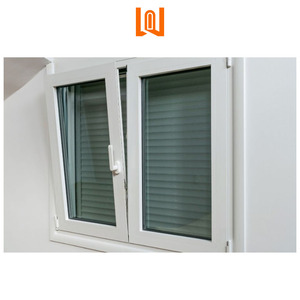
Dual-action tilt and turn mechanism for versatile micro-ventilation or total sash inward opening. Standard and custom sizes with multi-chamber fusion-welded PVC profiles.
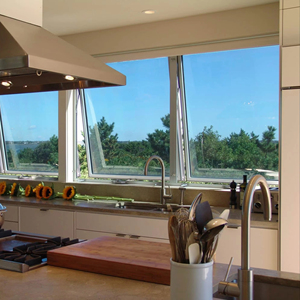
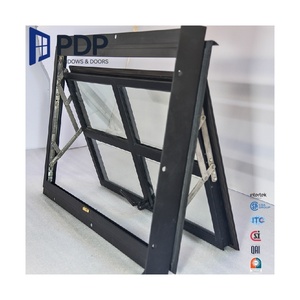
Structural top-hinged awning designed for weather-tight ventilation during heavy Korean monsoon season (Jangma). Resists high wind loads on mid-to-high rise exterior walls.
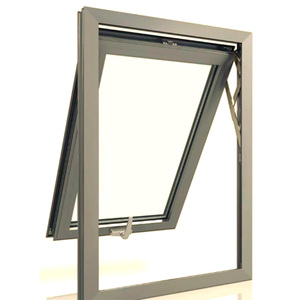
Architectural louver integration with high-efficiency glazing. Ideal for mechanical room screening, luxury residential facades, and climate-controlled sunrooms in Seoul suburbs.
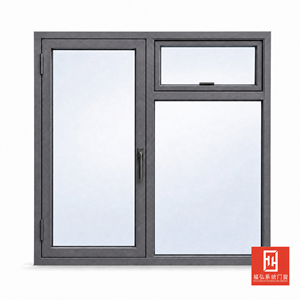
Hybrid fenestration unit featuring dual ventilation paths. Formulated specifically for bathroom, kitchen, and high-humidity indoor environments requiring rapid airflow management.
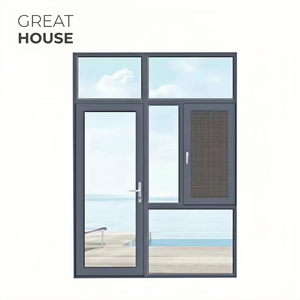
Inward-tilting bottom-hinged hopper layout optimized for secure baseline security, privacy glazing compliance, and rain-safe background ventilation in commercial project schedules.
Navigating the complex synthesis of extreme thermal variance, high-density acoustic isolation, and rigorous Korean building envelope mandates.
Seoul’s geography subjects residential and commercial building envelopes to an exceptionally harsh thermal cycle. Winters in the Seoul Metropolitan Area frequently dip below -15°C under dry Siberian high-pressure systems, creating massive interior-to-exterior thermal stress. Conversely, the summer season brings humid monsoon conditions (Jangma) with severe wind-driven rainfall and thermal spikes reaching 35°C.
Standard imported windows often fail under these extreme conditions due to differential expansion coefficients, seal degradation, and perimeter cold bridging. Our CE-certified custom window systems are engineered specifically with multi-chamber extruded profiles, glass-reinforced polyamide (PA66) thermal break bars, and triple-sealed EPDM gasket loops that maintain elastic compression across a -40°C to +80°C operating window.
Information Gain Insight: According to Korea’s Ministry of Land, Infrastructure and Transport (MOLIT) Zero Energy Building (ZEB) regulations, residential window schedules must achieve a total heat transmittance ($U_w$) under $0.9 \text{ W/m}^2\text{K}$. Our triple-pane LoĒ³-366 argon-filled units exceed this standard with certified values down to $0.78 \text{ W/m}^2\text{K}$.
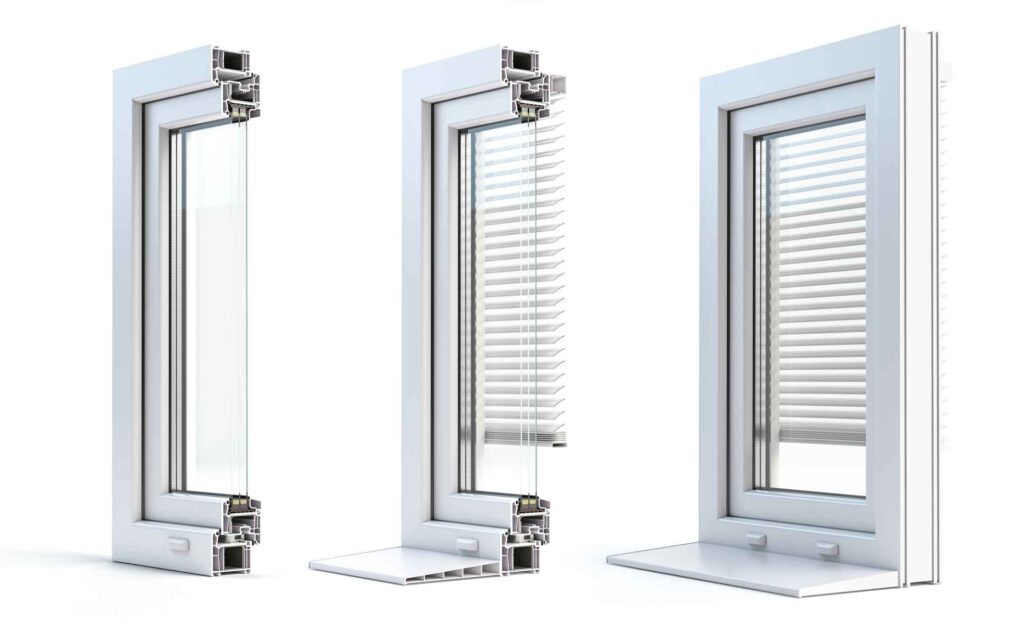
Comparative structural and thermal parameters validated through independent third-party laboratory testing.
| Performance Parameter | CE Test Standard | Our Engineering Standard | Seoul Architectural Impact |
|---|---|---|---|
| Thermal Transmittance ($U_w$) | EN ISO 10077-2 | 0.78 – 1.1 W/m²K | Reduces heating load during sub-zero winters; meets K-Energy Class 1. |
| Air Permeability | EN 12207 | Class 4 (Highest Rating) | Blocks fine dust (PM2.5 / Hwangsa) and prevents cold drafts in high-rises. |
| Watertightness | EN 12208 | Class E1050 (1050 Pa pressure) | Prevents water penetration during intense monsoon downpours and typhoons. |
| Wind Load Resistance | EN 12210 | Class C5 (2000 Pa design load) | Ensures frame deflection compliance for 30+ story residential towers. |
| Acoustic Insulation ($R_w$) | EN ISO 140-3 | 38 dB – 46 dB (Laminated option) | Suppresses urban highway, subway, and high-density street noise in Seoul. |
Why Tier-1 Korean construction firms and international architectural specifiers choose our factory direct supply chain.
We extrude our own vinyl profiles using 100% virgin PVC compound without recycled scrap degradation. This guarantees zero discoloration under intense UV radiation and superior corner fusion-weld integrity.
Unlike mechanically screwed frames with leak-prone gasket joints, our vinyl frames are heat-welded into a single monolithic unit, completely eliminating air infiltration and structural corner sag over time.
Every rough opening in Seoul renovation projects presents unique structural deviations. We fabricate all window schedules to exact custom dimensions, eliminating ugly interior trim fillers and structural shimming.
Our in-house automated insulating glass line incorporates triple-silver solar control low-E coatings paired with stainless steel warm-edge spacers and 90%+ pure argon gas fill for peak solar thermal deflection.
Exporting to Busan and Incheon ports requires robust moisture control and impact resistance. Units are individually corner-protected, vacuum plastic-wrapped, and secured in fumigated heavy-duty plywood crates.
We supply full Factory Production Control (FPC) documentation, CE declaration of performance (DoP), structural wind load calculations, and Revit/CAD files for seamless integration into Korean architectural blueprints.
Deploying specialized fenestration typologies for high-density apartments, waterfront towers, and suburban luxury estates.
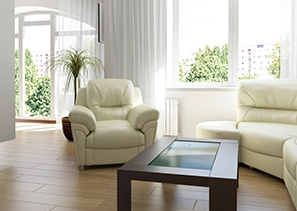
Over 60% of Seoul’s population resides in high-rise apartment complexes along major arteries like the Olympic Expressway and Gangnam-daero. In these environments, fenestration units must solve two primary issues: acoustic intrusion from continuous traffic and high-altitude wind pressure.
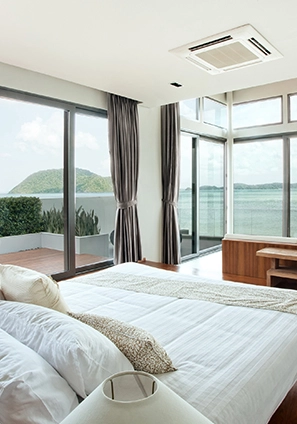
Residences located along the Han River corridor in Mapo, Yongsan, and Seongsu experience intense solar glare reflection off the water surface and high ambient moisture. Window framing and glazing packages must withstand high solar gain while providing pristine optical clarity.
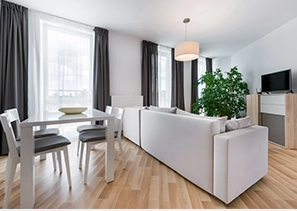
Modern luxury suburban developments in Gyeonggi Province feature complex non-rectangular architectural geometry, including arched entryways, cathedral window walls, and French patio openings.
Strategic compliance considerations for developers responding to national carbon neutrality targets.
The South Korean government has made ZEB certification mandatory for private residential buildings with over 30 units starting in 2024. Window systems represent the single largest point of thermal loss in the building envelope. Utilizing CE-certified windows with tested thermal break technology allows developers to secure ZEB Level 5 certification faster while qualifying for municipal floor-area-ratio (FAR) bonuses in Seoul.
Hundreds of apartment complexes constructed in Seoul during the 1980s and 1990s (such as those in Yeouido and Mokdong) are undergoing massive green remodeling overhauls. Replacement window schedules require narrow-frame retrofit flanges that fit existing concrete openings without destroying interior wallpaper and finish work—a core design feature of our 1733 and 5000 retrofitting series.
Essential guidance on certifications, customs clearance, shipping lead times, and structural specifications.
Yes. European CE certification under EN 14351-1 provides comprehensive testing documentation for thermal transmittance ($U$-value), air permeability, watertightness, and wind load resistance. These metrics directly correlate with South Korea’s Energy Efficiency Labeling and Standards under the Ministry of Trade, Industry and Energy (MOTIE). We supply full laboratory test reports for seamless submittal to local Korean building inspectors.
Our window profiles utilize dual-component continuous EPDM rubber gaskets combined with fusion-welded frame corners. This achieves an EN 12207 Class 4 air permeability rating—the highest achievable standard. When closed, air infiltration is reduced to near zero (< 0.1 m³/h·m at 100 Pa), preventing fine micro-particles from entering indoor living spaces during high PM2.5 events in Seoul.
Production lead time for custom-sized window schedules typically spans 15 to 22 business days depending on order volume and frame finish complexity (e.g., standard white vs. custom powder-coated anodizing). Sea freight transit from our port to Busan or Incheon Port generally takes 5 to 8 days, ensuring fast turnaround for critical construction schedules.
Absolute precision in custom geometric shapes is one of our primary factory strengths. Because we own the profile extruders and specialized radius-bending equipment, arch-top single hungs, cathedral fixed lites, and trapezoid transom windows are built directly from your submitted CAD files in 1/8-inch (3mm) increments.
We back all export shipments with a 20-Year Limited Lifetime Warranty covering the structural integrity of vinyl and thermal break aluminum extrusions, 10 years on insulating glass seal failure against internal fogging, and 5 years on mechanical operator hardware and multi-point lock assemblies. Replacement parts are dispatched via express air freight when required.
Units are packed following strict export protocols. Each window is wrapped in a protective shock-absorbing film with heavy plastic corner guards. The units are loaded vertically into fully enclosed, fumigated, sea-worthy plywood crates with interior foam wedging to eliminate internal movement during sea passage.
Send us your floor plans, elevation drawings, or architectural window schedules. Our bilingual engineering team will return a detailed itemized quote with thermal specs and structural calculations within 24 hours.