Engineered with precision fusion-welded frames, argon-filled dual/triple pane glass packages, and advanced thermal break technology compliant with international building codes.
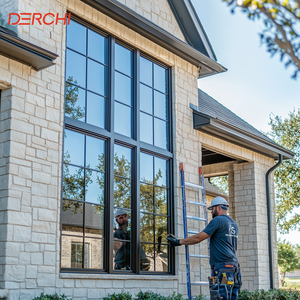
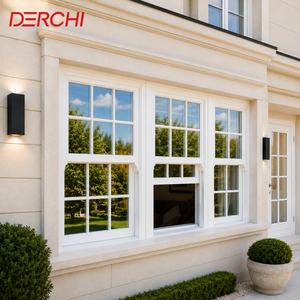
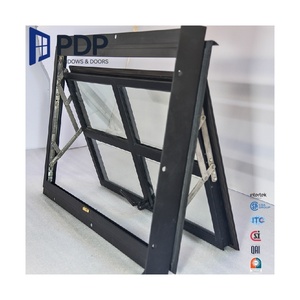
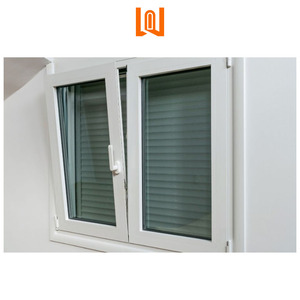
An authoritative analysis of how leading Chinese insulated glass manufacturers achieve extreme energy conservation, structural longevity, and acoustic dampening for international building projects.
Modern architectural glazing has transitioned from basic double-pane barrier systems to complex, multi-layered energy control systems. For developers, general contractors, and facade engineers sourcing from China, understanding the precise thermodynamic parameters of Insulated Glass Units (IGUs) is essential to achieving Net-Zero targets and meeting strict regional building performance mandates, such as California's Title 24, ASHRAE 90.1, and Europe's Passive House standards.
A superior IGU does not rely solely on glass thickness. Instead, it is an integrated assembly comprising premium float glass substrates, advanced magnetron sputtered Low-Emissivity (Low-E) coatings, noble gas fills (argon/krypton), warm-edge spacer technology, and dual-seal structural silicone boundaries. As a top China insulated glass manufacturer, our integrated extrusion, welding, and glazing facility maintains vertical control over every fabrication stage, mitigating thermal bridges and mechanical stress points before products leave the factory floor.
Utilizes three microscopic layers of silver to reflect solar infrared heat without reducing visible light transmittance. Delivers a Solar Heat Gain Coefficient (SHGC) as low as 0.22 while maintaining clarity.
Corners are fused at high temperatures into a monolithic frame, eliminating screws, gaskets, and joints that deteriorate under thermal cycles, achieving near-zero air infiltration performance.
Hermetically sealed cavity filled with high-purity Argon gas significantly reduces conductive and convective heat transfer across the glass unit compared to standard ambient air.
Integrates PVB or SGP interlayers alongside asymmetrical pane thicknesses to attenuate high-frequency airborne noise and low-frequency urban traffic vibrations.
Replaces traditional aluminum spacers with low-conductivity composite polymer spacers, raising interior glass edge temperatures and eliminating perimeter condensation risks.
Engineered polyamide (PA66) thermal barrier strips inside aluminum profiles block heat conduction across internal and external frame faces in extreme climates.
Certified values measured according to NFRC and EN 673 benchmark conditions across varying IGU glass configurations.
| Glazing Configuration Type | U-Factor (Btu/h·ft²·°F) | SHGC Value | Visible Light Transmittance (VLT) | STC Rating (dB) | Primary Application Segment |
|---|---|---|---|---|---|
| Standard Clear Dual Pane (6mm + 12A + 6mm) | 0.46 – 0.49 | 0.62 – 0.68 | 78% | 31 – 33 dB | Interior partitions & mild climate residential |
| Single-Silver Low-E + Argon Fill | 0.30 – 0.33 | 0.38 – 0.42 | 68% | 32 – 34 dB | Standard commercial & multi-family replacement |
| Triple-Silver Loȳ-366 + Argon Fill | 0.24 – 0.27 | 0.21 – 0.25 | 64% | 34 – 36 dB | High solar exposure, hot-desert & extreme energy codes |
| Acoustic Laminated Low-E Dual Pane (6mm + 1.52PVB + 6mm) | 0.28 – 0.31 | 0.30 – 0.35 | 61% | 39 – 43 dB | Hotels, airport corridors, urban street elevations |
| Ultra-Efficient Triple Pane (Loȳ-366 + Argon + Low-E) | 0.14 – 0.18 | 0.18 – 0.22 | 56% | 36 – 38 dB | Passive House standard & cold alpine climates |
Sourcing insulated glass and thermal fenestration directly from premier Chinese manufacturers grants enterprise buyers direct oversight of raw material selection and quality control protocols. Unlike regional distributors who assemble third-party frame kits with varying tolerances, our vertically integrated plant executes every manufacturing phase in-house:
Key technological transformations shaping how international buyers, architects, and real estate developers source insulated glazing from China.
VIG technology removes gas entirely to create an ultra-thin vacuum gap, achieving thermal performance equivalent to solid insulation (U-factors ≤ 0.10 Btu/h·ft²·°F) while reducing overall window weight.
Insulated glass units are increasingly manufactured with embedded semi-transparent solar cells, enabling facade curtain walls to generate renewable electricity without compromising natural interior lighting.
Smart IGUs featuring low-voltage electrochromic layers allow occupants to electrically adjust tint and visible light transmission on demand, optimizing HVAC loads dynamically throughout the day.
B2B buyers are prioritizing suppliers with certified Environmental Product Declarations (EPDs), utilizing electric melt furnaces and recycled cullet to minimize embodied carbon in facade materials.
Fenestration units are pre-assembled with factory-integrated flashing fins, structural silicone anchors, and motorized actuators to streamline off-site modular building construction.
Global building codes are mandating mandatory thermal break isolation and multi-point security locking, accelerating the replacement of non-thermal legacy windows worldwide.
The global insulated glass market is undergoing a structural shift. Historically viewed as a commoditized material, IGUs have become complex engineered components requiring deep chemical, mechanical, and optical expertise. Leading Chinese manufacturers are investing heavily in automated European machinery (e.g., Bystronic, Lisec IG lines), ensuring consistent edge deletion, automated spacer application, and precision gas filling.
Furthermore, global supply chain resilience has made direct factory partnerships more advantageous. By managing containerized crating, custom moisture-barrier packaging, and sea freight logistics, top suppliers reduce shipping breakage rates to under 0.1%, ensuring seamless project scheduling for large-scale multi-family and commercial developments.
Expert guidance addressing seal longevity, structural integrity, custom shapes, shipping safety, and code compliance.
Seal failure is prevented using a dual-seal system: a primary polyisobutylene (PIB/butyl) seal preventing vapor transmission, and a secondary structural silicone or polysulfide seal securing mechanical strength. Molecular sieve desiccant inside the spacer adsorbs residual internal moisture, maintaining a dew point below −60°C.
Fusion welding melts frame corners into a continuous, monolithic piece, eliminating joint gaps where air and water infiltrate. Mechanically joined frames rely on screws, brackets, and gaskets that loosen over time due to thermal expansion, compromising structural and thermal integrity.
Loȳ-366 features three microscopic silver layers that block 95% of solar infrared heat while allowing clear visible light indoors. It achieves an exceptionally low SHGC (≈0.22), substantially reducing air conditioning energy costs in hot and sunny climates.
Yes. Custom geometric shapes are fabricated using automated CNC glass cutting and custom-bent flexible spacers. Special care is taken during primary and secondary seal application to guarantee seal continuity around non-90-degree corners.
Units are separated by non-adhesive cork or foam spacers, wrapped in waterproof vacuum foil with desiccants, and packed in heavy-duty fully enclosed fumigated wooden crates with metal banding, ensuring zero movement inside shipping containers.
Yes. Premium China suppliers manufacture windows tested to NFRC, AAMA, CE, and EN1279 standards. Glazing units can be customized to meet specific regional U-factor and SHGC limits required by Title 24, Energy Star, or local egress codes.
Connect with our technical engineering team for instant line-by-line schedule reviews, custom sizing support, and direct factory pricing quotes.