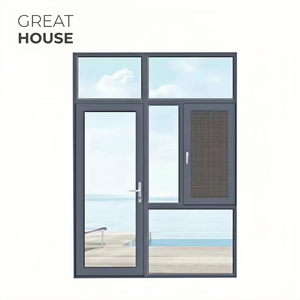
Factory-direct high-performance window units integrated with obscure, low-E, and soundproof frosted glass technologies. Custom-welded and engineered to meet global architectural standards.
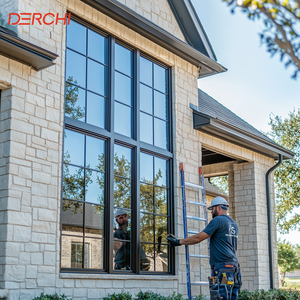
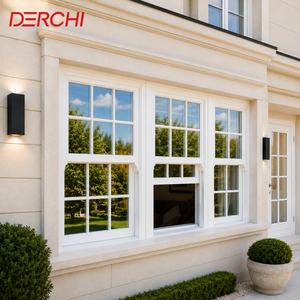
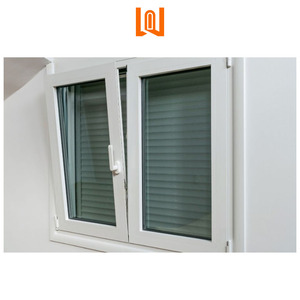
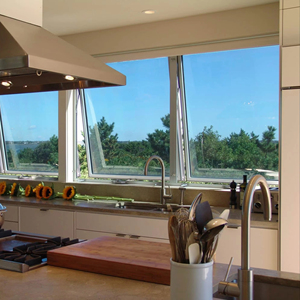
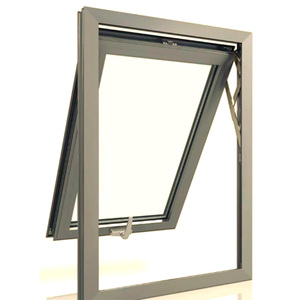
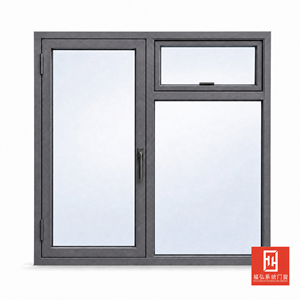
Architectural demand for translucent glazing, daylighting strategies, and visual privacy has propelled frosted glass from a decorative secondary material into a core performance specification for commercial, healthcare, and high-end residential real estate.
As building envelopes become increasingly energy-conscious and privacy-centric, architectural specifiers, curtain wall contractors, and window manufacturers face complex procurement challenges. Frosted glass—traditionally produced via chemical acid-etching or mechanical sandblasting—now encompasses hybrid ceramic frit treatments, micro-etched low-iron float substrates, and switchable electrochromic PDLC (Polymer Dispersed Liquid Crystal) smart glass technologies. Selecting the appropriate primary manufacturer requires an in-depth understanding of substrate glass quality, surface roughness metrics ($R_a$), thermal performance integration ($U$-factor and Solar Heat Gain Coefficient), sound transmission loss (STC/OITC), and structural compliance under AS 1288, ASTM C1048, and EN 12150 standards.
Information Gain Insight: Not all frosted glass performs equally under real-world maintenance cycles. While sandblasted glass exhibits high micro-porosity leading to oil absorption and fingerprint staining, hydrofluoric acid-etched glass creates a permanently sealed satin surface with micro-grooves ($R_a < 0.4 \ \mu\text{m}$) that repels organic oils and eliminates smudging. Specifying acid-etched low-iron glass increases total daylight penetration by up to 14% compared to standard clear frosted float glass.
Our engineering board evaluated global glass primary processors and specialized converters across five core technical vectors to establish the 2025 Tier-1 Manufacturer Benchmark.
Evaluation of raw float glass base (low-iron/ultra-clear vs. standard clear float). Premier suppliers maintain Visible Light Transmittance (VLT) above 85% while providing complete visual opacity (obscure level 4–5).
Microscopic roughness metrics. Acid-etch chemical bath precision determines satin uniformity. Low $R_a$ values (< 0.5 microns) prevent dust accummulation and facilitate self-cleaning in exterior facades and wet room enclosures.
Thermal strengthening capability post-etching. Assessment of surface compression stress ($\ge 69 \text{ MPa}$ for fully tempered glass per ASTM C1048) and compatibility with EVA/PVB/SGP interlayers for hurricane and safety applications.
Detailed profile breakdown of market leaders, primary float fabricators, and specialized fenestration system integrators dominating the architectural translucent glass sector.
Saint-Gobain is the undisputed pioneer in acid-etched architectural glass through its world-renowned Satinovo Mate® series. Manufactured by subjecting premium float glass to a continuous hydrofluoric acid bath, Satinovo Mate offers an ultra-smooth, silky appearance that perfectly balances light transmission with visual privacy. Saint-Gobain excels in large-format jumbo sizes ($6000 \times 3210 \text{ mm}$) for interior office partitions, rain-screen facades, and structural balustrades.
AGC’s proprietary Matelux® product line sets the benchmark for neutral, translucent satin finishes. By applying acid treatment to low-iron Planibel Clearvision float glass, AGC eliminates the greenish edge tint common in standard glass, producing an ultra-pure white frost. Matelux glass is hydrophobic, resistant to harsh cleaning agents, and widely specified for modern interior doors, wall cladding, and high-durability exterior double-glazed units.
Guardian Glass produces SatinDecora®, a premier acid-etched glass engineered for high architectural consistency across large volume deliveries. Guardian integrates its low-E magnetron sputter coatings (such as SunGuard®) directly onto the un-etched reverse side of SatinDecora sheets, allowing architects to specify solar control and privacy within a single monolithic or insulated glass assembly.
NSG Group, under the Pilkington brand, offers Pilkington Optifloat™ Satin alongside its historic textured privacy line (Pilkington Texture Glass). Pilkington’s acid-etching line creates a delicate translucent finish that diffuses light evenly, eliminating harsh glare in office environments. Their glass can be easily laminated with acoustic interlayers to achieve STC ratings exceeding 42 dB.
Amar Engineered Products (in strategic alignment with Derchi Fenestration Systems) represents the leading vertically integrated manufacturer of custom frosted window assemblies, patio doors, and architectural glazing systems. Unlike raw float producers, Amar handles the entire conversion chain: extruding vinyl and aluminum thermal break profiles, acid-etching glass units, assembling dual/triple insulated glass packages with argon gas fill, and fusion-welding frame corners.
Amar specializes in custom 1/8-inch precision sizing for retrofit and commercial construction. Their privacy glass packages combine LoĒ³-366 solar coatings with acid-etched or laminated obscure glass, fulfilling California Title 24 energy mandates while delivering sound attenuation and structural durability backed by a limited lifetime factory warranty.
Cardinal Glass Industries is a premier North American producer of residential insulating glass units. Cardinal’s obscure and acid-etched privacy glass options are engineered specifically for high-volume window OEMs. Their glass packages feature warm-edge stainless steel Endur spacers and sealed argon gas chambers, preventing thermal leakage while offering standardized obscure patterns (Obscure #62, Pattern 62, and Satin Etch).
Schott AG dominates the technical and specialty glass market. In frosted glass applications, Schott supplies micro-etched borosilicate glass (Pyran® and Borofloat®) engineered for extreme thermal shock resistance and fire-rated privacy partitions. Their frosted borosilicate glass can withstand thermal spikes up to 450°C and is mandated in specialized laboratory, pharmaceutical, and fire-rated stairwell enclosures.
Fuyao Group is a global heavyweight in automotive and architectural safety glass. Fuyao’s architectural division fabricates automated ceramic-fritted frosted glass and large-scale sandblasted privacy panels for transit hubs, commercial skyscrapers, and sunroof modules. Their advanced tempering lines ensure zero optical distortion and tight edge tolerances.
Taiwan Glass Industry Corp. is a leading Asian manufacturer of acid-etched and low-E float glass. TG’s frosted glass products feature uniform light diffusion with superior surface hardness. Their chemical-etching facilities operate closed-loop acid filtration systems, reducing environmental impact while producing high-grade satin glass exported extensively throughout Asia-Pacific and North America.
Xinyi Glass is one of the world's largest float glass manufacturers by volume. Xinyi provides cost-effective acid-etched clear and tinted glass (bronze, grey, blue) for massive commercial development projects. Their high-capacity production lines make them a go-to supplier for large-scale procurement requiring standard frosted float glass sheets.
A side-by-side engineering evaluation of frosted glass processing techniques and their impact on physical performance metrics.
| Frosted Processing Method | Surface Roughness ($R_a$) | VLT Range (%) | Stain & Fingerprint Resistance | Tempering Compatibility | Primary Application |
|---|---|---|---|---|---|
| Chemical Acid-Etching (Satin) | 0.2 – 0.5 μm | 82% – 88% | Excellent (Non-Porous) | Pre or Post-Etch Temperable | Luxury Doors, Facades, Bathrooms |
| Mechanical Sandblasting | 1.5 – 3.0 μm | 70% – 78% | Poor (Requires Sealant) | Must Temper Prior to Sandblasting | Custom Logos, Decorative Panels |
| Ceramic Screen-Frit (Enamel) | 0.8 – 1.2 μm | 60% – 80% | High (Fired Ceramic) | Fired During Tempering Cycle | Spandrel Glass, Exterior Shading |
| Smart PDLC Switchable Film | Smooth Glazed Surface | 75% (ON) / 5% (OFF) | High (Internal Interlayer) | Laminated between Tempered Lites | Executive Boardrooms, ICU Rooms |
| Translucent PVB Laminated | Smooth Glazed Surface | 65% – 80% | High (Internal Interlayer) | Laminated Safety Glass | Hurricane Windows, Skylights |
Key innovations shaping the next decade of translucent building envelopes and smart privacy fenestration.
The traditional distinction between permanent frosted glass and clear glass is dissolving. Polymer Dispersed Liquid Crystal (PDLC) interlayers allow windows to switch from optically clear to milky frosted in less than 100 milliseconds via low-voltage power consumption (< 5 W/m²), fully integrating with building management systems (BMS).
Post-pandemic healthcare specifications mandate hygienic surfaces. Leading chemical processors are combining silver-ion anti-microbial treatments with acid-etch baths, creating continuous self-disinfecting frosted glass for hospitals, operating rooms, and high-traffic public restrooms.
With stringent global Net-Zero operational targets, developers are specifying vacuum-insulated glass (VIG) units featuring an acid-etched outer lite and low-E inner lites. This achieves center-of-glass $U$-factors as low as $0.60 \ \text{W/m}^2\text{K}$ (U-0.10) while maintaining daylight harvesting and visual screening.
Eliminate supply chain friction, lead-time bottlenecks, and warranty disputes by sourcing complete, pre-glazed window assemblies directly from factory extrusion and glazing lines.
Sourcing raw frosted glass sheets leaves contractors vulnerable to third-party cutting damage, improper thermal stress breaks, and frame sizing mismatches. Direct manufacturing partners like Amar Engineered Products control the extrusion of virgin vinyl or thermal-break aluminum profiles alongside insulated glass assembly. Every unit is custom-built in 1/8-inch increments, ensuring drop-in field installation without oversized trim fillers.
When glass failure or seal desiccation occurs in field installations, component suppliers often shift blame between the glass fabricator, frame extruder, and sealant manufacturer. Integrated sourcing provides an absolute limited lifetime warranty covering the welded frame, sash balance, locking hardware, and hermetic insulating glass seal under one contract.
Technical answers to critical questions asked by architects, general contractors, and curtain wall specifiers.
Consult with our structural glazing engineers and fenestration specialists. Submit your architectural window schedule or project elevation drawings for a line-by-line commercial estimate.