Engineered with multi-chamber fusion-welded PVC and thermal-break structural aluminum. Optimized for high structural load resistance, Title 24 compliance, and long-term acoustic isolation.
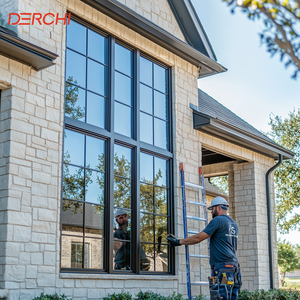
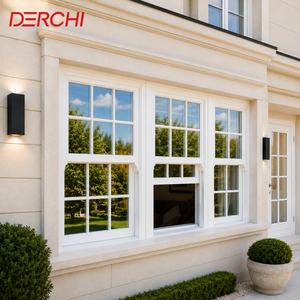
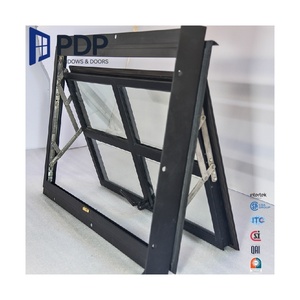
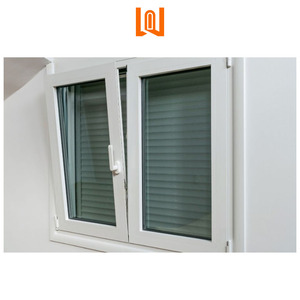
A deep dive into profile extrusion engineering, structural integrity, thermal dynamics, and fenestration longevity for commercial specifiers and B2B buyers.
In modern architectural fenestration, the frame serves as the core load-bearing and energy-managing matrix of the window assembly. Selecting a qualified custom OEM (Original Equipment Manufacturer) window frame supplier requires evaluating the structural physics, polymer composition, thermal breaks, and glazing pocket designs of the extrusions. Standard commercial windows often fail prematurely not due to glass breakage, but due to joint degradation, seal failure, frame distortion under thermal load, and water ingress through mechanically fastened corners.
Unlike lower-grade mechanical corner joins that rely on screws and liquid sealants (which degrade over thermal expansion cycles), fusion-welded vinyl corners melt the frame and sash into a single monolithic structural profile. Concurrently, for thermal break aluminum frames, using PA66GF25 (25% glass-fiber reinforced Polyamide 66) thermal barrier struts ensures that structural shear strength is maintained under wind load pressure exceeding 3000 Pa while preventing thermal bridging.
As an OEM engineering facility, our production line bifurcates into two main material pathways designed to satisfy diverse architectural specifications and regional building energy codes (such as California Title 24, IECC, and Energy Star 7.0):
Unplasticized Polyvinyl Chloride extrusions engineered with minimum 3-to-5 internal isolated chambers. Air within these chambers acts as a natural insulator, dramatically lowering the frame conductivity.
Extruded aluminum alloys treated to T6 temper, delivering exceptional yield strength. Integrated with polyamide thermal breaks to physically separate exterior and interior metal profiles.
The performance of custom OEM window frames is intrinsically linked to the glazing pocket capacity. Our custom frames accommodate glazing pockets ranging from 24mm (0.94") dual-pane to 44mm (1.73") triple-pane units. By pairing warm-edge stainless steel or structural foam spacer bars with triple-silver low-E glazing (such as LoĒ³-366) and 90%+ Argon gas retention, total window assembly U-factors drop to industry-leading performance tiers.
Technical performance benchmarking across material platforms for commercial specifiers, developers, and project engineers.
| Material Platform | Structural Capacity (DP Rating) | Typical Frame U-Factor | Acoustic Performance (STC) | Max Frame Height | Maintenance & Life Expectancy |
|---|---|---|---|---|---|
| Fusion-Welded Multi-Chamber UPVC | DP 50 - DP 70 | 0.14 - 0.22 BTU/h·ft²·°F | STC 32 - 40 (Laminated IG) | up to 2.4 Meters | Zero maintenance; 35+ Year Service Life |
| Thermal Break Aluminum (PA66) | DP 70 - DP 100+ | 0.26 - 0.38 BTU/h·ft²·°F | STC 35 - 45 (Acoustic Glass) | up to 3.8 Meters | Powder Coated AAMA 2605; 50+ Years |
| Narrow-Sightline Minimalist Metal | DP 65 - DP 90 | 0.30 - 0.42 BTU/h·ft²·°F | STC 30 - 38 | up to 3.2 Meters | Anodized / PVDF; 40+ Years |
| Aluminum-Clad Composite Frame | DP 45 - DP 60 | 0.18 - 0.25 BTU/h·ft²·°F | STC 30 - 36 | up to 2.6 Meters | Interior wood care required; 30 Years |
Anticipating regulatory shifts, supply chain evolution, and technological adoption in global B2B window framing procurement.
Procurement managers in North America and Europe are rapidly shifting focus from operational energy efficiency alone to Embodied Carbon in Building Materials. Modern RFQs now demand Environmental Product Declarations (EPDs). OEM window suppliers must utilize low-carbon recycled aluminum billets (smelted via hydro-power) and bio-stabilized, lead-free UPVC compounds to satisfy LEED v4.1 and BREEAM certifications.
The traditional back-and-forth of paper shop drawings is being superseded by direct BIM integration. Forward-thinking real estate developers and general contractors require OEM suppliers to ingest Revit / IFC 3D parametric files. This allows die modifications and CNC extrusion cutting lines to be programmed automatically, shortening custom tooling lead times from 12 weeks down to under 21 days.
With global maritime freight costs fluctuating, procurement officers are optimizing shipping density. OEM suppliers now offer Knock-Down (KD) precision-machined frame kits equipped with pre-inserted EPDM gaskets and snap-lock corner keys alongside fully welded complete units. KD shipping increases container loading capacity by up to 250%, substantially decreasing landed per-unit freight costs.
Next-generation material science, structural engineering, and smart integration transforming the fenestration landscape.
As modern building architectures lean toward larger glazed openings, floor-to-ceiling glass elevations, and extreme climate resilience, OEM window frame manufacturing is undergoing a technical renaissance. Below are the key technological advancements shaping modern framing systems:
To achieve Passive House (PHI) standards without creating excessively thick, cumbersome window profiles, factories are integrating silica aerogel insulation strips into the internal air chambers of aluminum and vinyl extrusions. Aerogel possesses thermal conductivity values as low as 0.014 W/m·K, enabling ultra-slim window frames to reach standard U-factors under 0.12 BTU/h·ft²·°F.
The market demand for minimalist interior and exterior sightlines has driven the evolution of structural silicone glazing channels. OEM frame designs now incorporate specialized anodized surface channels that allow structural silicone sealants (such as Dow Corning 983) to bond the glass directly to the hidden sub-frame. This transfers wind load forces evenly across the glass pane, eliminating bulky exterior retaining beads.
With electrochromic dynamic glass (tint-on-demand) and Building-Integrated Photovoltaic (BIPV) windows gaining traction, OEM frame suppliers are re-engineering profile cross-sections. Internal structural channels now feature dedicated water-isolated wiring conduits, micro-junction box alcoves, and concealed contact sensors to streamline installation by electrical contractors on-site.
Vertical integration, stringent quality control, and scalable production tailored for global distributors and large-scale builders.
We own and operate our profile extrusion dies, fusion welding stations, and automated insulating glass lines under one roof. By avoiding third-party profile purchasing, we guarantee consistent alloy/PVC purity, color matching across batches, and precise dimensional control.
Every OEM frame design undergoes physical testing for Air Infiltration (ASTM E283), Water Penetration Resistance (ASTM E331), and Structural Performance under Uniform Deflection (ASTM E330). Certifications are available for project submittals.
We manufacture custom sizes in 1/8-inch increments directly from shop drawings. Whether your project calls for classic rectangular openings, Gothic arches, trapezoids, or heavy-duty multi-slide patio door tracks, our tooling lines accommodate your schedule.
Essential insights for procurement officers, architects, and importers ordering custom OEM window framing systems.
Yes. Every unit is built to order in 1/8-inch (3.17mm) custom increments. Because we extrude and fabricate profiles in-house, custom rough openings, arched tops, trapezoids, and stacked window assemblies are produced without requiring oversized trim or structural fillers on-site.
Fusion welding utilizes heat to melt the vinyl frame and sash corners into a monolithic, homogenous plastic joint. Mechanical corners rely on screws, brackets, and injected sealants which expand and contract at different rates, eventually drying out, leaking air/water, and sagging under glass weight.
Our frame pockets accommodate standard dual-pane insulated units (clear or Low-E with argon fill), triple-pane LoĒ³-366 glass packages for hot/desert climates, frosted obscure privacy glass, laminated soundproof glass (STC 40+), and tempered safety glass for door-adjacent openings.
All OEM orders are individually labeled by architectural opening number, wrapped in protective foam film, corner-guarded, and secured into heavy-duty fumigated wooden crates or steel-framed export pallets. This prevents transit scratching, racking, and frame deformation.
Our thermal break aluminum and multi-chamber vinyl frames are engineered to pass North American NFRC ratings, U.S. ENERGY STAR 7.0 requirements, California Title 24 prescriptive energy codes, and European CE EN 14351-1 fenestration standards.
Standard production runs using existing extrusion dies take approximately 15 to 25 business days. For fully custom profile extrusions requiring dedicated die tooling, initial sample prototyping takes 21 days, followed by immediate mass production upon CAD sign-off.