Explore our export-ready architectural fenestration solutions engineered for residential, commercial, and multi-family construction projects worldwide.
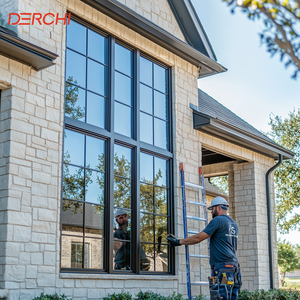
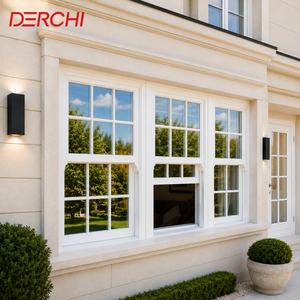
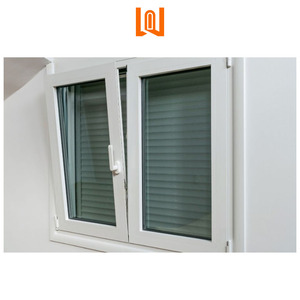
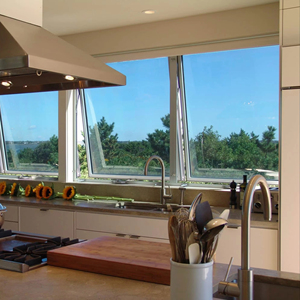
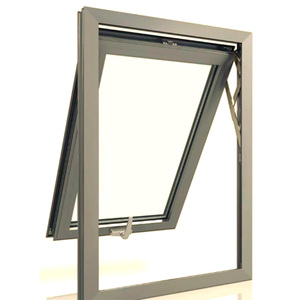
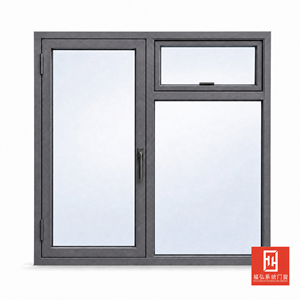
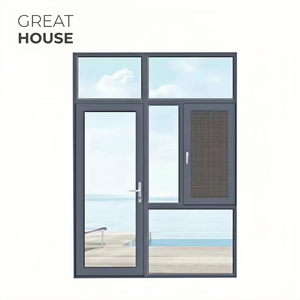
In modern architectural design, fixed windows (picture windows) serve as the fundamental backbone for building envelopes requiring maximum structural integrity, daylight penetration, and uncompromised thermal efficiency. Unlike operable fenestration units—such as casement, single-hung, or sliding systems—fixed picture windows eliminate mechanical hinges and weather-stripping friction joints, creating a completely sealed static barrier against moisture intrusion, wind pressure, and energy transfer.
As global building codes enforce increasingly stringent energy targets (such as North America’s Title 24, ENERGY STAR® 7.0, and Europe’s Passive House standards), specifying high-performance fixed windows directly from OEM Chinese manufacturers has transitioned from a cost-reduction tactic into a strategic architectural advantage. Leading Chinese factories combine advanced aluminum extrusion, precision thermal break polyamide strip insertion (PA66-GF25), automated robotic double/triple insulating glass glazing, and strict CNC milling tolerances.
Information Gain Insight: Selecting a fixed window supplier in China requires evaluating structural frame deflection limits (L/175 or L/240 under design wind load), thermal insulation break configurations, structural silicone sealant bonding, and low-emissivity (Low-E) glass coating specs (such as triple-silver LoĒ³-366 with argon gas fill).
A superior fixed window system is far more than glass held inside a metal or vinyl frame. The technical performance depends on precise structural engineering and material selection:
Deep supply chain integration, automated robotic manufacturing, and rigorous testing protocols deliver high-end architectural fenestration at scale.
Top Chinese fenestration factories control the complete production cycle: profile extrusion die creation, alloy anodizing, powder coating, thermal break assembly, IG glass tempering, and final unit framing under one unified quality management system (ISO 9001).
In-house glass processing lines equip fixed picture windows with magnetron sputtering Low-E glass (double and triple-silver coatings like LoĒ³-366), solar control tinted glass, laminated soundproof glass, and self-cleaning coatings tailored for diverse climate zones.
Direct export configurations meet North American NFRC thermal standards, AAMA structural specs, Florida Hurricane Impact requirements (HVHZ), European CE/EN 14351-1 criteria, and Australian AS2047 fenestration standards.
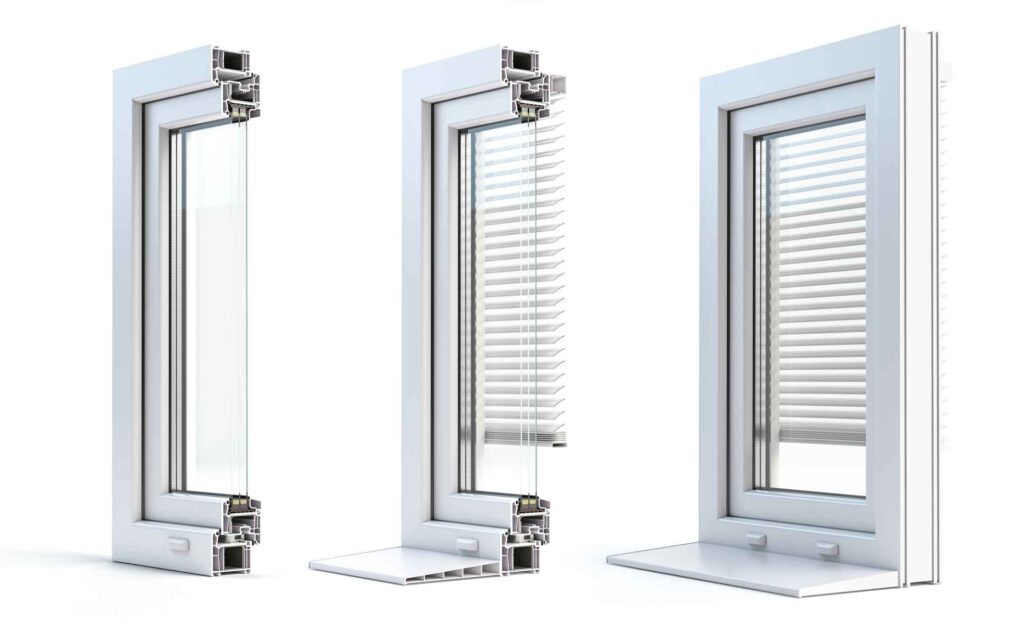
Building envelopes demand fenestration systems that resist extreme environmental pressure. By specifying direct-factory fixed windows, engineers achieve large architectural glass spans while maintaining low overall U-factors (U-values as low as 0.16 to 0.24 BTU/h·ft²·°F).
Our OEM manufacturing facilities utilize high-precision German CNC double-head cutting saws, automated corner-crimping machines with dual-component corner adhesive injection, and structural silicone glazing robots to ensure lifetime frame squareness and air-tight seals.
As the commercial and high-end residential real estate markets evolve, the global demand for fixed windows and combination fenestration systems is shifting toward higher performance and minimal visual obstruction. Procurement directors, facade consultants, and general contractors should align their supply chain specifications with the following key industry developments:
Modern architectural design heavily emphasizes seamless interior-exterior connection. Future fixed window systems utilize ultra-narrow visible frame profiles (sightlines under 25mm to 35mm) where the aluminum frame is recessed into the outer wall building structure. This maximized glass-to-frame ratio increases visible light transmittance (VLT) while maintaining total structural strength through structural silicone structural glazing (SSG).
The industry is rapidly advancing from standard argon-filled double glazing to Vacuum Insulated Glass (VIG) and triple-glazed units with double low-E coatings. VIG technology introduces a microscopic vacuum gap between glass panes, achieving thermal performance equivalent to solid masonry walls (U-factors below 0.10 W/m²K) in a remarkably thin profile, revolutionizing cold-climate architectural design.
Fixed picture windows occupying expansive solar-exposed building facades increasingly incorporate electrochromic smart glass and Building-Integrated Photovoltaics (BIPV). Electrochromic glazing adjusts solar heat gain coefficients (SHGC) dynamically via automated sensor control or building automation systems, dramatically reducing HVAC summer cooling loads without requiring mechanical blinds.
Leading Chinese fenestration exporters are committing to ESG (Environmental, Social, and Governance) targets by using certified low-carbon recycled aluminum billets, eco-friendly solvent-free powder coatings (Qualicoat Class 2 standard), and 100% recyclable lead-free uPVC compounds. Sourcing low-carbon windows enables developers to achieve LEED®, BREEAM®, and WELL® green building certifications.
A comprehensive engineering comparison to help project specifications match functional building requirements.
| Performance / Feature Category | Architectural Fixed (Picture) Windows | Casement & Crank Windows | Double Hung / Single Hung Windows | Hopper & Awning Combination |
|---|---|---|---|---|
| Primary Application | Living rooms, storefronts, high-rise curtain walls, daylighting lites | Bedrooms, balconies, deep airflow ventilation areas | Heritage, traditional American residential elevations | Basements, bathrooms, continuous weather protection |
| Structural Wind Load (DP Rating) | Exceptional (DP 60 – DP 100+) | High (DP 40 – DP 70) | Moderate (DP 35 – DP 50) | High (DP 40 – DP 65) |
| Air Infiltration Rate (cfm/ft²) | < 0.01 (Near Zero Leakage) | 0.02 – 0.05 | 0.08 – 0.15 | 0.03 – 0.06 |
| Thermal U-Factor (W/m²K) | 0.8 – 1.4 (Ultra Low) | 1.2 – 1.8 | 1.4 – 2.0 | 1.2 – 1.7 |
| Acoustic Performance (STC Rating) | STC 38 – 45+ (With Laminated Glass) | STC 32 – 38 | STC 28 – 34 | STC 30 – 36 |
| Maintenance Requirements | Extremely Low (No Moving Hardware) | Moderate (Hinges & Cranks lubrication) | Moderate (Balance systems & sash springs) | Low-Moderate (Top hinges) |
The glass package comprises over 85% of a fixed window's physical surface area. Achieving balance between solar heat gain reduction, high visual clarity, and acoustic insulation requires specifying engineered glass stack-ups.
By pairing double or triple-silver spectrally selective Low-E coatings with argon or krypton gas fill and warm-edge composite spacers, our factory delivers insulated glass units that reflect infrared heat rays during hot summers while trapping radiant heat indoors during freezing winters.
Procuring custom fenestration directly from Chinese factories requires a systematic, milestone-driven quality control protocol. Below is the proven supply chain execution framework utilized by international developers and importers:
The project window schedule, structural CAD drawings, and wind load specification documents are subjected to factory engineering review. CAD/BIM technicians verify rough opening (RO) tolerances, structural mullion reinforcement requirements, thermal performance targets, and egress/safety code compliance.
For custom architectural profiles, precision die tooling is created. Prototype corner cuts, aluminum profile mockups, finish color swatches (AAMA 2604/2605 fluoropolymer liquid spray or powder coating), and glass stack-up samples are produced and dispatched for physical client sign-off.
Upon shop drawing approval, mass production commences across automated CNC machining centers. Operations include precision length cutting, hardware pocket milling, weep hole slotting, polyamide strip insertion, corner assembly with two-component corner epoxy sealant, and automated structural glass glazing.
Before packing, finished fixed windows undergo strict quality testing in accordance with ISO 9001 quality standards:
Windows are cleaned, covered with protective low-tack film, fitted with corner guards, wrapped in heavy-duty shrink film, and secured into fully enclosed sea-worthy wooden crates or custom steel A-frame racks. This ensures pristine arrival after long-distance ocean shipping.
Detailed technical answers to common queries faced by architects, developers, and fenestration importers.
Send your project window schedule, elevation drawings, or specifications to receive a direct factory quotation, structural CAD review, and sample kit.
Get a Quote