Explore our export-certified fenestration systems manufactured with precision fusion-welding, multi-chambered insulating frames, and advanced low-emissivity double glass packages.
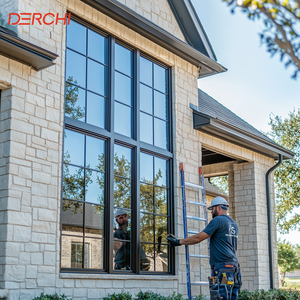
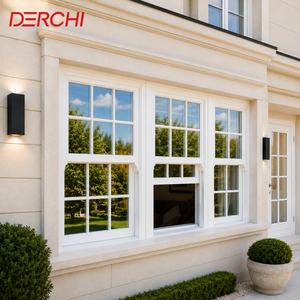
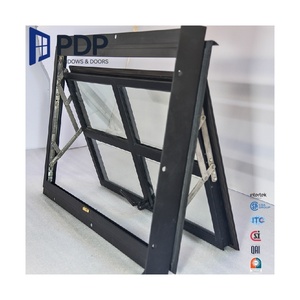
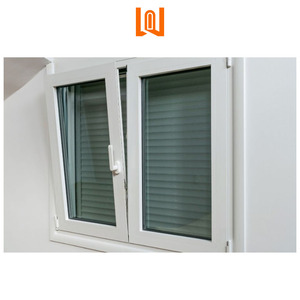
As a leading Chinese double glazing manufacturer, we operate vertically integrated extrusion plants, fusion welding lines, and cleanroom double glazing assembly suites to eliminate intermediary markups and guarantee strict quality control.
Unlike third-party fenestration assembly shops, we engineer, extrude, thermally break, and glaze every double-glazed unit under one roof. By controllingprofile extrusion dies and automated insulating glass lines, we ensure micro-level tolerance accuracy (±0.5mm) and consistent batch-to-batch color stability.
Our vinyl profiles feature 100% virgin vinyl extruded to multi-chambered structural standards, completely avoiding reground scrap. Frames undergo precision 4-point fusion welding, melting corners into a seamless, leak-proof structural monolith that outperforms mechanically screwed joints in air-tightness and water resistance.
Equipped with state-of-the-art dual and triple-pane insulating glass units (IGU), our glass packages incorporate triple-silver magnetron low-E coatings with 95%+ Argon gas fill and warm-edge spacer bars. This delivers extraordinary solar control while maintaining 64%+ daylight transmittance.
Every fenestration batch is manufactured to satisfy rigorous international building codes, including North American NFRC certifications, California Title 24 energy standards, European CE structural marks, and ISO9001 quality system directives, facilitating rapid municipal approval.
We eliminate expensive jobsite modifications by offering custom fabrication in exact 1/8-inch increments. Whether specifying complex vintage arches, trapezoid transom windows, or heavy-duty multi-slide patio systems, every order matches architectural field dimensions perfectly.
To eliminate maritime transit breakage, our logistics team utilizes custom wooden crating, corner shock absorbers, and moisture-sealed vacuum wrap. Windows arrive organized by opening schedules for seamless multi-story project installation.
Comprehensive engineering metrics across primary double glazed fenestration categories manufactured in our facility.
| Fenestration Category | Thermal U-Factor (W/m²K) | Solar Heat Gain (SHGC) | Acoustic Rating (STC) | Structural Air / Water Tightness | Recommended Applications |
|---|---|---|---|---|---|
| Crank Casement Double Glazed | 0.26 - 0.28 | 0.22 - 0.35 | STC 38 - 42 dB | Class A1 / 700 Pa Water | Luxury Villas, High-Rise Residential, Coastal Homes |
| Thermal Break Tilt & Turn | 0.24 - 0.27 | 0.20 - 0.30 | STC 40 - 45 dB | Class 4 Air / 900 Pa Water | Commercial Offices, Modern European-Style Estates |
| American Vertical Sash Double Hung | 0.28 - 0.32 | 0.25 - 0.38 | STC 35 - 38 dB | Standard Commercial / DP50 | Heritage Retrofits, Urban Multi-Family Living |
| Heavy Duty Sliding & Lift-Slide Doors | 0.29 - 0.33 | 0.28 - 0.40 | STC 36 - 40 dB | DP60 High Wind Load | Resort Patios, Commercial Balconies, Penthouse Units |
| Architectural Arched & Fixed Picture Lites | 0.22 - 0.25 | 0.18 - 0.28 | STC 42 - 48 dB | Maximum Monolithic Seal | Atriums, Storefronts, Feature Walls, Skylights |
Strategic insights for procurement directors, real estate funds, and master contractors navigating decarbonization, code shifts, and advanced material engineering.
Global architectural specifications are transitioning from assessing operational energy consumption alone toward analyzing the full life-cycle Embodied Carbon of building materials. Forward-thinking buyers are prioritizing Chinese manufacturers that utilize recycled aluminum billets, zero-waste PVC profile extrusions, and solar-powered glass processing facilities. Mandates like LEED v4.1 and BREEAM now award significant credits to developers sourcing IGUs accompanied by verified Environmental Product Declarations (EPDs).
While standard double glazing utilizes a 12mm to 16mm argon gas cavity, the next evolutionary leap combines vacuum technology within a double-glazed profile. By replacing gas cavities with a micro-pillar evacuated vacuum space (0.1mm), thermal transfer by conduction and convection drops to near zero. Procurement trends indicate rapid adoption of hybrid VIG double units for high-rise facades where curtain wall weight and frame depth are tightly constrained.
Traditional aluminum or stainless-steel warm-edge spacer bars are rapidly being replaced by direct-extruded Thermoplastic Spacers (TPS). Applied by robotic dispensers directly onto the glass pane, TPS technology creates an impenetrable gas seal with near-zero edge conductivity. This eliminates thermal bridges at window perimeters, prevents condensation in extreme sub-zero climates, and increases the service life of sealed double-glazed units beyond 30 years.
To mitigate volatile domestic distributor inflation and extended lead times, global contractors are establishing direct factory-to-site supply pipelines with Tier-1 Chinese manufacturers. By standardizing window schedules into modular opening call sizes early in the architectural design phase, procurement teams reduce unit costs by 35-50% while locking in guaranteed production windows.
An in-depth analysis of structural thermal barriers, gas insulation science, and acoustic laminate interlayers powering modern fenestration.
Aluminum fenestration relies heavily on thermal break technology. Modern profiles utilize 25% glass-fiber reinforced polyamide strips (PA66GF25) to mechanically join interior and exterior aluminum extrusions. Polyamide has an identical coefficient of thermal expansion to aluminum, preventing structural shear failure under extreme temperature fluctuations while reducing frame thermal conductivity by over 80%.
Air cavities in insulated glass transmit heat via natural convection loops. Replacing atmospheric air with noble gases increases thermal resistance. Argon gas (density 1.78 kg/m³) provides optimal performance in standard 12mm to 16mm cavities. For slim-profile retrofits requiring narrow 6mm to 8mm gaps, high-density Krypton gas (density 3.74 kg/m³) is specified to maintain low U-factors without widening frames.
Urban double glazing often demands superior acoustic attenuation (STC/OITC ratings). By combining asymmetric glass thicknesses (e.g., 6mm exterior pane + 12mm argon + 8.76mm interior laminated pane) with specialized Sound-Dampening Polyvinyl Butyral (PVB) or structural SentryGlas® (SGP) interlayers, sound wave coincidence dips are neutralized, lowering outdoor traffic noise by up to 45 decibels.
Essential guidance for commercial buyers, engineers, and project managers evaluating Chinese double glazing suppliers.
Fusion welding melts vinyl profile corners at 240°C into a solid continuous piece, completely eliminating corner seams, mechanical screws, and rubber gasket degradation. This creates a 100% airtight and watertight joint. Mechanically joined aluminum frames rely on corner cleats, screws, and sealant beads which can shrink or loosen over decades due to wind load stress and thermal cycling.
For cooling-dominated climates (Hot/Sunny zones), specify Triple-Silver Low-E (such as LoĒ³-366) on surface #2 of the double glazed unit. This reflects solar heat radiation while allowing maximum daylight, yielding an ultra-low Solar Heat Gain Coefficient (SHGC < 0.23). For heating-dominated or mixed climates, a Double-Silver Low-E on surface #3 maximizes passive solar heat gain during winter while retaining indoor radiant heat.
Standard aluminum spacer bars act as thermal highways, conducting cold temperatures directly to the interior glass edge. This creates perimeter cold spots leading to condensation, mold growth, and premature dual-seal failure. Warm-edge spacers (composed of composite polymers or stainless-steel hybrids) reduce edge conductivity by up to 70%, maintaining uniform surface temperatures and protecting the primary butyl seal integrity.
Yes. Our facility specializes in custom architectural shapes engineered to exact 1/8-inch field tolerances. Custom arching bending rigs, CNC profile cutters, and specialized glass lamination lines allow us to produce arched casements, trapezoid transom windows, bay configurations, and heavy-duty stacked curtain-wall units from the same extrusion platform as standard windows.
Internal fogging is caused by moisture vapor penetrating defective sealants into the gas cavity. We prevent this by enforcing a dual-seal barrier system: a primary continuous polyisobutylene (PIB) seal to contain argon gas, backed by a secondary structural silicone or polyurethane sealant. Additionally, automated matrix filling places high-absorption desiccant within the spacer bar to absorb any trace residual moisture during assembly.
All double-glazed units are packed into heavy-duty export-grade plywood crates, featuring individual foam dividers, rubber edge protectors, and steel banding. Crates are loaded via overhead cranes into 40ft High Cube containers equipped with internal dunnage bags and heavy-duty ratcheting straps to eliminate sea-container shift during transoceanic shipping.
Standard production cycles for custom window schedules range between 15 to 25 business days following final engineering shop-drawing sign-off. Transit times depend on destination ports: approximately 14-20 days to West Coast North America, 25-35 days to European main ports, and 10-15 days across Southeast Asia and Australia.