Explore our export-certified tempered safety glass line-up, engineered using high-precision horizontal continuous quenching lines and automated furnace technologies.
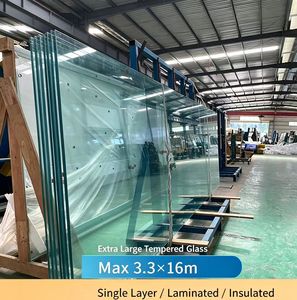
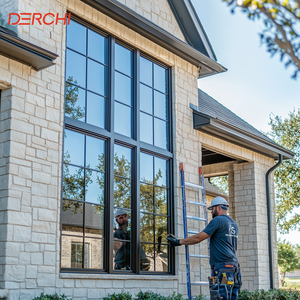
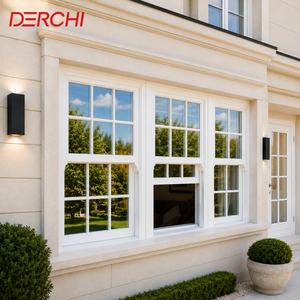
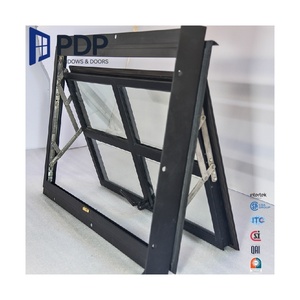
The global glass processing industry has undergone a monumental shift toward high-performance safety glazing, thermal insulation efficiency, and extreme impact resilience. As architectural designs move toward expansive glass facades, double-skin curtain walls, zero-emission photovoltaic greenhouses, and ultra-durable consumer electronics, China has established itself as the absolute nerve center of advance tempered glass manufacturing and export engineering. Modern Chinese glass processors combine state-of-the-art horizontal convection tempering furnaces with robotic CNC edge grinding, automated ceramic frit printing, and rigorous Heat Soak Testing (HST) to deliver products that strictly adhere to global building codes including SGCC (North America ANSI Z97.1), CE Mark (Europe EN 12150 & EN 14179), and AS/NZS 2208 (Australia).
This technical whitepaper examines the core physics of thermal glass strengthening, evaluates key criteria for international buyer procurement, provides sector-by-sector product analysis, highlights future manufacturing trends, and addresses critical procurement challenges such as nickel sulfide (NiS) inclusion risks, roller wave distortion control, and cross-border freight consolidation.
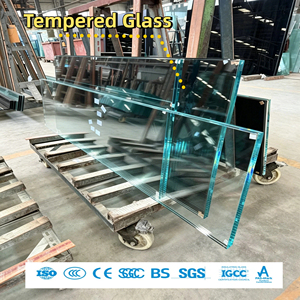
Tempered glass—frequently designated as toughened glass—is fabricated by subjecting standard float glass (soda-lime silicate composition) to controlled thermal treatments. The raw glass sheet is transported through a continuous horizontal convection furnace where it is uniformly heated to temperatures surpassing its softening point (approximately 620°C to 680°C). Upon exiting the heating chamber, the glass is subjected to rapid surface quenching via high-pressure air nozzles (chiller blast system).
This forced cooling process rapidly freezes the outer surfaces of the glass while the internal core remains hot and plastic. As the central core cools and contracts, it exerts strong compressive forces on the already hardened exterior surfaces. The resultant stress distribution creates a permanent surface compression layer (typically between 90 MPa and 150 MPa) offset by internal tensile stress.
This locked-in surface compressive stress is what grants tempered glass its extraordinary structural characteristics: tensile stress applied via external bending or impact must first overcome this compressive layer before fracture can occur. Consequently, high-grade tempered glass exhibits up to 5 times the mechanical flexing strength and thermal shock resilience of untreated annealed glass, withstanding temperature differentials up to 250°C without thermal stress failure.
| Physical Property | Standard Float Glass | Fully Tempered Glass |
|---|---|---|
| Surface Compression | < 20 MPa | 90 – 150 MPa |
| Bending Strength (fK) | 45 N/mm² | 120 – 180 N/mm² |
| Impact Resistance | Standard Base | 4 to 5x Higher |
| Thermal Shock Tolerance | 40 K ΔT | Up to 250 K ΔT |
| Breakage Pattern | Sharp, dangerous shards | Small, dice-like fragments |
| Post-Tempering Cutting | Permissible | Strictly Impossible |
Choosing the correct tempered glass specification requires aligning structural load requirements, optical clarity mandates, thermal performance parameters, and safety compliance. Below is an engineering evaluation across five strategic glass sectors:
For architectural glazing, interior partitions, frameless balustrades, and structural facades, thickness tolerance and optical flatness are critical. Premium Chinese exporters utilize low-iron float glass substrates (such as Starphire or equivalent extra-clear formulations) where iron content is suppressed below 0.015%. This eliminates the natural green tint of standard float glass, yielding maximum visible light transmittance (VLT > 91%). Furthermore, edge fabrication must precede tempering: CNC double-edger machines process flat polished edges, arrissed edges, or bevels with precise radius corners to eliminate micro-cracks that could initiate thermal stress fractures during the quenching phase.
Modern fenestration systems require integrated energy performance. Combining tempered glass with low-emissivity (Low-E) pyrolytic or magnetron sputter vacuum deposition (MSVD) coatings drastically curtails solar heat gain. Multi-layer triple-silver Low-E coatings (such as LoĒ³-366) integrated into double or triple-glazed argon-filled units achieve U-factors below 0.28 W/m²K and Solar Heat Gain Coefficients (SHGC) as low as 0.22. When integrated into vinyl or thermal-break aluminum frames (e.g., crank casement, double-hung sash, or awning configurations), these assemblies comply with North American NFRC benchmarks, California Title 24, and European Passive House energy metrics.
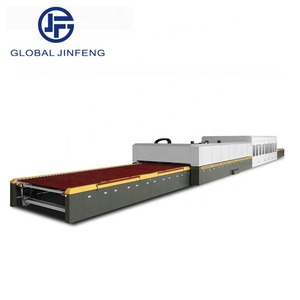
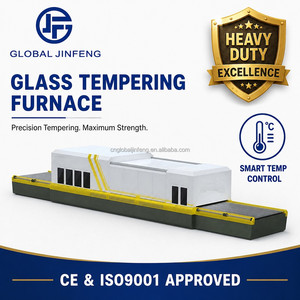
For overseas processors seeking to build domestic capacity, importing processing machinery from top Chinese equipment OEMs (such as JFG horizontal tempering furnaces) represents a strategic capex decision. Advanced convection tempering furnaces feature intelligent zoned matrix heating, ceramic roller wave compensation, and energy-efficient frequency-inverter blowers. These machines process a broad range of glass types—including soft-coated Low-E glass, patterned glass, and extra-thin 3mm glass—while maintaining localized warp distortion tolerances below 0.1% across total length.
Industrial greenhouses and utility-scale BIPV (Building Integrated Photovoltaic) systems require specialized solar glass. Fabricated using high-transmission low-iron patterned glass (prismatic/matte patterns), these sheets undergo anti-reflective (AR) chemical etching to boost photon transmittance. Tempered solar glass must resist extreme weather, high hail impact velocity (25mm ice spheres at 23 m/s per IEC 61215), and aggressive chemical environments while maintaining mechanical strength over 25+ years of exterior deployment.
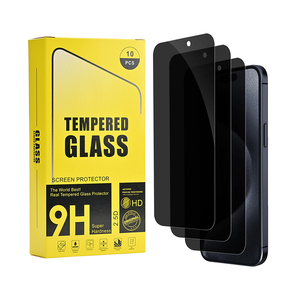
In contrast to thick architectural glass, mobile device accessories and display interfaces rely on ultra-thin chemical strengthening (ion-exchange tempering in molten potassium nitrate baths) or precision thermal quenching for 0.33mm to 0.7mm high-aluminosilicate glass. Featuring 9H Mohs scale scratch resilience, oleophobic coating treatments via physical vapor deposition (PVD), and 2.5D curved CNC edge contouring, these products deliver optical privacy filtering (anti-spy angle cutoffs at 28°) without compromising touch sensitivity.
The operational and engineering advantages that set tier-1 Chinese glass manufacturers apart in the international B2B supply chain.
Direct integration with premium float glass lines ensures flawless substrate selection free of bubbles, stones, or internal inclusions, establishing an ideal foundation for tempering.
State-of-the-art Heat Soak Test ovens accelerate the transformation of Nickel Sulfide (NiS) inclusions, eliminating the risk of spontaneous explosion in installed structural facades.
Advanced optical scanner inspection lines monitor roller wave distortion (< 0.05mm) and edge lift, guaranteeing crisp visual reflections without haze or optical warping.
Fully compliant with US SGCC (ANSI Z97.1), European CE Mark (EN 12150), Australian AS/NZS 2208, and Chinese CCC standards for seamless international building approvals.
Custom wooden crates with moisture-proof interlayers, corner guard protection, and specialized A-frame container loading maximize safety during transoceanic shipping.
Precision CNC cutting allows custom sizing in 1/8-inch increments, enabling fast sample turnaround and scalable volume production within 14-21 days.
Key technological innovations shaping the next decade of tempered glass manufacturing, export logistics, and architectural integration.
The convergence of thermal tempering and Vacuum Insulated Glass technology is revolutionary. By inserting a microscopic vacuum cavity (0.2mm space held by tiny pillars) between two sheets of tempered glass, manufacturers can achieve thermal insulation values equivalent to solid brick walls (U-factors < 0.60 W/m²K) with ultra-thin profiles.
To align with global ESG mandates and EU Carbon Border Adjustment Mechanisms (CBAM), top Chinese glass manufacturers are transitioning from natural gas furnaces to hybrid electric-hydrogen convection furnaces, significantly reducing the embodied carbon footprint per square meter of processed glass.
Tempered glass substrates are increasingly serving as carriers for conductive ITO (Indium Tin Oxide) coatings and liquid-crystal films. This allows structural windows to dynamically alter light transmission via mobile app controls or building automation systems, dramatically reducing HVAC loads.
Real-time inline laser scanners equipped with machine-learning algorithms are replacing visual inspections. These systems instantly detect micro-strain variations, roller distortion, and surface scratches during tempering, driving factory yields above 99.2%.
Expert answers to common engineering, procurement, quality assurance, and global logistics queries.
Spontaneous breakage in tempered glass is primarily caused by Nickel Sulfide (NiS) inclusions present in the raw float glass substrate. Over time, these microscopic inclusions expand when exposed to thermal cycles, inducing internal stress concentrations that can shatter the sheet. Top Chinese manufacturers eliminate this risk by performing mandatory Heat Soak Testing (HST) per EN 14179 standards. During HST, tempered glass is placed in a specialized thermal chamber heated to 290°C for several hours, deliberately inducing fracture in any vulnerable panels before they leave the factory floor.
No. Once glass has undergone the thermal quenching process, its internal tension and surface compression are locked in equilibrium. Any post-tempering modification—such as cutting, diamond drilling, or edge grinding—will instantly disrupt this stress state, causing the entire panel to explode into small granular fragments. All sizing, notch cutting, hole drilling, edge profiling (flat polish, pencil edge, bevel), and surface printing must be fully completed prior to loading the glass into the furnace.
When glass passes over ceramic rollers inside a tempering furnace at high temperatures, minor surface waves (roller wave distortion) can occur. International standards such as ASTM C1048 and EN 12150 specify acceptable tolerances. Premium exporters maintain roller wave distortion below 0.05 mm (0.002 inches) across the main area, and localized edge dip within 0.15 mm. High-end architectural specifications utilize continuous force-convection heating to maintain pristine optical reflection with virtually imperceptible distortion.
The primary difference lies in the surface compressive stress level achieved during quenching. Fully Tempered Glass requires a surface compression of 90 MPa to 150 MPa (or > 10,000 psi per ASTM C1048), rendering it 4 to 5 times stronger than float glass and causing it to break into small safety fragments. Heat-Strengthened Glass is cooled at a slower rate, producing a lower surface compression of 24 MPa to 52 MPa (3,500 to 7,500 psi). Heat-strengthened glass is twice as strong as float glass, breaks in larger pieces that remain engaged in the frame, and is specifically chosen for applications where optical flatness is paramount and safety glass code compliance is not required.
Exporters employ multi-layer protection strategies for ocean freight. Glass panels are separated using anti-fungal intermodule powder (such as lucite powder) or cork pads to prevent friction scratching and moisture-induced iridescence (chemical staining). Crates are built using solid hardwood or heavy-duty fumigated plywood, sealed with polyethylene moisture barrier foil, and secured inside steel shipping containers using heavy-duty webbing, steel strapping, and wooden chocks to withstand ocean vessel motion.
Custom fenestration solutions—including crank casement, vertical double-hung sash, awning, and sliding patio doors—can be customized with choices of frame material (thermally-broken aluminum or virgin fusion-welded vinyl), glazing setups (dual or triple insulated glass units with argon fill), low-E thermal coatings, ceramic digital print patterns, decorative grills, integrated insect screens, and customized hardware colors.
For standard flat monolithic tempered glass or insulated units, production lead times typically range from 10 to 18 working days following final approval of CAD drawings. Specialized orders—such as oversized curved tempered glass, complex silk-screen fritted units, or multi-layer structural laminates requiring Heat Soak Testing—generally require 20 to 25 calendar days. Ocean freight transport times vary by destination port (e.g., 14-20 days to US West Coast, 28-35 days to Europe/US East Coast).
Tier-1 manufacturers provide Factory Acceptance Testing (FAT) reports for every production lot. This includes ball drop impact test records, fragmentation density counts (> 40 fragments in a 50x50mm square area), surface compression gauge readings, and optical distortion scan reports. Additionally, buyers can commission third-party inspection agencies (such as SGS, TÜV, or Intertek) to conduct pre-shipment inspections covering dimensions, edge work quality, squareness, quantity, and crate stability.
Partner directly with China's leading export manufacturers for custom engineering, wholesale quotes, and verified quality assurance for your project schedules.