Explore high-performance commercial and residential window assemblies extruded, fusion-welded, and glazed to stringent international standards (NFRC, Title 24, ASTM).
A comprehensive analysis for real estate developers, facade contractors, architectural specifiers, and wholesale importers evaluating Chinese fenestration suppliers.
Leading Chinese factories utilize automated four-point CNC fusion welders for uPVC profiles, melting sash frame corners into single seamless units. Unlike mechanically joined frames assembled with screws and perimeter caulking, fusion-welded profiles eliminate corner separation, air infiltration, and water penetration across multi-decadal thermal expansion cycles.
For high-rise and luxury commercial projects requiring aluminum sash structures, top suppliers integrate high-precision PA66GF25 (25% glass fiber reinforced polyamide) thermal break strips. This structural separation breaks the thermal bridge between exterior heat gain and interior conditioned spaces, drastically lowering whole-window U-factors.
The glass package represents up to 80% of total fenestration surface area. Premium Chinese suppliers feature automated insulated glass unit (IGU) lines producing argon-filled dual- and triple-pane assemblies. Options include LoĒ³-366 triple-silver low-emissivity coatings, warm-edge composite spacers, and acoustic laminated interlayers for high-traffic environments.
Compare key physical and thermal attributes of China-sourced sash window configurations for optimal project specification.
| System Profile Type | Thermal U-Factor (W/m²K) | Solar Heat Gain (SHGC) | Acoustic Rating (STC) | Design Pressure (DP) | Primary Commercial Use |
|---|---|---|---|---|---|
| Fusion-Welded Virgin uPVC Sash | 0.24 – 0.28 (Btu/h·ft²·°F) | 0.22 – 0.35 | STC 32 – 36 | DP 35 – 45 | Residential Refurbishment, Multi-Family Housing |
| Thermal Break Aluminum Double Hung | 0.28 – 0.34 (Btu/h·ft²·°F) | 0.18 – 0.26 | STC 35 – 40 | DP 50 – 65 | Modern Commercial, Mid-Rise Urban Developments |
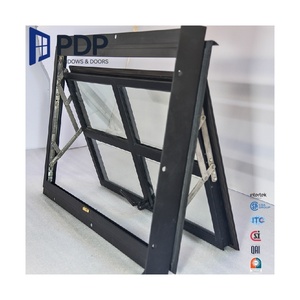
| Architectural Crank Out Casement | 0.22 – 0.26 (Btu/h·ft²·°F) | 0.20 – 0.30 | STC 38 – 43 | DP 60 – 80 | Coastal High-Wind Zones, Luxury Private Villas |
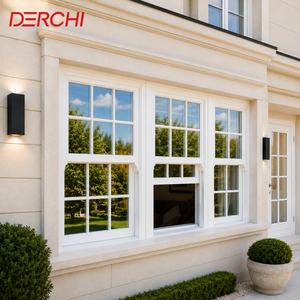
| Heritage Vertical Sliding Sash | 0.26 – 0.30 (Btu/h·ft²·°F) | 0.25 – 0.38 | STC 30 – 35 | DP 40 – 55 | Historical District Restoration, Colonial Style Homes |
*Note: Thermal and acoustic values vary based on selected IGU build-up (e.g., argon gas percentage, glass thickness, laminated interlayers). Certified NFRC / AAMA test reports available upon request.
How global energy decarbonization mandates and factory automation are reshaping sash window manufacturing and export standards.
Global building codes—including California's Title 24, Europe's EPBD, and Australia's NCC—are driving demand for ultra-low U-factor fenestration. Chinese manufacturers are rapidly transitioning from basic dual-glazed units to warm-edge, krypton-filled, triple-silver Low-E triple glazing. These systems achieve Passive House certified performance, drastically lowering HVAC operational cost over the building lifecycle.
The era of ordering standard off-the-shelf window dimensions is over. Leading OEM suppliers in China now accept direct BIM/Revit architectural files, outputting custom-extruded profiles cut to exact 1/8-inch field tolerances. This eliminates expensive field trimming, perimeter filler blocks, and structural shimming during on-site installation.
Vertical sliding sash windows traditionally suffered from air leakage at the meeting rail. Modern Chinese manufacturers incorporate spiral balance mechanisms alongside dual-cam multi-point lock systems. Concealed continuous weatherstripping provides enhanced air tightness while maintaining smooth, effortless vertical glide operations.
To eliminate shipping breakage, top suppliers employ heavy-duty wooden crate packaging with integrated corner shock absorbers and desiccated vapor barrier bags. Complete orders are palletized by floor plan or unit designation, enabling contractors to move crates straight from port to job site for immediate unboxing and fitting.
Combining vertically integrated manufacturing with stringent global compliance to deliver unmatched quality, lead time, and structural durability.
From aluminum profile extrusion dies and powder coating lines to automated uPVC profile compounding and glass tempering, controlling 100% of the manufacturing chain guarantees flawless color consistency and strict dimensional tolerance control.
Inferior uPVC window profiles utilize reground industrial scrap that yellows, cracks, and becomes brittle under intense UV exposure. Certified suppliers utilize exclusively 100% virgin vinyl compounded with titanium dioxide UV stabilizers for lifetime frame stability.
Products are engineered to meet NFRC thermal performance standards, AAMA structural load criteria, Title 24 energy mandates, and Florida Building Code hurricane impact resilience, simplifying building inspector approval across worldwide destination markets.
Direct technical answers addressing the most common questions raised by architects, facade engineers, and procurement directors.
Fusion welding uses high-temperature heating plates to melt profile joints, fusing the PVC vinyl frame and sash into a monolithic piece of solid material. There are zero mechanical screws, sealant gaps, or gaskets at the corners to loosen, degrade, or leak air over time. This process yields superior structural rigidity, eliminates corner water leaks, and maintains tight air infiltration performance over the building’s operational life.
Units are fully custom-manufactured in 1/8-inch (3mm) precise increments based on final architectural schedule specifications. Whether your project demands standard rectangular openings, arched transoms, trapezoid geometric profiles, or integrated stack units, profiles are extruded and assembled to exact site dimensions to avoid costly framing modifications on site.
For hot, sun-exposed regions, LoĒ³-366 triple-silver low-E coatings are specified to dramatically reduce Solar Heat Gain Coefficient (SHGC down to 0.22) while preserving high visible light transmittance. In colder northern climates, dual-silver Low-E coatings paired with high-purity argon gas fill maximize winter passive solar heat gain while retaining interior radiant heat.
Window units undergo a rigorous multi-stage packaging process: individual protective film on frame finishes, heavy plastic wrap, impact-resistant foam corner guards, and reinforced custom wooden crating. Crates are engineered to match ocean container dimensions (20GP / 40HQ), preventing internal movement during ocean freight transit.
Products undergo rigorous independent testing for air infiltration (ASTM E283), water resistance under static pressure (ASTM E331), and structural wind pressure performance (ASTM E330). Testing verifies structural compliance for multi-family residential towers, commercial offices, and coastal wind-borne debris zones.
Factory-direct orders include a comprehensive limited warranty covering vinyl profiles against color degradation and chalking, welded joints against structural fatigue, hardware against mechanical failure, and insulated glass units against seal failure and desiccant saturation for up to 20 years.