Sales: (323) 726-2885 [email protected] Mon–Fri 9:00–17:00 PST

China Best Laminated Glass Manufacturers & Suppliers

Architectural Whitepaper & B2B Procurement Guide: High-Performance PVB/SGP Structural Glass Engineering, Solar Heat Control & Global OEM Supply Solutions

Factory Direct Catalog

Featured Architectural & Security Laminated Glass Solutions

Precision-engineered float, tempered, and laminated glass configurations built to international structural, acoustic, and thermal performance standards.
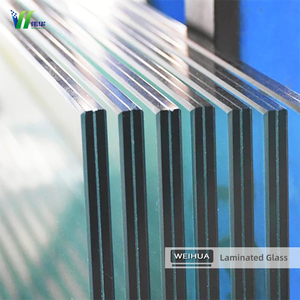
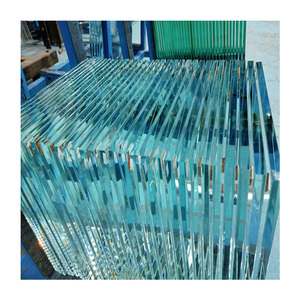
High Quality Security Glass 6mm 8mm 10mm 12mm Tempered Laminated Glass for Buildings

High Quality Security Glass 6mm 8mm 10mm 12mm Tempered Laminated Glass for Buildings

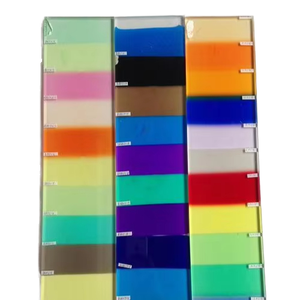
Tinted Laminated Building Glass Color Coated Laminated Glass Product

Tinted Laminated Building Glass Color Coated Laminated Glass Product

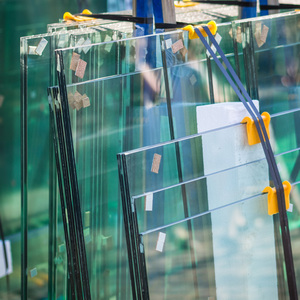
Custom Cut 6mm 8mm 10mm 12mm Tempered Toughened Laminated Building Glass

Custom Cut 6mm 8mm 10mm 12mm Tempered Toughened Laminated Building Glass

8mm 10mm 12mm Frameless Tempered Laminated Glass Terrace Panel for Stair Balcony Railing

8mm 10mm 12mm Frameless Tempered Laminated Glass Terrace Panel for Stair Balcony Railing

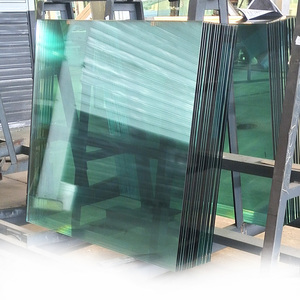
6.38mm 8.38mm 10.38mm Clear Float Glass Tempered Laminated Glass

6.38mm 8.38mm 10.38mm Clear Float Glass Tempered Laminated Glass

Laminated Glass Tinted Reflective Tempered Laminated Glass Decorative Curtain Wall Window

Laminated Glass Tinted Reflective Tempered Laminated Glass Decorative Curtain Wall Window

Safety Clear Toughened Tempered Glass Panel for Building Windows and Doors

Safety Clear Toughened Tempered Glass Panel for Building Windows and Doors

Custom Size Building Tempered Float Glass Fine Polished Edge Tempered Transparent Glass

Custom Size Building Tempered Float Glass Fine Polished Edge Tempered Transparent Glass

STC 42+
Acoustic Sound Reduction
99.9%
UV Radiation Interception
5x
Flexural Mechanical Strength
0.0%
Delamination Defect Target
Industrial Rigor & Capabilities

Why Premier Developers Partner with China’s Leading Glass Manufacturers

In modern architectural fenestration and structural facade engineering, laminated safety glass is no longer a simple commodity. It is a critical structural element that dictates envelope safety, thermal envelope integrity, and occupant comfort.

Vertical Integrated Manufacturing

From raw float glass inspection to automated CNC edge grinding, cleanroom lamination, and high-pressure autoclave curing, full vertical integration guarantees zero micro-cracks and perfect edge alignment across large-scale batches.

SGP & Structural Interlayer Mastery

Specialized processing of SentryGlas® (SGP) ionoplast interlayers provides 5x the tear strength and 100x the rigidity of traditional PVB, ensuring structural post-breakage load integrity for frameless glass fins and overhead canopies.

Class 10,000 Dust-Free Cleanrooms

Lamination assembly under strictly controlled temperature (18-22°C) and humidity (<28% RH) cleanroom environments prevents bubble formation, dust inclusions, and long-term moisture delamination.

Global Safety Standard Certifications

Full compliance with EN 14449 (CE Europe), SGCC / ANSI Z97.1 (USA), AS/NZS 2208 (Australia), and ISO 9001 quality management systems. Fully backed by batch-traceable test certificates.

HST (Heat Soak Testing) Protocols

Optional Heat Soak Testing in accordance with EN 14179 eliminates the risk of spontaneous toughened glass breakage caused by Nickel Sulfide (NiS) inclusions in high-rise curtain walls.

Custom Export Crating & Consolidation

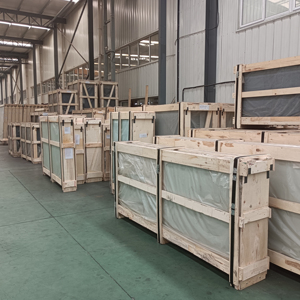
Heavy-duty fumigation-free plywood crates with inter-leaf protective powder or cork pads ensure zero glass scratching during trans-oceanic freight and rough site handling.

Technical Insights

Interlayer Material Science: PVB vs. SGP vs. EVA

Selecting the correct interlayer polymer dictates long-term deflection, edge stability, yellowing resistance, and safety post-failure behaviors in architectural installations.

Performance Characteristic Standard PVB (Polyvinyl Butyral) SGP (SentryGlas® Ionoplast) EVA (Ethylene Vinyl Acetate)
Tear Strength (MJ/m³) 36 - 50 300 (5x Strength) 18 - 30
Young’s Modulus (MPa) 1.5 - 3.0 (Flexible) 300 (100x Stiffness) 2.0 - 5.0
Post-Breakage Structural Integrity Fails under self-weight when broken Remains upright under design load Moderate sagging
Open Edge Weathering & Moisture Sensitivity Moderate (Requires edge sealing in damp environments) Impervious (Ideal for open edges) High moisture resistance
Yellowness Index (YI) Slight yellowing over 10-15 yrs (YI ~ 1.5) Ultra-Clear (YI < 0.5) Varies by formulation
Primary Architectural Application Standard windows, doors, interior partitions, STC acoustic glass Frameless glass balustrades, glass fins, canopies, hurricane zones Interior decorative glass, solar panels, smart glass laminates
Market Intelligence

Future Procurement Trends in Architectural Laminated Glass

As global carbon neutrality targets tighten and building designs push for maximum transparency, international glass sourcing strategies are undergoing structural shifts.

1. Standardisation of Ultra-Clear Low-Iron (Optiwhite) Base Glass

Architects are moving away from standard clear float glass, which exhibits a greenish edge hue caused by ferric oxide impurities. Procurement schedules for commercial tower facades and museum-grade glazing now heavily mandate Low-Iron Laminated Glass (Iron content < 0.015%). Combined with SGP interlayers, ultra-clear laminated glass provides neutral color rendering, maximum daylighting (VLT > 89%), and minimizes heat absorption across multi-layer makeups.

2. Integration of Solar-Control Triple-Silver Low-E Coatings inside Laminated IGUs

Future-proof architectural specifications combine security lamination with thermal performance. Modern double and triple-glazed units (IGUs) utilize a laminated inner lite paired with a Triple-Silver Low-E coated outer lite (e.g., Solarban 60/70 equivalent). Positioned on surface #2 or #3, this hybrid build blocks up to 78% of infrared solar radiation (SHGC < 0.23) while providing anti-intrusion security meeting EN 356 Class P4A standards.

3. Surge in Demand for Frameless Structural Balustrades & Canopy Engineering

Urban architectural aesthetics demand uninterrupted views. Structural engineers are shifting from framed glass railings to top-mounted channel or point-fixed frameless SGP laminated balustrades (e.g., 8.8.4 or 10.10.4 SGP configurations). Procurement teams must ensure their supplier possesses advanced CNC waterjet cutting, precise countersunk drilling capability, and polished edge polishing to prevent stress concentration points.

4. Decarbonized Glass Manufacturing & EPD Transparency

With Europe’s Carbon Border Adjustment Mechanism (CBAM) and US LEED v4.1 requirements, tier-1 procurement managers are evaluating Chinese suppliers based on Environmental Product Declarations (EPDs). Leading Chinese glass manufacturers are adopting electric-assisted melting furnaces, recycled cullet utilization (>30%), and roof-mounted solar photovoltaics to lower the embodied carbon footprint per square meter of finished laminated product.

Innovation Whitepaper

Architectural Glass Engineering & Technology Advancements

Explore the latest technical innovations shaping modern safety, acoustic, and smart dynamic glass systems.

Acoustic PVB (Soundproofing)

Specialized multi-layer Acoustic PVB interlayers feature a soft core layer engineered to damp coincidence frequency resonance. This achieves up to 45 dB sound transmission loss (STC rating), essential for airport, hotel, and street-facing urban facades.

PDLC Switchable Smart Glass

By laminating Polymer Dispersed Liquid Crystal (PDLC) films between two glass lites, switchable smart glass transitions from opaque to transparent in milliseconds upon electrical voltage application, replacing mechanical blinds in executive conference rooms.

Digital Ceramic Frit Printing

Fusing inorganic ceramic inks into the glass surface during the tempering phase before lamination enables custom geometric shading patterns, bird-friendly anti-collision aesthetics, and durable non-slip textures on walkable glass floors.

Frequently Asked Questions

Architectural Glass Sourcing & Technical FAQ

Direct technical answers addressing key considerations for B2B glass buyers, facade engineers, and international procurement teams.

What is the difference between annealed laminated glass and tempered laminated glass?
Annealed laminated glass consists of two un-tempered float glass sheets bonded with PVB. When broken, it forms a linear crack pattern while adhering to the film, making it easy to cut on site. Tempered laminated glass uses pre-toughened glass sheets (5x stronger). Upon extreme impact, tempered glass fractures into small blunt fragments held firmly by the interlayer. Structural glass codes require tempered laminated glass for balustrades, overhead canopies, and high-windload facades.
How do I determine whether to specify 0.76mm, 1.52mm, or 2.28mm PVB interlayer thickness?
Interlayer thickness selection depends on glass thickness, surface planarity, thermal stress, and design wind pressure. Standard single-tempered lamination typically specifies a minimum 1.52mm PVB (4 layers of 0.38mm) to absorb roller wave distortion inherent in heat-treated glass. Thinner 0.76mm PVB is suitable for flat annealed float glass. Heavy structural or triple-ply configurations require 2.28mm+ interlayers to prevent edge bubbling and de-airing flaws.
Why is SGP (SentryGlas) recommended over PVB for frameless glass railings?
Traditional PVB interlayers become flexible at elevated ambient temperatures (>30°C), causing broken glass panels to sag and collapse over the edge. SGP ionoplast interlayers maintain structural stiffness even when both glass lites shatter, keeping the panel upright under residual design loads. This post-breakage load-bearing capability is critical for frameless glass balustrades and public safety barriers.
What quality control steps prevent long-term delamination in coastal humid climates?
Delamination in humid environments is caused by moisture ingress reacting with the PVB polymer along exposed edges. Prevention requires three strict factory protocols: (1) Assembly in Class 10,000 cleanrooms maintained at <28% relative humidity; (2) Vacuum de-airing and high-pressure autoclave cycles (13-15 bar at 135-145°C) to ensure 100% polymer crosslinking; (3) Utilizing moisture-resistant SGP or specialized hydrophobic PVB grades for open-edge applications.
How does China’s glass export packaging guarantee zero breakage during sea freight?
Export shipments utilize custom-designed, heavy-duty fumigation-free wooden or steel A-frame crates. Glass sheets are separated by anti-fungal acrylic inter-leaf powder or rubber cork pads. Crates are tightly strapped with high-tensile steel bands and blocked inside 20ft/40ft Open-Top or Dry-Container floors with timber bracing and heavy-duty wire ropes to withstand maritime ocean transit forces.
What international certifications are mandatory for importing laminated glass to North America and Europe?
For North America, products must carry SGCC (Safety Glazing Certification Council) certification verifying compliance with ANSI Z97.1-2015 and CPSC 16 CFR 1201 standards. For European Union markets, CE Marking under EN 14449 (Attestation System 1) is mandatory for safety glass, supported by Factory Production Control (FPC) audit documentation.
Can laminated glass be cut, drilled, or edge-polished after fabrication?
Annealed laminated glass can be cut on specialized double-sided cutting tables, followed by thermal wire separation of the PVB. However, tempered laminated glass cannot be cut, notched, or drilled after fabrication; any post-tempering modification will cause the panel to instantly shatter. All CNC cutouts, radius corners, countersunk holes, and flat-polished edge treatments must be executed prior to tempering and lamination.
What lead times should buyers expect for custom architectural glass orders from China?
Standard production turnaround for custom cut-to-size tempered laminated glass ranges between 10 to 18 days upon drawing approval. Complex orders involving heat soak testing (HST), digital ceramic printing, or high-volume Low-E insulated lamination typically require 15 to 25 days. Ocean shipping transit adds 14-35 days depending on the destination port (e.g., US West Coast ~14-18 days; Europe ~28-35 days).

Require Precision Architectural Glass for Your Project Schedule?

Work directly with China’s premier glass engineering specialists. Upload your facade drawings or glass schedule today for instant technical review, structural thickness verification, and factory-direct wholesale pricing.