Factory-direct fenestration profiles manufactured with multi-chamber thermal barriers, lead-free calcium-zinc stabilization, and high solar heat gain resistance.
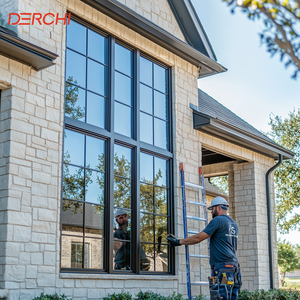
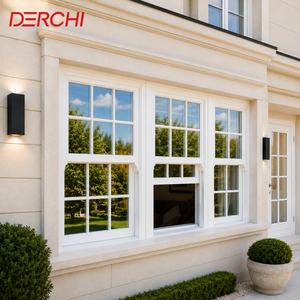
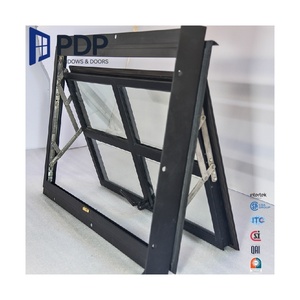
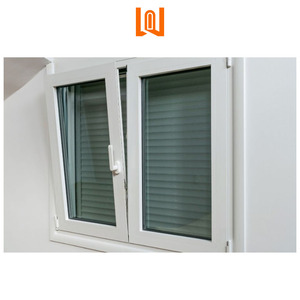
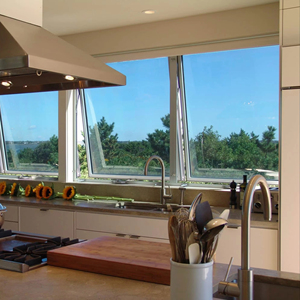
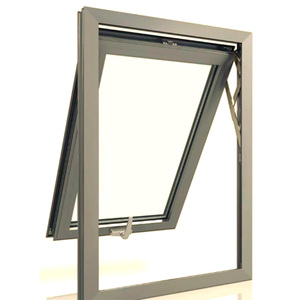
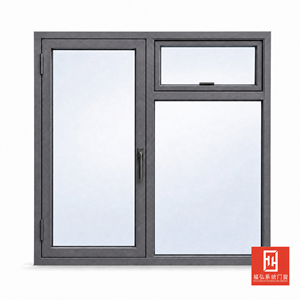
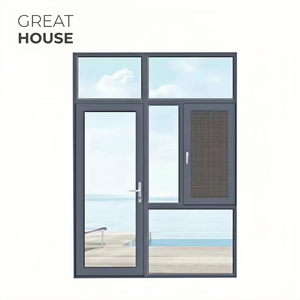
Unlike standard profile extruders using post-consumer reground scrap—which introduces microscopic structural voids and chemical degradation—our CE-certified vinyl extrusion line utilizes exclusively virgin tropical-grade uPVC compound synthesized with high titanium dioxide (TiO2) content (>9.5 parts per hundred resin) and eco-friendly Calcium-Zinc (Ca-Zn) heat stabilizers. This guarantees zero yellowing, superior Charpy impact strength (≥ 45 kJ/m²), and complete compliance with European Union REACH and RoHS environmental directives.
End-to-end vertical integration from raw resin compounding and precision extrusion dies to fusion-welded corner fabrication and thermal glazing assembly.
We own and control over 150 proprietary extrusion dies. This vertical autonomy eliminates third-party component bottlenecks, permitting custom wall thickness calibrations (up to 3.0mm nominal wall thickness) and exact color matching across large commercial volume orders.
Mechanical joint failure is the primary cause of frame leakage in lower-tier windows. Our automated four-point fusion welders heat profile ends to 245°C, bonding vinyl frame and sash members into a single, seamless, monolithic structural entity with zero risk of corner separation or seal shrinkage.
Designed with 5 to 7 independent internal air chambers, our profiles form thermal break pockets that arrest conduction currents. When paired with triple-silver Low-E glass units, frames easily achieve Title 24 compliance and Passivhaus structural insulation criteria.
To resist structural deflection under wind loads exceeding 3,000 Pa, high-stress profile chambers incorporate custom-fit cold-rolled zinc-coated steel reinforcement channels (1.5mm to 2.5mm thickness), ensuring extreme rigidity for high-rise elevations.
Integrated co-extrusion technology bonds weatherstripping gaskets directly to the vinyl profile during manufacturing. This eliminates gasket stretching, shrinkage, or manual installation errors, delivering air infiltration performance < 0.05 cfm/ft².
Available in solid body white and cream, as well as acrylic co-extruded PMMA surfaces and high-durability Renolit exterior foils (woodgrain textures, architectural anthracite gray, and dark matte bronze) tested under severe UV exposure.
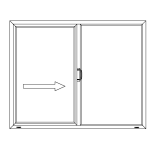
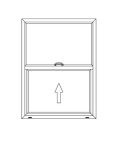
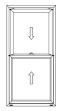
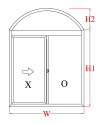
Extruded profile suites manufactured to standard and custom architectural window schedules in 1/8-inch (3mm) precision increments.
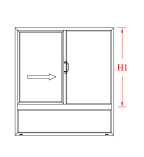
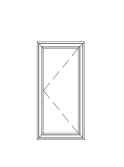
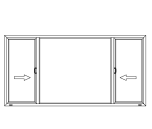
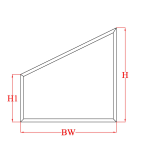
Quantitative analysis evaluating CE-certified vinyl profiles against legacy thermal-break aluminum, solid wood, and composite alternative profiles under rigorous testing protocols.
| Performance Criterion | CE Certified uPVC Profile | Thermal Break Aluminum | Solid Wood Core | Fiberglass Composite |
|---|---|---|---|---|
| Thermal Transmittance (U-Factor) | 0.13 - 0.28 BTU/h·ft²·°F | 0.32 - 0.48 BTU/h·ft²·°F | 0.30 - 0.42 BTU/h·ft²·°F | 0.15 - 0.30 BTU/h·ft²·°F |
| Coastal Salt Spray Resistance | Immune (ASTM B117 >10k hrs) | Moderate (Pitting Risk) | Low (Rot & Swell Risk) | High (Resin Degradation) |
| Corner Joint Structural Strength | Monolithic Fusion Weld | Mechanical Corner Cleats | Mortise & Tenon / Glue | Mechanically Fastened |
| Acoustic Attenuation (STC Rating) | STC 32 - 44 (Multi-Chamber) | STC 28 - 36 | STC 30 - 38 | STC 32 - 40 |
| Maintenance & Repainting Lifecycle | Zero Maintenance (30+ Yrs) | Powder Coat Recoat 15 Yrs | High (Sand/Stain 3-5 Yrs) | Low to Moderate |
| Embodied Energy & Recyclability | Low Energy / 100% Recyclable | Extremely High Energy | Renewable / High Processing | Non-Recyclable Thermoset |
Acoustic performance is governed by both structural profile dampening and glazing configuration. By incorporating asymmetrical dual-glazed laminated acoustic glass packages (e.g., 6mm exterior pane + 0.76mm PVB interlayer + 4mm interior pane) into our 70mm multi-chamber profile systems, ambient sound pressure levels are attenuated by up to 44 decibels (dB). This qualifies our vinyl profiles for high-noise urban corridors, airport proximity zones, and multi-family residential projects facing strict municipal noise codes.
Emerging structural, regulatory, and environmental shifts reshaping global vinyl profile procurement for large-scale developments.
Institutional developers increasingly specify Environmental Product Declarations (EPDs) and Life Cycle Assessments (LCAs). Manufacturers utilizing 100% closed-loop lead-free Ca-Zn compounding are displacing legacy organotin systems, aligning with EU REACH policies and LEED v4.1 Materials and Resources credits.
Global building codes (such as California Title 24, IECC 2024, and EU Near-Zero Energy Building directives) require window assemblies to lower U-factors below 0.20. Specifiers are transitioning from traditional 60mm 3-chamber profiles to deep-frame 70mm–88mm systems with 5-to-7 chambers engineered for thick insulating glass units.
Industrialized offsite construction requires profiles engineered with tight dimensional tolerances (±0.5mm). Pre-slotted nail fins, standardized installation flanges, and integrated frame receiver channels accelerate wall panel integration on automated assembly lines.
Technical details regarding CE certification, factory tolerances, custom profile tooling, and international logistics container crating.
Our vinyl window profiles are tested and certified according to European Standard EN 12608-1 (Unplasticized poly(vinyl chloride) (PVC-U) profiles for the fabrication of windows and doors). They satisfy Class A wall thickness criteria (nominal outer wall thickness ≥ 2.8mm), ensuring maximum mechanical screw retention and corner weld resistance under high wind forces. Additional compliance includes EN 477 (impact resistance), EN 478 (behavior after heat storage), and ISO 4892-2 artificial weathering protocols.
Mechanical joining relies on internal corner cleats, screws, and liquid sealants or elastomeric gaskets. Over time, building movement and thermal expansion cause sealant joints to dry, crack, and fail, permitting water infiltration. Fusion welding heats the uPVC material at the mitered corner to a molten state and fuses the profile walls into a continuous structural frame. There are zero joints or seam gaps for water to penetrate, creating a permanent watertight barrier.
Yes. We maintain an in-house tooling center equipped with CNC wire EDM machinery to design, cut, and calibrate custom extrusion dies. Clients can submit CAD/BIM drawings or physical samples. We provide rapid prototyping, initial profile extrusion sampling, and laboratory testing for wall thickness, dimensional stability, and flexural modulus prior to mass production.
Our profile glazing pockets accept dual-pane (24mm) and triple-pane (36mm–44mm) glass units. We offer advanced glazing technology including Loʳ-366 triple-silver low-emissivity coatings, warm-edge stainless steel/composite spacers, 90% Argon gas fill, toughened safety glass, laminated acoustic interlayers, and ceramic privacy glass configurations matching exact architectural performance targets.
Unassembled profiles are wrapped in protective surface film, bundled with corner guards, and strapped into heavy-duty wooden crates or steel A-frame racks. Completed window units are fitted with corner protectors, shrink-wrapped in protective polyethylene film, separated by foam spacers, and packed into custom wooden crates built for ocean container shipping (20GP / 40HQ) to prevent transit damage.
Partner directly with an established CE-certified vinyl profile manufacturer. Submit your window schedule, BIM models, or extrusion profile drawings for immediate technical review and competitive wholesale estimation.