Precision-extruded, fusion-welded, and spectrally tuned tinted insulating glass packages manufactured for export compliance across North America, Europe, and Australia.
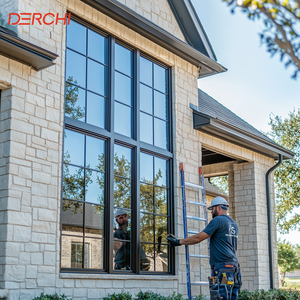
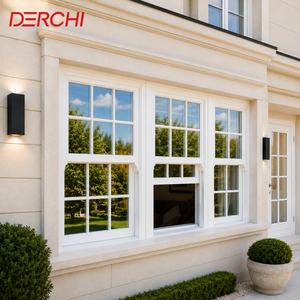
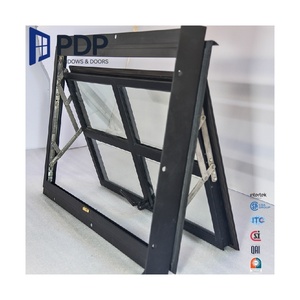
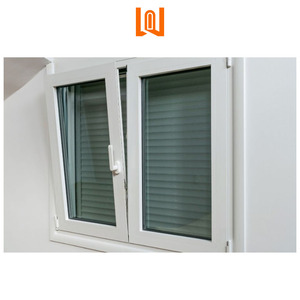
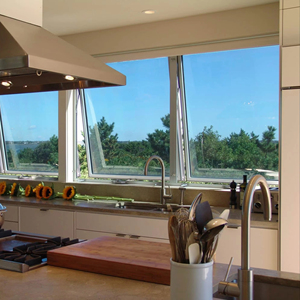
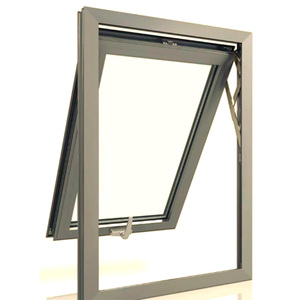
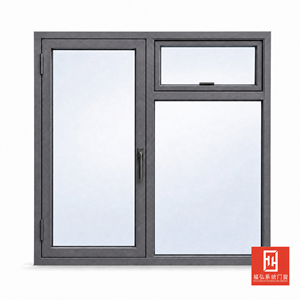
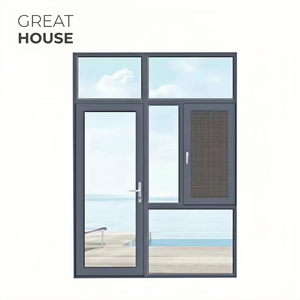
Vertical manufacturing integration eliminates intermediary markups and guarantees absolute material traceability from raw extrusion to crate export.
Unlike mechanically screwed frames prone to joint separation, our vinyl profiles undergo automated 4-point thermal fusion welding. This process melts sash corners into a seamless single unit, eliminating corner seal shrinkage and preventing moisture infiltration for decades.
Our spectrally selective body-tinted float glass is paired with Magnetron Sputtered Vacuum Deposition (MSVD) triple-silver Low-E coatings (LoĒ³-366). This technology blocks solar radiation while retaining maximum Visible Light Transmittance (VLT).
Every tempered unit undergoes rigorous fragment testing under CE EN 12150-1 standards, ensuring safety compliance. Our Double and Triple Insulating Glass Units (IGU) comply with EN 1279-2 moisture penetration resistance, backed by 98%+ Argon gas fill ratios.
Architectural aluminum series feature high-density Polyamide (PA66) thermal barrier strips. This structural break halts conductive energy loss, keeping indoor surfaces dew-free and ensuring compliance with California Title 24 and European NZEB energy codes.
For street-front developments and hospitality projects, our tinted glass units incorporate Sound Transmission Class (STC) engineered acoustic PVB and SGP structural interlayers, cutting exterior urban noise pollution by up to 42 decibels (dB).
Window frames and glazed panels are individually foam-shielded, shrink-wrapped, and loaded into heavy-duty fumigated wooden crates or steel A-frame racks. Designed to withstand ocean transit stress and simplified forklift unloading on construction sites.
Comparative technical data sheet detailing Solar Heat Gain Coefficient (SHGC), U-Factor (W/m²K), and Light-to-Solar Gain ratio (LSG) across primary tinting formulations.
| Tint Specification | Glazing Build-Up | VLT (%) | SHGC | U-Factor (ISO 10292) | STC Sound Rating |
|---|---|---|---|---|---|
| Euro Grey Body Tint + Low-E | 6mm Tinted + 12Ar + 6mm Clear Low-E | 42% | 0.26 | 1.2 W/m²K | 36 dB |
| Dark Bronze Performance Tint | 6mm Dark Bronze + 12Ar + 6mm Clear | 33% | 0.31 | 1.4 W/m²K | 35 dB |
| Ford Blue Solar Control Tint | 6mm Ford Blue + 12Ar + 6mm Clear Low-E | 51% | 0.28 | 1.2 W/m²K | 36 dB |
| French Green High-VLT Tint | 6mm French Green + 12Ar + 6mm Clear | 62% | 0.35 | 1.5 W/m²K | 34 dB |
| Acoustic Laminated Grey Tint | 6mm Tinted + 1.52PVB + 6mm Low-E IGU | 38% | 0.22 | 1.1 W/m²K | 43 dB (High Noise) |
How dynamic climate mandates, carbon taxation, and structural modularity are transforming B2B purchasing decisions over the next decade.
With stringently enforced building energy consumption caps across North America (Title 24) and Europe (EPBD directive), commercial facades are shifting from clear double glazing to high-performance tinted IGUs. Lowering the SHGC down to 0.22 drastically reduces HVAC refrigeration loads, directly contributing to net-zero carbon operations.
Target: 40% Energy Load ReductionModern architectural projects are combining body-tinted float glass substrates with dynamic electrochromic and thermochromic thin-film technologies. This allows fenestration systems to automatically alter tint density based on real-time solar irradiance, optimizing natural interior lighting without thermal overload.
Trend: Smart Dynamic GlazingGlobal developers are replacing field-glazing installation methods with pre-assembled, factory-tested fenestration units. Ordering factory-glazed casement, hung, and hopper windows manufactured to exact 1/8-inch tolerance schedules slashes jobsite labor expenses and guarantees factory-sealed airtight integrity.
Efficiency: 60% Faster Jobsite InstallImporters are moving away from non-certified regional suppliers to mitigate regulatory risk. Importers require complete proof of compliance—including CE EN 12150 impact safety benchmarks, EN 1279 gas leak rate testing, and SGCC glass tempering credentials—prior to issuing purchase orders.
Standard: Verified Full-ComplianceUnderstanding the physics of spectrally selective solar control, structural thermal breaks, and corner fusion technology.
Tinted glass is no longer selected merely for aesthetic privacy or exterior glare reduction. Modern structural engineering views tinted glass as an integral component of a building’s thermodynamic envelope. Through body-tinting—the addition of metal oxides such as iron, cobalt, and selenium into molten float glass—we modify the absorption spectrum of the pane. This selectively absorbs incoming Near-Infrared Radiation (NIR, 780nm–2500nm), which is primary responsible for solar heat accumulation indoors.
When body-tinted float glass is paired with a secondary pane featuring a Magnetron Sputtered Vacuum Deposition (MSVD) triple-silver Low-E coating, the resulting Insulating Glass Unit (IGU) reflects far-infrared thermal radiation back to its source while admitting natural daylight. This balance preserves indoor comfort, limits cooling overhead, and prevents thermal degradation of interior finishes caused by ultraviolet exposure.
A high-performance glass pack requires an equally capable frame to prevent perimeter thermal bridging. Our factory manufactures two distinct structural profiles designed for long-term commercial reliability:
Every fenestration unit leaving our export warehouse undergoes rigorous quality assurance checking. Tinted float panes are scanned with laser automated flaw detectors to spot inclusions, seeds, and nickel sulfide (NiS) impurities before entering the tempering furnace. Thermally toughened panes undergo stress testing under EN 12150-1 standards, verifying fragment density upon fracture to guarantee safety performance.
For double and triple insulating units, primary butyl sealing and secondary structural silicone application are executed inside an automated cleanroom. Dual warm-edge spacer technology, coupled with automated 98% purity Argon gas injection, ensures long-term seals that resist fogging, gas leakage, and perimeter heat transfer across decades of service life.
Clear engineering and procurement guidance for architects, fenestration distributors, and general contractors.
Our products carry full European CE certification adhering to EN 12150-1 (Tempered Safety Glass) and EN 1279-2/3 (Insulating Glass Unit Durability and Gas Retention). Furthermore, our glass products comply with North American SGCC (Safety Glazing Certification Council) standards and California Title 24 thermal energy requirements.
Yes. Every unit is manufactured to order down to 1/8-inch (3mm) precision increments. Our factory routinely processes custom window schedules including arched tops, trapezoids, stacked fixed picture units, casement-hopper combinations, and custom mullion configurations.
Fusion welding melts frame and sash corners into a single monolithic unit at 240°C. Mechanically screwed frames rely on gaskets and sealants at corner joints that degrade under UV exposure and thermal expansion, leading to frame sagging and air leakage. Fusion welding provides higher structural rigidity and long-term weatherproofing.
Body-tinted glass incorporates color pigments (grey, bronze, blue, green) directly into the raw glass melt, absorbing solar radiation evenly without creating a harsh mirror effect. Reflective coatings rely on surface metallic films that can scratch or oxidize over time if not protected within an insulating unit. Combining body-tinting with an interior Low-E coating delivers optimal solar heat control and lasting durability.
For high-noise urban environments, we recommend our acoustic laminated tinted glass packages. These feature asymmetrical glass thicknesses (e.g., 6mm exterior pane + 12mm Argon space + 4mm interior pane) combined with an acoustic PVB or SGP interlayer, achieving STC sound ratings up to 43 dB.
All finished window and door units are individual protected with corner guards, wrapped in moisture-barrier film, and packed into custom-built, fully enclosed fumigated wooden crates or heavy-duty steel A-frame containers designed for safe forklift handling.
Partner directly with a certified tinted glass factory. Speak with our technical engineering team to verify specs, CAD drawings, and volume pricing within 24 hours.