Choosing Vinyl Casement Windows is not just a matter of comparing prices or selecting a frame color. These hinged windows open outward, helping direct breezes indoors while offering an unobstructed view. Yet comfort and durability depend on more than the operating style. Look closely. Frame dimensions, weather seals, locking hardware, glass options, and drainage details can all affect everyday performance. Two windows may look nearly identical in a showroom, while their specifications reveal meaningful differences.
Start by considering your climate, wall exposure, ventilation needs, and cleaning routine. Ask how the frame is reinforced and what type of glazing suits your home. Energy-performance ratings can help you compare products, but check the rating label and understand which conditions it measures. Also review warranty coverage, installation requirements, and the availability of replacement parts. A strong product can still underperform if it is measured or installed poorly, so request clear written specifications and qualified installation advice.
Think about how the window will work in your actual room. Will an outward-opening sash interfere with a walkway, planter, or exterior shutter? Can you reach the glass safely for cleaning? These practical questions are easy to overlook when browsing samples. There is no perfect option for every home, and some trade-offs may remain. This guide explains the key features to compare, the questions worth asking suppliers, and the details that can help you choose confidently without relying on appearance alone.
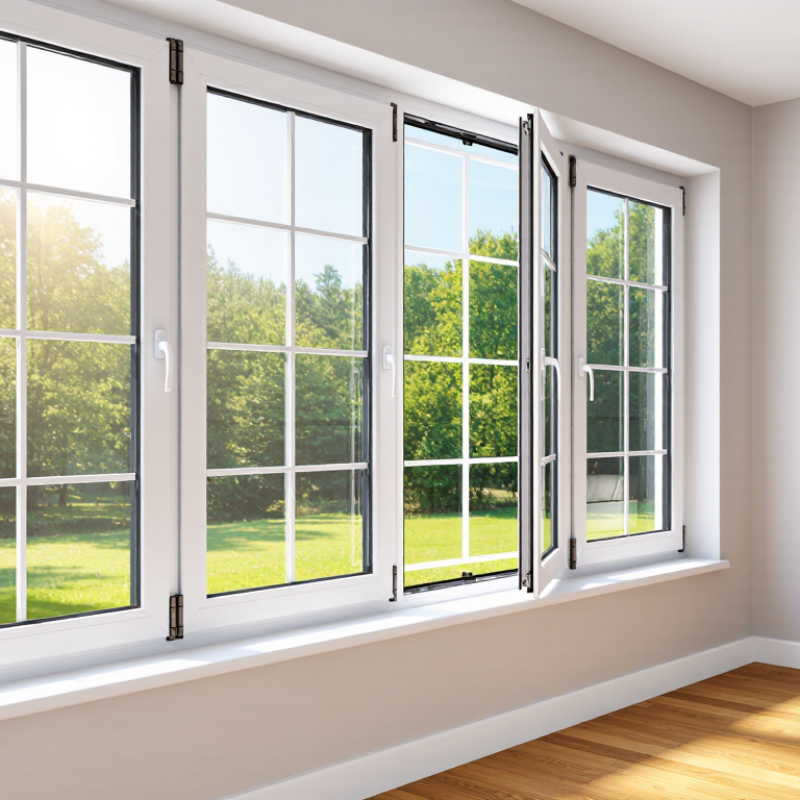
A vinyl casement window has a frame fixed to the wall and a movable sash hinged along one side. Start with the sash: it holds the glass and should sit evenly within the frame.
Look closely. Check the corners, where poorly aligned joints may allow air or water to pass. Weatherstripping runs around the sash or frame to cushion the closure and limit drafts; inspect it for gaps or flattening. At the side, hinges support the sash as it swings outward, while a crank handle turns an operator arm to open and close it. A lock pulls the sash snug against the weatherstripping.
Not just the glass. Vinyl profiles are made from rigid PVC, but internal reinforcement may vary with window size and design. Ask for product specifications rather than assuming every frame has the same structure. Check seals and drainage openings, too; blocked openings can leave water sitting in the frame. A smooth handle matters, but it does not prove the hinges are aligned. It is tempting to judge quality by appearance alone. Instead, operate the window several times and notice any scraping, uneven gaps, or looseness.
When comparing vinyl casement windows, read the NFRC label rather than judging glass by appearance. U-factor measures heat flow through the entire window; a lower number generally means better insulation. SHGC measures how much solar heat enters. Higher SHGC can help warm a home in winter, while lower SHGC can reduce unwanted heat in summer.
Start with your climate zone, then consider the window’s direction and local weather. In colder zones, a low U-factor may help keep rooms near a drafty window more comfortable. South-facing glass with a moderate or higher SHGC can capture useful winter sun, but summer shade matters. In hot zones, prioritize a lower SHGC, especially on west-facing windows that take strong afternoon sun. There is no perfect number. Mixed climates often require a compromise.
Compare ratings for the same window size and configuration, since frame and glass choices affect performance. Casement sashes press against seals when closed, but poor installation can still leave gaps. Ask for the NFRC-certified values for the exact model, and check whether they meet local energy-code requirements. A small detail: curtains, roof overhangs, and nearby trees can change how much solar heat reaches a room. I would not choose from ratings alone; they cannot predict every site condition.
When choosing vinyl casement windows, start with the ENERGY STAR v7.0 U-factor limit for your U.S. climate zone. The stated range is 0.22 to 0.30; a lower U-factor means less heat passes through the window. Check the current zone chart and the window’s whole-unit rating, since the required limit depends on where you live. A rating of 0.27 may qualify in one zone but miss the mark in another.
Do not choose by U-factor alone. Compare the listed solar heat gain coefficient, air leakage, and frame details with your climate and home. On a cold morning, a well-sealed casement should close firmly without a noticeable draft around its edges. Installation matters, too: even an efficient window can perform poorly if the opening is not properly sealed. It is easy to chase the lowest number, but that may not be the best fit for every room.
Tips: Ask for the full rating label and confirm it matches your zone. Check that the lock pulls the sash snugly against the seals. Small details matter.
When comparing vinyl casement windows, look beyond frame color and glass options. Check the product’s AAMA/WDMA/CSA performance grade, often shown as a PG value. This grade reflects tested performance under defined conditions, including structural pressure, water resistance, and air infiltration. It is not a universal quality score. A higher value may suit a more exposed location, but match the rating to your building and local requirements.
Read the test documentation, not just the sales label. Confirm the window size and configuration tested; a result for one size may not apply to every unit. Wind exposure matters. A window on a sheltered porch faces different demands from one on an upper floor with open terrain nearby. Numbers matter.
Air leakage deserves its own check. Compare results measured using the same method and pressure, and note the units. Lower leakage generally means less air passes through the closed window during testing. Casement sashes press against seals when locked, but worn weatherstripping or poor installation can still leave drafts. That detail is easy to overlook. A careful installer and correctly adjusted locks help the tested performance translate into a quieter, more comfortable room.
When comparing vinyl casement windows, read the NFRC label, not just the glass description. U-factor measures heat flow; lower values generally mean better insulation. Solar heat gain coefficient matters too, especially on sunny elevations. The U.S. Department of Energy estimates that windows account for about 25–30% of residential heating and cooling energy use. Better glazing can help, but the right balance depends on climate and orientation. A low number alone is not a complete answer.
Check the crank, hinges, locks, and weather seals in person. Open and close the sash; it should move smoothly and pull snugly against the frame. Ask whether hardware is replaceable and what the written warranty excludes. Installation deserves equal attention. A poorly shimmed frame or thin, uneven sealant bead can undermine good glazing. Small details matter. I would not assume a longer warranty guarantees an easier repair.
Include service and energy use in lifecycle costs, not only the purchase price. The 2024 Cost vs. Value report from Remodeling magazine placed national vinyl-window replacement costs at about $21,264, with an estimated $14,270 in resale value. That is a remodeling benchmark, not a personal quote or lifetime savings forecast. Regional labor, window count, and installation conditions can change the math. I still find comparisons imperfect: quotes often describe different glass packages and trim work, so ask for itemized specifications.
Typical center-of-glass U-factors for common glazing configurations. Lower values indicate less heat transfer; actual performance varies by glass, gas fill, and construction.
These figures describe the glass center, not the complete window. Compare certified whole-window ratings, then assess casement hardware and seals, installation quality, warranty coverage, and expected maintenance when estimating lifecycle costs.
The sash holds the glass and connects to the frame with side hinges. A crank moves an operator arm, while a lock pulls the sash closed. Weatherstripping cushions the seal.
Open and close it several times. The crank should turn smoothly, and the sash should not scrape or feel loose. Look for uneven gaps at the corners. Appearance can fool you.
Check for flattened or missing weatherstripping and gaps around the sash. Look at drainage openings, too. Blocked openings can leave water sitting in the frame.
U-factor measures heat flow through the whole window; lower values generally provide better insulation. SHGC measures how much solar heat enters. Lower SHGC can help limit summer heat.
In colder areas, a lower U-factor may improve comfort near chilly glass. In hot areas, lower SHGC can help on west-facing windows. Trees, curtains, and roof overhangs also affect sunlight.
Compare certified ratings for the same size and configuration. Glass and frame choices can change performance. One rating cannot predict every room’s comfort.
Ask whether the crank, hinges, and locks can be replaced, and review written warranty exclusions. Check that the frame is shimmed evenly and the sealant bead is continuous. Small details matter.
Include installation, future service, and energy use, not just the purchase price. A 2024 national report estimated vinyl-window replacement at about $21,264, but local quotes vary. Not a personal quote. Ask for itemized glass and trim details.
Choosing Vinyl Casement Windows starts with understanding their frames, sash, hinges, crank operators, seals, and glazing. Compare frame materials and operating mechanisms for durability, ease of use, and maintenance. Then check independently rated NFRC U-factor and solar heat gain coefficient (SHGC) values against your climate: a lower U-factor generally reduces heat transfer, while the best SHGC depends on local heating and cooling needs. For current v7.0 efficiency criteria, check that the product’s U-factor meets the applicable U.S. zone limit, which ranges from 0.22 to 0.30.
Also review AAMA/WDMA/CSA performance grades and air-leakage ratings to assess resistance to wind, water, and drafts. Consider glazing options, hardware quality, and professional installation, since these affect comfort and long-term performance. Before deciding, compare warranty coverage and lifecycle costs, including purchase price, upkeep, and potential energy savings. A careful evaluation of these factors helps you select a window suited to your home, climate, and budget.