Choosing the best Vinyl Bay Windows from China requires more than comparing product prices. The decision involves profile quality, glass performance, hardware durability, factory control, packaging, and installation support. A polished catalog can look impressive. It does not prove consistent production.
Fenestration consultant Gary Johnson has expressed a practical principle: “A good window cannot rescue a poor installation.” That idea matters especially for bay windows. Their wide projection creates leverage against the wall, wind, and supporting brackets. A weak frame or careless anchoring may cause movement, air leakage, or water entry. I have seen buyers focus on the lowest quotation, then discover missing reinforcement details and unclear warranty terms. That mistake is expensive.
Look closely at the vinyl profile. Ask about wall thickness, internal reinforcement, fusion-welded corners, drainage paths, and ultraviolet resistance. Request test reports for air infiltration, water resistance, and structural performance. Confirm whether the reported values apply to the exact model, not a larger or different sample. Small details count.
The glass deserves equal attention. Low-E coatings, argon filling, warm-edge spacers, and laminated options can improve comfort and safety. However, specifications should match your climate and building orientation. More features are not always better.
A reliable Chinese supplier should provide production photos, sample approval, inspection records, export packaging details, and clear replacement procedures. Ask difficult questions. Notice vague answers.
Even experienced buyers can miss one detail: installation compatibility. Measure the rough opening carefully, verify projection limits, and confirm local requirements with a qualified professional. The best Vinyl Bay Windows are not merely attractive. They are tested, correctly specified, and realistically installable.
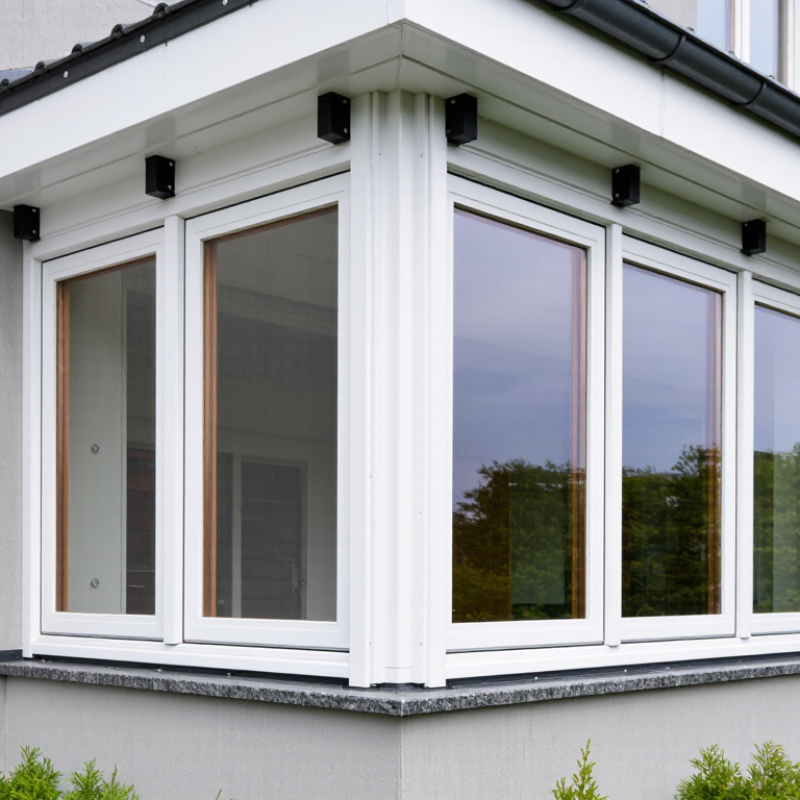
Vinyl bay windows are projecting window assemblies built from several angled units. They extend beyond the exterior wall, creating a wider interior view and a small seating or display area. Unlike simple flat windows, they usually combine a fixed center pane with operable side casements. Some designs use double-hung side sections instead. The exact layout depends on ventilation needs, wall space, and local climate.
The main design feature is the projection angle. Common configurations use 30 or 45 degrees, while custom angles may suit unusual façades. A deeper bay brings more daylight, but it also increases structural demands. The frame should include reinforced corners, secure locking points, and a properly supported sill. Multi-chamber vinyl profiles can improve insulation, although more chambers do not automatically guarantee better performance.
Glazing deserves careful attention. Low-emissivity glass, sealed insulating units, and warm-edge spacers can reduce heat transfer and interior condensation. In windy or rainy regions, ask for tested air, water, and structural performance. Drainage paths must remain clear, especially around the lower frame. I once assumed a thicker profile always meant higher quality. That was too simple. Material thickness, welding quality, hardware adjustment, and installation tolerance work together. When choosing from China, request section drawings, test reports, sample corners, and packing details. A beautiful sample can still hide weak reinforcement.
Choosing vinyl bay windows from China requires more than comparing catalog prices. Material quality affects stability, insulation, and service life.
I inspect sample corners, welded joints, drainage paths, and reinforcement before reviewing quotations. A smooth surface is not enough. Ask for the vinyl profile’s formulation, wall thickness, steel reinforcement details, and dimensional tolerances. Reinforcement matters near wide bay sections, where weight and wind pressure increase. Check whether the frame includes reliable gaskets and properly sealed joints. Small gaps can create noticeable drafts during winter.
Glass selection strongly influences comfort. Double glazing is common, but its performance depends on more than thickness. Request the glass configuration, low-emissivity coating, gas filling, spacer type, and safety treatment. Argon-filled units with warm-edge spacers may reduce heat transfer and interior condensation. Tempered or laminated glass can improve safety, especially near seating areas and lower floors. Confirm that the glass dimensions match the frame design.
Energy documents deserve careful attention. Compare U-factor, solar heat gain coefficient, visible transmittance, and air-leakage results from recognized testing facilities. Lower U-factor usually means better insulation, while excessive solar gain may overheat a sunny room. I once focused too heavily on the advertised glass package and overlooked frame leakage. That was a useful mistake. Request full test reports, production samples, packaging photos, and installation guidance before approving the final order. Test evidence should match the exact window configuration, not a similar model.
Assess window materials, glass options, and energy performance
Comparing Chinese manufacturers requires more than checking catalog photos. Review their production experience, factory equipment, and export records. Ask how they reinforce large bay window frames. Steel or galvanized reinforcement should fit securely inside the vinyl profile. Inspect corner welds, drainage holes, seals, and hardware on a physical sample. Small details matter during cold rain and strong sunlight.
Certifications can support trust, but they do not replace inspection. Request current test reports for air leakage, water resistance, wind pressure, thermal performance, and glass safety. Confirm that the reports match the exact window system, not a similar model. Check whether testing followed standards required in your market. A certificate with unclear scope is not enough. Product quality may vary between production batches. That point is easy to overlook.
Tips: Compare at least three factories using the same specification sheet. Measure profile thickness, glass type, hardware grade, and frame reinforcement. Request factory photographs, packing details, and a pre-shipment inspection. Ask about replacement parts and warranty handling in writing. Also, test the sample yourself. Open it repeatedly. Check the locks. Pour water over the joints. No factory is perfect, and my own evaluation would remain cautious until the sample, documents, and delivered units agree.
Choosing vinyl bay windows from China starts with a specification, not a catalog photo. Ask for projection, bay angles, frame chambers, reinforcement, glazing, color, hardware, and screens. Measure twice. NFRC explains that U-factor measures heat transfer, while SHGC measures solar heat gain. For colder rooms, a lower U-factor usually matters; bright southern elevations may need controlled SHGC. The U.S. Department of Energy estimates windows cause 25–30% of residential heating and cooling energy use. That figure makes glass selection more important than decorative trim.
Pricing should separate product, tooling, packaging, inland transport, ocean freight, insurance, duties, port charges, and final delivery. The 2024 Cost vs Value Report lists a national average of $21,264 for a standard vinyl window replacement project, not a custom bay unit. Use it only as a broad benchmark. A Chinese quotation can look cheaper while excluding steel supports or special crates. Request a line-item pro forma invoice, sample corner welds, drainage drawings, test reports, and a written warranty. Details decide value.
Shipping requires exact packed dimensions and gross weight; bay windows consume cubic space quickly. Confirm Incoterms, destination handling, damage-claim deadlines, and whether glass travels separately. During installation, the opening needs structural support, sill pan flashing, insulation, and an exterior cap. NFRC certification guidance supports comparing labeled U-factor and SHGC values, rather than trusting generic “double-glazed” claims. Allow a qualified local installer to verify wall loading and local code requirements before production. I would not treat the lowest quote as a win. That judgment can be wrong.
| Evaluation Area | Key Dimension | Typical Requirement or Market Range | What to Check Before Ordering | Buyer Impact |
|---|---|---|---|---|
| Customization | Window configuration | Common layouts include a fixed center window with two angled side windows. Typical projection angles are approximately 30°, 45°, or 90°. | Request a dimensioned elevation drawing showing the center width, side widths, projection, angle, and overall height. | The configuration affects appearance, structural support, glass area, packaging size, and total cost. |
| Overall size | Custom sizes are common. A practical residential bay window may be about 1,800–3,600 mm wide and 1,200–2,100 mm high, subject to structural limits. | Confirm finished-frame dimensions, rough-opening dimensions, tolerances, and whether measurements are supplied in millimetres or inches. | Incorrect opening information can cause installation delays, modifications, or unusable products. | |
| Frame and reinforcement | Vinyl profiles commonly use multi-chamber PVC construction. Larger bay assemblies may require steel or other reinforcement and dedicated support. | Ask for profile wall thickness, reinforcement details, drainage design, corner construction, and maximum tested sash size. | Reinforcement and support requirements influence long-term stability and installation safety. | |
| Glass specification | Typical options include double glazing with approximately 20–24 mm overall thickness. Low-E coatings, argon filling, laminated glass, and tempered glass are available depending on the design. | Specify glass thickness, safety-glass locations, U-value or U-factor target, solar-control needs, spacer type, and visible light requirements. | Glass selection affects energy performance, condensation risk, safety, weight, and price. | |
| Colours and hardware | White is usually the most economical finish. Laminated colours, wood-look surfaces, insect screens, restrictors, handles, and grille patterns may be offered as options. | Confirm colour code, surface finish, handle type, screen dimensions, corrosion resistance, and hardware compatibility with local standards. | Special finishes and hardware can increase minimum order quantities, production time, and replacement-part complexity. | |
| Pricing | Indicative product price | A standard-size vinyl bay window may commonly fall around US$600–US$1,800 per unit before freight, taxes, installation, and project-specific accessories. | Compare like-for-like quotations using the same size, glass, opening style, colour, hardware, packaging, and trade term. | A low initial price may exclude reinforcement, flashing, trim, screens, upgraded glass, or export packaging. |
| Quantity and tooling | One-off custom units usually have higher per-unit costs. Repeated sizes and larger quantities can reduce setup and packaging costs. | Ask whether mould, die, sample, engineering, or colour setup fees apply and whether they are refundable against production. | Small orders may be less economical after fixed costs and international freight are added. | |
| Payment and quotation basis | Manufacturing quotations commonly require a deposit, with the balance due before shipment or according to an agreed inspection milestone. | Ensure the pro forma invoice lists specifications, currency, validity period, bank charges, warranty terms, and the selected Incoterm. | Clear commercial terms reduce disputes over changes, defects, delays, and payment release. | |
| Total landed cost | The final budget should include product price, export packing, inland transport, ocean or air freight, insurance, customs duties, local delivery, unloading, and installation. | Request a landed-cost estimate based on the exact destination, delivery address, quantity, and applicable tariff classification. | Freight and local work can materially change the apparent savings from overseas purchasing. | |
| Shipping | Production lead time | Typical production may take approximately 25–45 calendar days after drawing approval, deposit receipt, and confirmation of all specifications. | Confirm when the lead time starts and whether it includes sample approval, quality inspection, and export documentation. | Late drawing approval or special colours can extend the schedule. |
| Transit and delivery time | Ocean freight often requires several weeks, while total door-to-door timing depends on port congestion, customs clearance, inland delivery, and destination distance. | Obtain an estimated sailing schedule, transit range, port or door destination, and responsibility for customs clearance. | Plan installation only after allowing time for inspection and possible replacement of damaged components. | |
| Packaging and container loading | Bay windows require corner protection, separators, moisture-resistant packing, and secure vertical or approved horizontal loading. | Specify packaging materials, crate dimensions, gross weight, loading method, marking, and photo evidence before dispatch. | Proper packaging reduces glass breakage, frame distortion, scratching, and water damage. | |
| Inspection and claims | Pre-shipment inspection should verify dimensions, glass, hardware, operation, finish, labels, quantity, and packaging condition. | Define the inspection standard, evidence required for claims, reporting deadline, spare-parts policy, and responsibility for replacement freight. | Documented inspection and delivery records improve the chance of resolving transport or manufacturing issues. | |
| Installation | Structural support | A bay window projects beyond the wall and may require a structural platform, brackets, framing, or support cables designed for the unit weight and local conditions. | Have a qualified installer or engineer verify load paths, support attachment, sill conditions, and compatibility with the existing wall. | Insufficient support can cause frame movement, leakage, glass stress, and safety hazards. |
| Rough opening and installation tolerance | The rough opening must allow for shimming, levelling, fastening, insulation, and perimeter sealing. The exact tolerance must follow the approved installation drawing. | Confirm sill level, plumb walls, opening squareness, fastening points, sill pan or flashing details, and approved sealants. | Accurate preparation is essential for smooth operation, airtightness, and water management. | |
| Weatherproofing and insulation | Installation generally requires compatible flashing, a sloped sill or sill pan, low-expansion foam or suitable insulation, backer rod where needed, and an exterior weather seal. | Request a cross-section detail showing drainage paths and the sequence for flashing, insulation, sealant, trim, and cladding. | Correct water management is more important than relying on surface sealant alone. | |
| Local code and installer capability | Energy, wind-load, egress, safety-glazing, thermal performance, and structural requirements differ by country, region, and building type. | Check local permits and standards before production. Use an installer experienced with large or projecting window assemblies. | A product suitable for one market may require testing, documentation, or design changes for another. | |
| Final Selection | Best-value purchase | Choose the quotation that provides the best verified combination of technical compliance, complete specifications, secure packaging, transparent landed cost, documented quality control, and practical installation support. | Approve a final drawing and written specification before production. Keep records of inspection photos, packing lists, shipping documents, and installation instructions. | The lowest unit price is not necessarily the lowest total project cost. |
Selecting a reliable supplier starts with physical samples, not attractive online photos. Request a complete bay window sample with glass, frame, reinforcement, hardware, and drainage details. Check the corner joints carefully. They should feel firm, clean, and accurately aligned. Open and close the sash several times. Notice unusual resistance, loose handles, or uneven gaps. View the vinyl in daylight, because indoor lighting can hide color differences.
A professional supplier should provide drawings, material specifications, and relevant test documentation. Compare these details with the sample before signing a contract. Define profile dimensions, glass construction, hardware quality, packaging, production time, and inspection procedures. Avoid vague terms such as “premium quality.” They create arguments later.
Include approved drawings and sample photos in the contract. Confirm which party handles damage, replacement costs, and shipping problems. Warranty terms also need practical detail. Check the coverage period, exclusions, claim evidence, response time, and labor responsibilities. The warranty should still be useful after installation, not merely impressive on paper.
Tips: Ask for a small trial order first. Measure the delivered windows yourself. Keep inspection photos and signed records. I once trusted a sample too quickly. The final hardware felt cheaper, so written approval matters. Also confirm compliance with your local building requirements before production.
Specify projection, bay angles, frame chambers, reinforcement, glazing, color, hardware, and screens. Measure the opening twice. Add approved drawings to the contract.
Compare U-factor and SHGC values on formal labels. A lower U-factor usually helps colder rooms. Bright southern windows may need controlled solar gain. “Double-glazed” alone is not enough.
Request separate prices for the window, tooling, packaging, inland transport, ocean freight, insurance, duties, port charges, and delivery. Ask whether steel supports and special crates are included. The cheapest quote may hide important costs.
Request a complete sample with glass, reinforcement, hardware, drainage, and corner joints. Open and close the sash several times. Check loose handles and uneven gaps. View the vinyl in daylight.
Confirm drawings, material specifications, test documents, packaging details, production time, and inspection procedures. Avoid vague phrases like “premium quality.” They cause arguments later. Keep signed approvals and sample photographs.
Confirm packed dimensions, gross weight, cubic volume, delivery terms, and destination handling. Ask about damage-claim deadlines. Check whether the glass ships separately. Bay windows occupy space quickly.
The opening needs structural support, sill-pan flashing, insulation, and an exterior cap. A qualified local installer should verify wall loading and building requirements. Do this before production. Installation details can decide performance.
Check the coverage period, exclusions, claim evidence, response time, replacement costs, and labor responsibilities. Put these terms in writing. A long warranty can still be weak. I once trusted a sample too quickly, and the final hardware felt cheaper.
Choosing the best Vinyl Bay Windows from China requires careful evaluation of design, materials, performance, and supplier reliability. Start by confirming the window’s structure, projection depth, frame style, opening method, and compatibility with your building. Compare vinyl quality, reinforcement options, glass types, insulation levels, weather resistance, and energy-saving features to ensure long-term comfort and durability. Proper drainage, airtight seals, and suitable hardware are also important for reliable operation.
When comparing Chinese manufacturers, review their production experience, quality-control procedures, testing reports, and relevant certifications. Request clear information about customization, minimum order quantities, pricing, packaging, shipping responsibilities, and installation requirements. Before placing a large order, examine product samples and confirm every specification in a detailed contract, including dimensions, colors, accessories, delivery schedules, inspection standards, and warranty coverage. A dependable supplier should communicate clearly, provide consistent quality, protect products during transportation, and offer practical after-sales support. This structured approach can help buyers select Vinyl Bay Windows that meet both project requirements and budget expectations.